When you want dinner soon, the most useful recipe is one with a sequence you can picture from start to finish. A short cooking time helps, but chopping, draining and getting a side dish ready can fill the gaps surprisingly quickly. Look for work that fits together, then set up the few things you will need at the busiest moment.
Let one part cook while you prepare the next
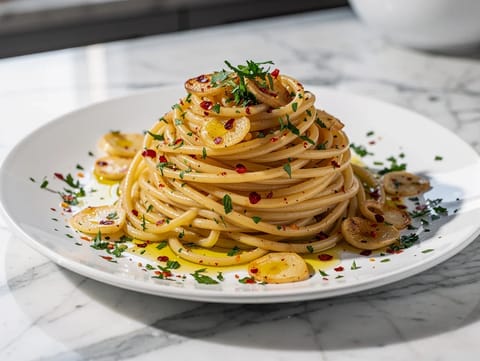
Our garlic, oil and chilli spaghetti makes good use of that overlap: the pasta cooks while you slice the garlic, chop the parsley and gently warm the garlic in olive oil. The garlic oil and pasta come together in a final toss.
That is a useful pattern to look for in other dinners: one component cooks while you make a dressing, prepare a quick topping or finish a sauce. Check that the tasks really fit the time available. If slicing garlic still takes concentration, prepare it before the pasta goes in; a slightly calmer sequence is often more useful than chasing the shortest possible time.
Start with the ingredient form the recipe expects
A tin of cooked beans can be drained and added to a pan, while dried beans need a different plan. Cooked rice, thawed ingredients and vegetables already cut into small pieces also represent work done before the final cooking stage. Read the ingredient notes as well as the headline time.
This helps when choosing between recipes with similar timings. One may ask you to peel and chop several vegetables; another may use ingredients that only need measuring or draining. Pick the preparation that fits the evening rather than swapping in a different form and hoping the method will take the same time.
Prepare for the last few minutes
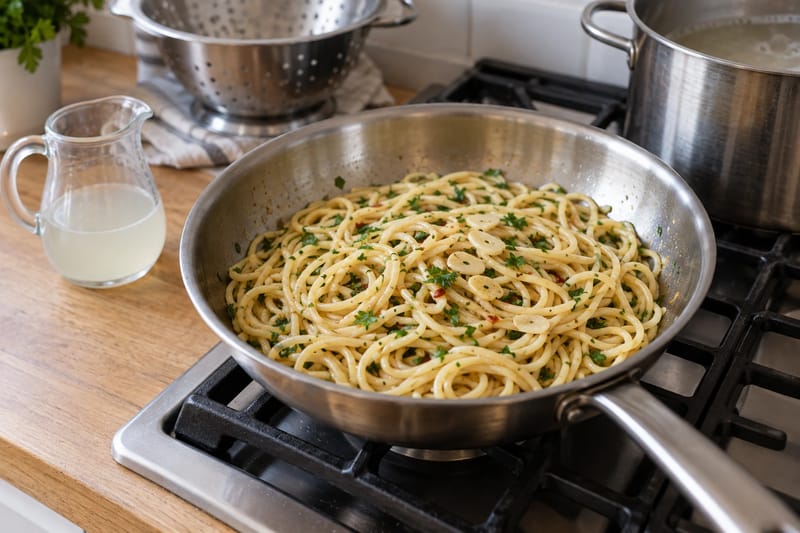
With the spaghetti, have a heatproof cup or jug ready for the reserved cooking water before you drain the pan. Keep the parsley nearby and use a frying pan large enough to toss the pasta comfortably. Those small preparations matter when the sauce is coming together and the food is ready to serve.
Read the final step of any quick dinner before turning on the heat. It may ask for a grated topping, a squeeze of citrus or a sauce stirred through off the hob. Get those ingredients ready so the finishing stage remains a few simple movements.
Choose the whole meal, not just the main dish
A fast main course can become a longer meal if its accompaniment needs a separate pan and another round of chopping. Choose something that fits the work already happening, or keep the side simple enough to prepare before cooking begins.