Lemon and garlic can brighten a dressing or season a roast from the start. Garlic and ginger might have a brief turn in a hot pan, while flour and butter can provide a sauce’s body. The pair is only the beginning: what surrounds it, and when it goes into the dish, shapes the result.
Lemon and garlic can dress a salad or cook with a roast
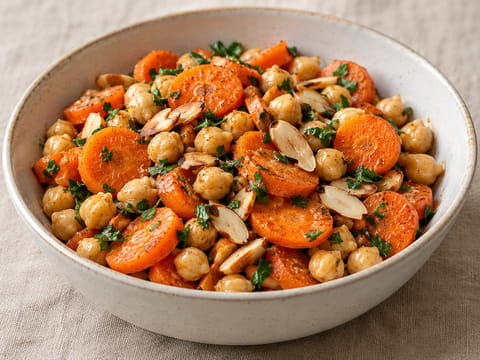
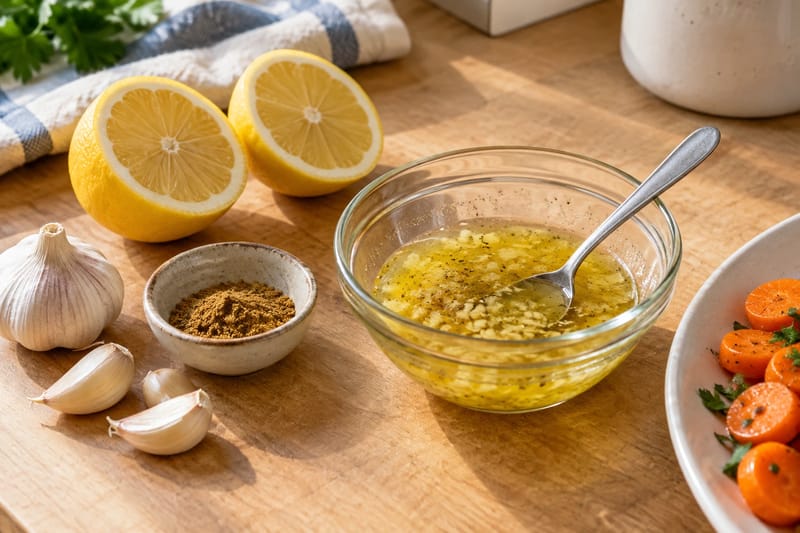
In our carrot and chickpea salad with toasted almonds, grated garlic, lemon zest and juice meet in a dressing with cumin, smoked paprika and olive oil. The dressing is tossed with warm, drained carrots and chickpeas after the carrots have cooked. Toasted almonds go on last, keeping their crunch.
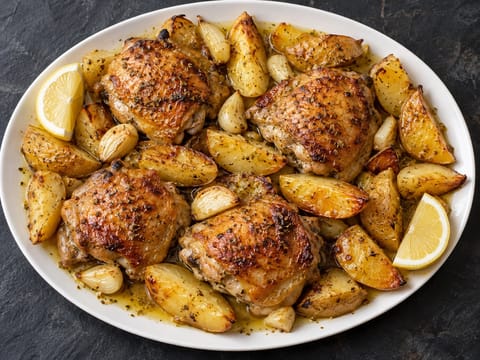
The same pair takes a different place in chicken with lemon, garlic and potatoes. Lemon juice joins the oil and oregano before the potatoes and chicken go into the roasting tin; lightly crushed garlic cloves roast alongside them. Here, the seasoning cooks with the meal, while extra lemon wedges let you add a fresher squeeze at the table.
Let the surrounding ingredients change the effect
Notice how the salad’s cumin and smoked paprika sit around the lemon and garlic. They season chickpeas and carrots in one bowl, while the toasted almonds give each forkful something crisp. In the roasting tin, oregano and the chicken’s pan juices take the familiar pair in another direction.
When lemon and garlic start to feel predictable, look at what surrounds them before adding more of either. A different herb or a crisp element can give the dish another direction. Keep the cooking stage in mind too: the salad gets its dressing after cooking, while the roast cooks with its seasoning.
Give garlic and ginger their short moment in the pan
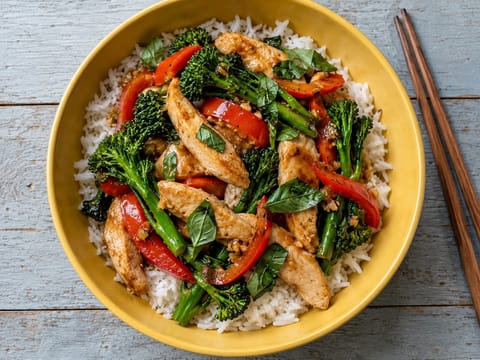
Our Thai ginger and garlic stir-fry bowl adds finely grated ginger and chopped garlic after the chicken has cooked. They have a brief fry before the broccoli and pepper go in, with soy sauce and lime following towards the end. Have the vegetables and liquids prepared before that aromatic stage begins.
The garlic and ginger are part of the cooking sequence, not a final topping. Moving them to the end would miss their brief time in the hot oil; leaving them there while you chop the vegetables would give them too long. The place of the pair in the method matters as much as choosing it.
Some pairs give a dish its texture
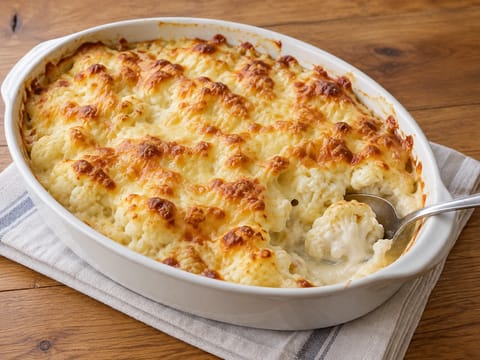
For a partnership that gives a dish its body, take our French cauliflower gratin. Flour and butter are cooked together before milk is whisked in gradually to make béchamel. Mustard, nutmeg and Gruyère follow once the pan is off the heat, then the sauce coats the drained cauliflower for baking.
Here, the pair helps build the structure of the sauce. Changing the flour or the amount of liquid affects the whole dish, so begin with the recipe’s quantities and judge the texture after its thickening stage. A flavour pairing gives you room to taste and adjust; a sauce base also asks you to understand how it holds together.