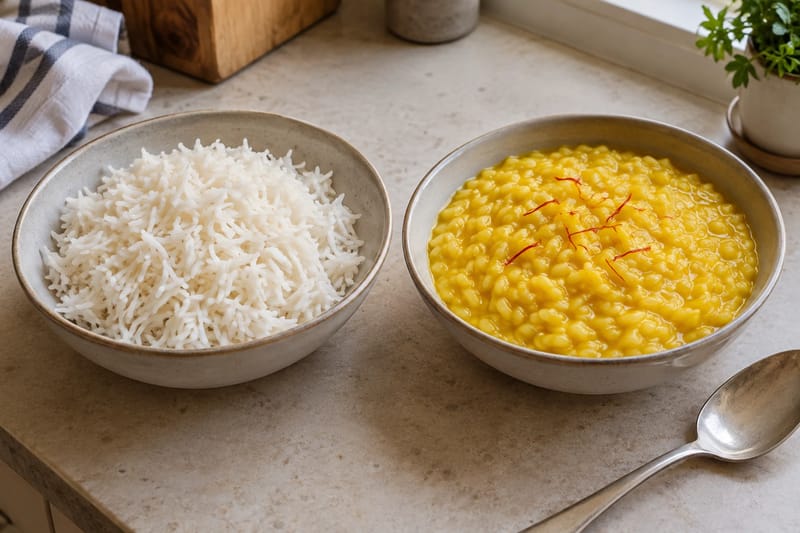
A forkful of pilaf should feel different from a spoonful of risotto. One is about separate grains; the other brings tender rice and a flowing sauce together. Deciding which texture you want makes the instructions easier to understand, including when to stir, when to leave the lid alone and why the packet of rice matters.
For separate grains, give the lid a chance
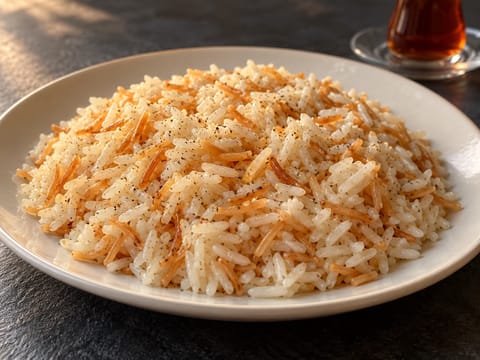
Our Turkish pilav with vermicelli starts with rinsed long-grain rice and toasted vermicelli. After the rice is coated in butter, measured stock goes in and the pan is covered. The resting stage that follows is part of getting it ready to serve, so allow for it when planning the rest of dinner.
Once a recipe asks you to keep the pan covered, resist the urge to lift the lid and stir every few minutes. Use that stretch to finish an accompaniment or clear the worktop. The rice is cooking in the conditions created by the measured liquid and lid; it does not need the same attention as a risotto.
For creamy rice, stay near the pan
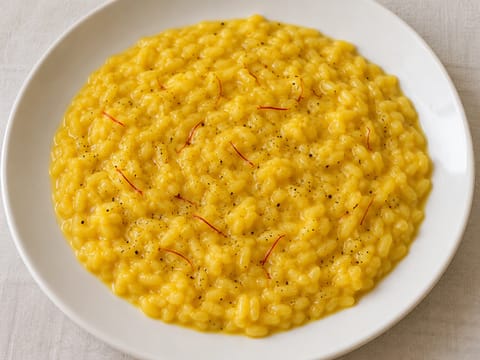
If you enjoy the rhythm of cooking at the hob, try making saffron risotto. Arborio rice receives hot stock a ladleful at a time, with frequent stirring as it cooks. You watch the liquid and grains move together, adding more stock without letting the pan turn completely dry.
The aim is a loose, flowing finish with tender grains that still have some bite. Butter and Parmesan go in off the heat at the end. Have the plates ready before that final stage: this is a dish whose last few minutes deserve your attention.
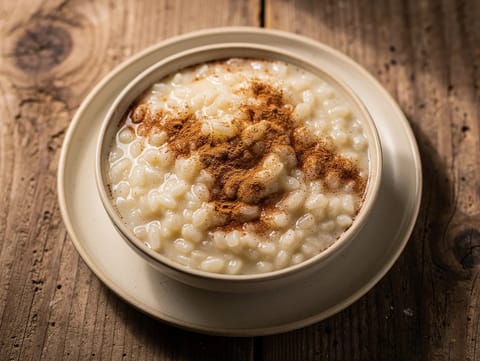
Milk gives rice another route to creaminess in Dutch rice pudding with cinnamon. Here, short-grain rice simmers gently in the milk and needs regular stirring, including across the bottom of the pan, so it does not catch.
A little cling can be exactly right
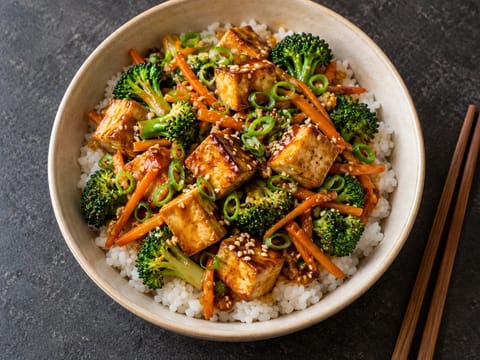
For our teriyaki tofu bowl, sushi rice is rinsed, cooked covered and rested before vinegar and sugar are folded through it. The grains should hold together comfortably as you eat; they do not need to separate like pilaf.
Fold the seasoning through gently after the rice has rested, then keep it covered while you cook the tofu and sauce. The rice brings its own flavour and texture to the bowl, so leave time for this small finishing job as well as the topping.
Let the packet and the dish agree
Choose a recipe for the rice you have. Brown rice needs a different liquid allowance and cooking time from white rice, while risotto rice and sushi rice are chosen for different finishes. Swapping the packet without changing the method can leave you chasing a texture the recipe was never designed to give.
It also helps to notice what else the liquid is doing. Stock in the pilav cooks vermicelli as well as rice; milk in the pudding becomes part of the dessert. Neither makes a useful universal water rule for a saucepan of plain rice.
Make a plan for what is left
If there will be leftovers, set aside small portions for prompt cooling rather than leaving rice to cool slowly in its cooking pan. Following Food Standards Agency guidance, cool it ideally within one hour, refrigerate and use within 24 hours. Reheat only once, until steaming hot throughout.