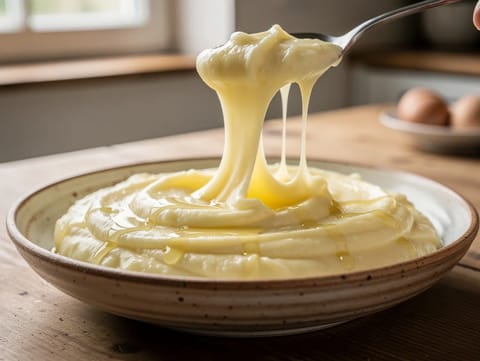
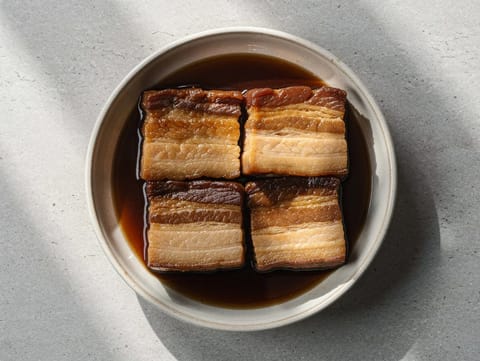
A simmer has gentle movement with bubbles breaking the surface intermittently. A rolling boil is more vigorous, with frequent bubbles and movement across much of the pan. The useful distinction is what the liquid is doing, not a fixed position on the hob dial.
When a gentle simmer helps
Soups, sauces and braises often need restrained bubbling. Gentle movement can cook food without tossing delicate pieces around. Watch the liquid after adding ingredients or replacing a lid, because either can change its behaviour.
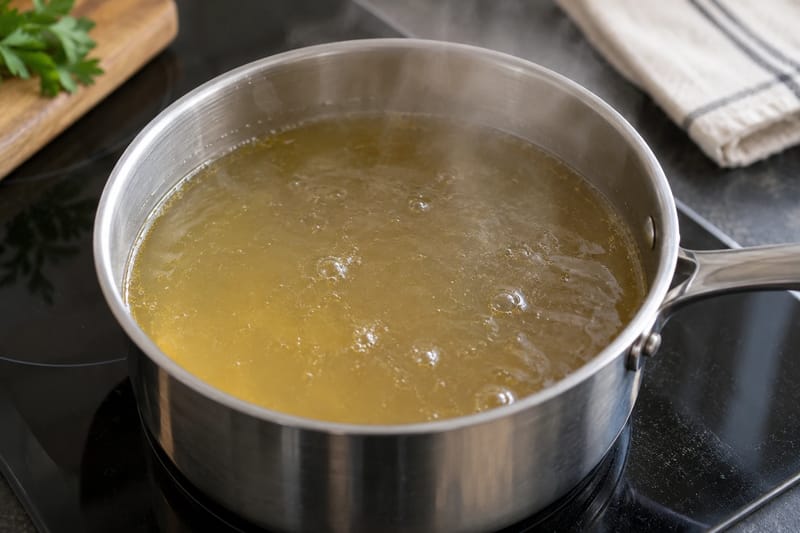
When the recipe calls for a boil
A boil may be used to heat liquid quickly or cook ingredients such as pasta. Follow the particular recipe: boiling is not automatically better or faster for every food, and it can reduce liquid more quickly than intended.
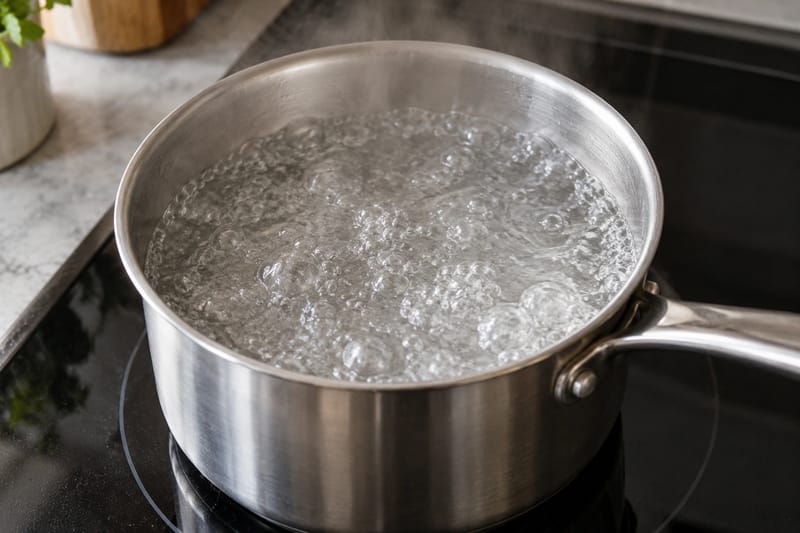
How to reduce a boil to a simmer
- Lower the heat when the liquid reaches a boil. Give the pan a moment to respond before adjusting again.
- If a heavy pan keeps boiling hard, move it briefly off the heat, then return it at a lower setting.
- Check several parts of the surface. Bubbles only at one hot spot may not represent the whole pan.
- If the liquid becomes still for a long time when a simmer is needed, increase the heat a little and check again.
Bubbling is not a doneness test
A simmering sauce does not prove that meat in it is safely cooked. Check the food’s required endpoint separately. Nor does liquid movement alone show whether beans, grains or tough meat have reached the desired tenderness.