Plain flour often comes out for cakes, but some of its most useful work happens at dinner. A light dusting helps build a crisp coating, a measured spoonful gives a sauce body, and a little cooked into vegetables can bring a soup together. The trick is to notice which job you are asking it to do before reaching for the bag.
Start lightly when you want a crisp coating
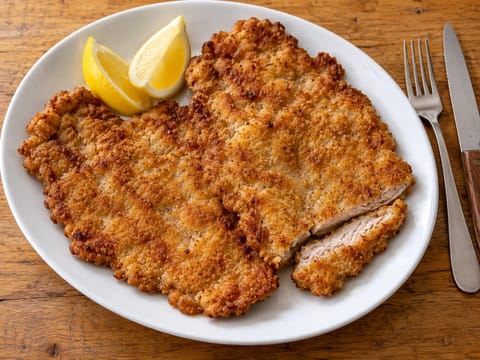
Our cotoletta alla Milanese recipe builds a crisp coating on veal cutlets with flour, beaten egg and breadcrumbs, in that order. Pat the cutlets dry, coat them lightly and shake off the excess before dipping them in the egg. You want an even surface for the next layer to meet.
Set the bowls out in order and have a plate ready for the breaded cutlets. A little organisation makes the job less messy, and there is no need to use every scrap of flour left in the bowl. Discard any flour that has touched raw meat; it should not go back into the bag.
Build the creamy sauce before adding the cheese
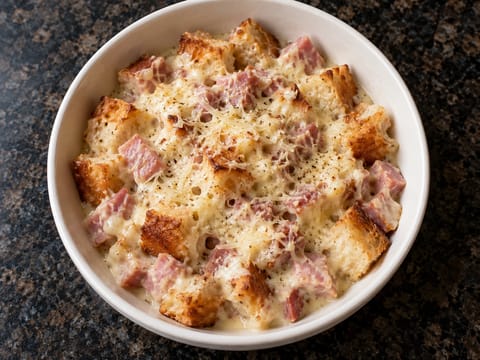
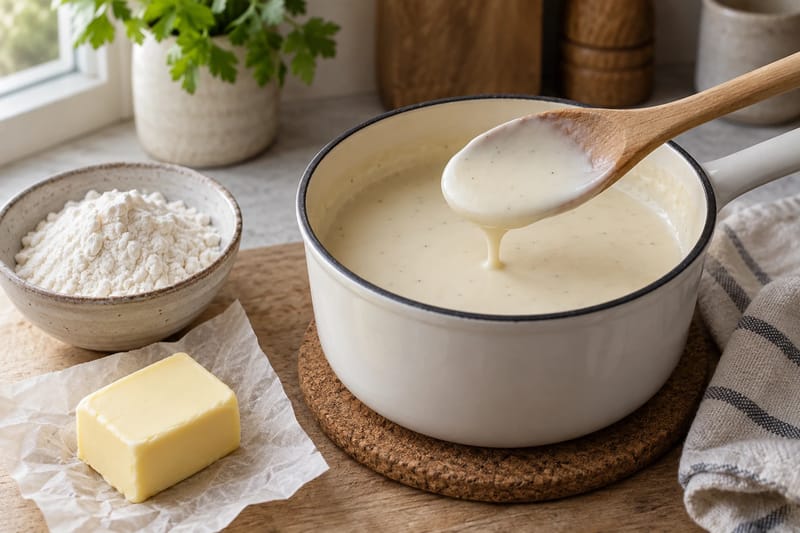
For a creamy supper, try the croque bowl with ham and Gruyère béchamel. Here, flour is whisked into melted butter to form a roux, a thick paste that becomes the base of the sauce. That paste is expected, so do not be tempted to add extra butter just because it looks stiff.
Whisk in the milk gradually, working the mixture smooth as you go. Then give it the cooking time the recipe asks for so the sauce can thicken. The Gruyère goes in off the heat once the flour-and-milk base is ready.
This is also why a spoonful of dry flour is a poor last-minute fix for a thin finished sauce. It is likely to leave lumps and an uncooked taste. Check that the sauce has cooked for long enough and that the liquid quantity is right before deciding it needs more thickening.
Let a little flour bring a soup together
For a lighter finish than the cheese sauce, try New England clam chowder. The flour joins onion and celery already softened in bacon fat and butter. It coats the vegetables before stock is stirred in gradually, then the broth thickens gently as the potatoes cook. Cream is added later.
The result should feel like a spoonable soup, so there is no reason to chase the thickness of the croque bowl’s cheese sauce. The method is related, but the finished dish tells you how much body you are looking for.
Decide what needs to stay the same
For a coating, what matters is the thin layer left on the food. For a sauce or soup, the amount of flour works with the liquid to shape the whole dish. Once you see that distinction, the recipe’s quantities and order make more sense.
These dishes use plain wheat flour. Self-raising flour brings raising agents with it, while cornflour thickens and needs handling differently. If another flour or starch is what you have, choose a recipe that uses it for the same job. A small change to the bag can ask for a bigger change to the method.