A long ingredient list can look like a long evening of cooking, especially when you are seeing the dish for the first time. Often, several entries are simply spices measured into the same stage of the method. Before putting the recipe aside, read for the jobs involved: chopping, heating, stirring and bringing the parts together.
Separate the shopping list from the preparation
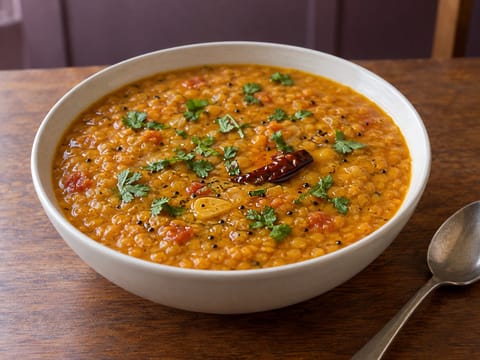
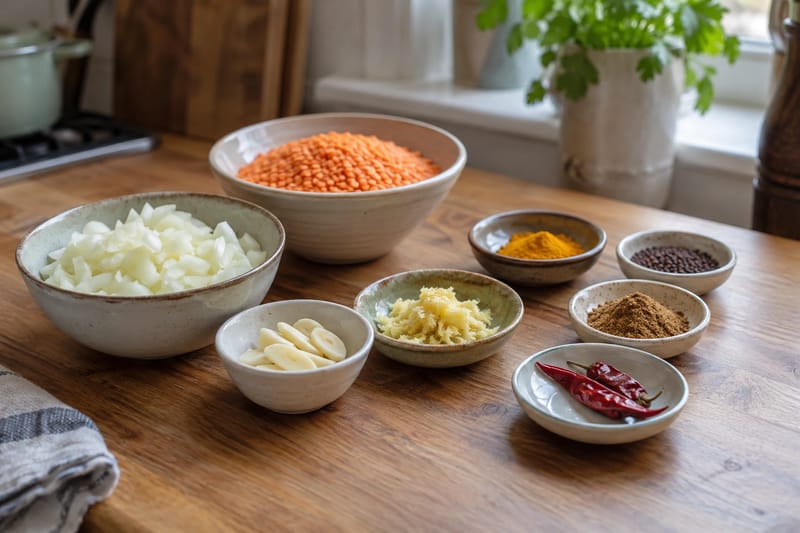
Take our recipe for masoor dal tadka. Its list includes turmeric, mustard seeds, cumin, dried chilli and salt, alongside the lentils and fresh ingredients. The spices need measuring, but each entry does not mean another round of peeling or chopping. Chopping the onion, grating the ginger and slicing the garlic are the jobs to allow time for.
The method also gives those ingredients an order. The lentils simmer with tomato and turmeric; the tadka begins with mustard seeds and chilli, followed by onion, then garlic, ginger and cumin. Group prepared ingredients by when they enter the pan, keeping them separate where the timings differ. A long list becomes a sequence you can follow.
A short list can still need close attention
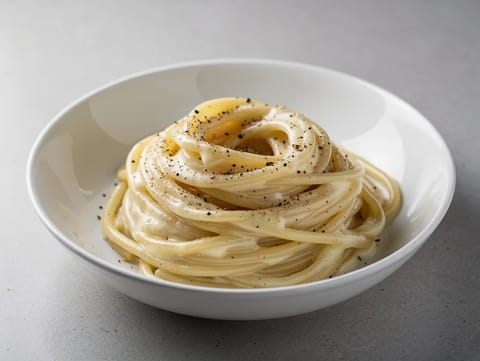
Now compare that with cacio e pepe. The list is much shorter: spaghetti, Pecorino Romano, black pepper, olive oil and salt. Yet the cheese needs fine grating and mixing with pasta water, the pepper needs a brief warming, and the sauce comes together with the pan off the heat. A few ingredients still ask for careful handling.
The useful preparation is different from the dal’s chopping and spice measuring. Have the grated cheese, pepper and a way to reserve the pasta water ready before the final toss. You are making that short finishing stage easier to manage, rather than trying to make the ingredient list shorter.
Look for the moments when jobs meet
A recipe with several components may feel straightforward until they all need finishing together. Read for a sauce that must be kept warm, a topping fried separately or a bowl of cooked ingredients waiting to be combined. Those are the points where a little preparation makes the biggest difference.
The dal offers a useful example: the lentils simmer while you make the tadka in another pan. Have the tadka ingredients ready before heating the ghee, then keep an eye on the lentils as you work. You are coordinating two stages, rather than starting every job from scratch at once.
Choose the work that suits you
When you read a recipe, notice which tasks are familiar and which will need your attention. Measuring a few spices may be easy for you, while finely chopping several vegetables takes longer. Another cook may feel the opposite, or prefer preparation that can be done before the hob is switched on.
Use the ingredient list to plan the shopping and measuring. Use the method to plan the preparation, pan space and finishing. That gives you a much clearer idea of the meal than deciding that fewer ingredients must mean easier cooking.