
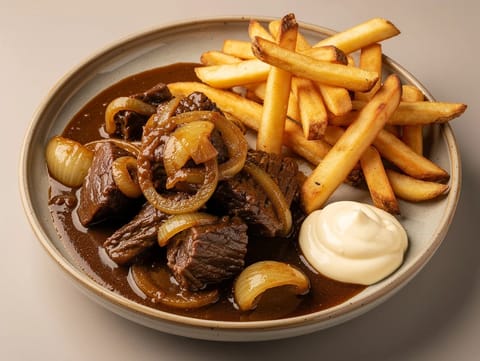
Stoofvlees met Friet (Belgian Beef Stew with Chips)
Belgian beef stew with dark beer, served with chips

A stew earns its place at the table because it carries its own sauce. The cooking method is the point: gentle heat over time turns tougher cuts and firm vegetables tender, and gives you a broth that becomes glossy and cohesive rather than thin. That makes stews naturally guest-friendly, too. You can focus on the bowl, the bread and the finishing touches, instead of juggling last-minute pans.
A stew is a dish of pieces cooked in liquid until both the main ingredients and the cooking liquid are ready to eat together. It is usually thicker than a soup, but it does not have to be heavy or opaque. What matters is the relationship between solids and sauce: the liquid is seasoned, reduced or lightly thickened so it clings to the spoon and coats the ingredients. Stews can be meat- or vegetable-led, and they can be made on the hob, in the oven, or in an electric cooker. They are distinct from braises mainly by scale and serving style: a braise often centres on one large piece, while a stew is built from bite-sized pieces meant to be shared out evenly.
Belgian beef stew with dark beer, served with chips
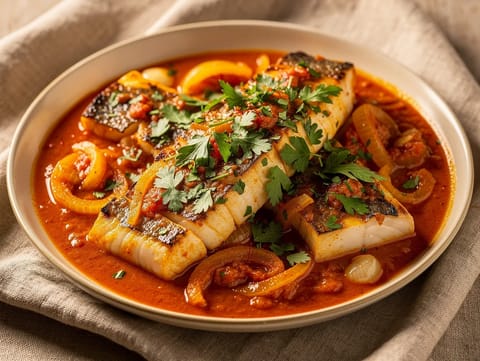
Spanish monkfish simmered in tomato, white wine and saffron sauce
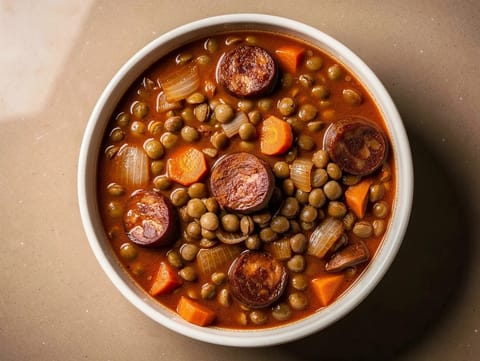
Spanish lentil stew simmered with chorizo, tomato and smoked paprika
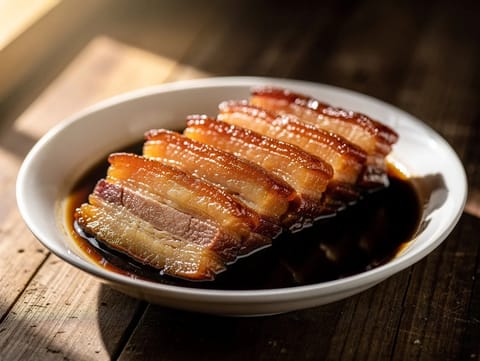
Hangzhou dongpo pork belly braised with Shaoxing wine and soy sauces
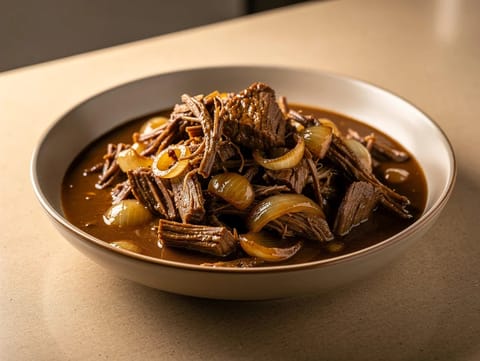
Dutch slow-braised beef that pulls into tender strands
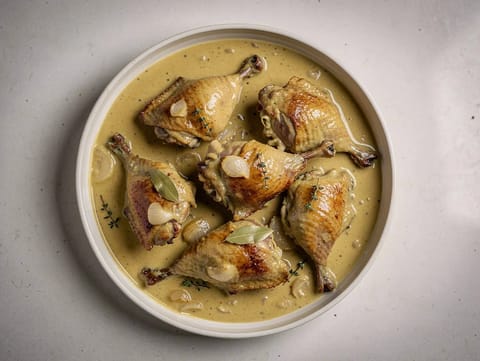
French rabbit stew with Dijon mustard and double cream
Some stews start with browning. Searing meat or vegetables before adding liquid builds a deeper, roasted base and gives the sauce a darker colour. Others begin with sweating aromatics, then simmering gently for a cleaner, lighter profile where herbs and spices stay more prominent. The cooking vessel matters: a wide pot encourages evaporation and a naturally thicker sauce; a tight lid keeps things brothy and can help delicate ingredients stay intact. Thickening can come from reduction alone, from starchy ingredients breaking down, or from a small amount of flour or other starch added early. Each route changes the texture: reduction gives gloss, starch gives body, and flour can make the sauce feel more velvety.
Slow-braised beef brisket with soy sauces, Shaoxing wine, ginger and star anise
Mexican-style pinto beans cooked until rich with bacon, sausage, cumin and bay
Vegetable stew of leeks, carrots, celery and potatoes finished with double cream
Belgian-style creamy salmon stew finished with egg yolk, double cream and lemon
Slow-braised Dutch game stew with red wine gravy, cranberries, juniper and bay
Fried floured potatoes simmered with onion, garlic and saffron-scented stock
German rinderrouladen are braised beef rolls with bacon, onion and dill pickles
Veal blanquette simmered with carrots and leeks, finished with tarragon and lemon
Tripe stew simmered with soffritto vegetables, tomato and white wine, finished with Parmesan
Tender lamb with lettuce and spring onions in a silky egg and lemon broth
Tender pork braised in sweet soy with spices and finished with lime
Rich hachee beef stew with lots of onions, bay leaves, cloves and stock
Because the sauce is part of the dish, think about what will catch it. Bread, rice, potatoes, polenta and noodles all do the job, but they change the experience: bread keeps the stew centre-stage; grains and mash turn it into a complete bowl. A bright finish helps, especially with long-cooked flavours. That might be a squeeze of citrus, a spoon of yoghurt, a handful of herbs, or something pickled on the side. If you are serving guests, keep the garnish separate so everyone can adjust. Stews also benefit from a short rest off the heat before serving, when fat rises and flavours settle, making the sauce taste more integrated.
If you want to steer the flavour profile, browse by Cuisine to see how different regions build stews with their own aromatics, spices and staples. For a more technical choice, Cooking method helps you compare stovetop simmering with oven cooking or other approaches that change evaporation, tenderness and sauce texture.
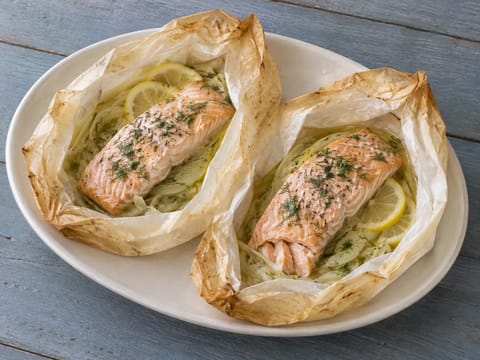
Salmon baked in parchment with fennel, lemon and dill
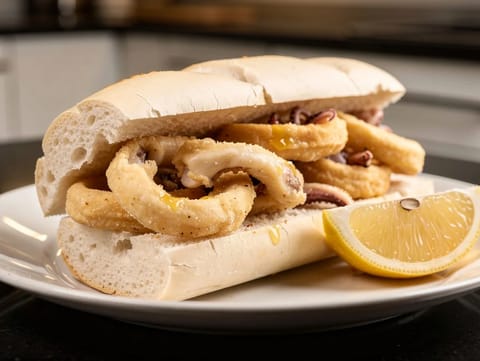
Crusty roll filled with flour-coated fried squid and lemon
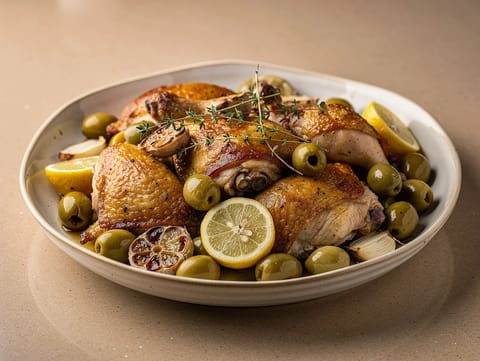
Chicken braised with lemon, green olives and thyme
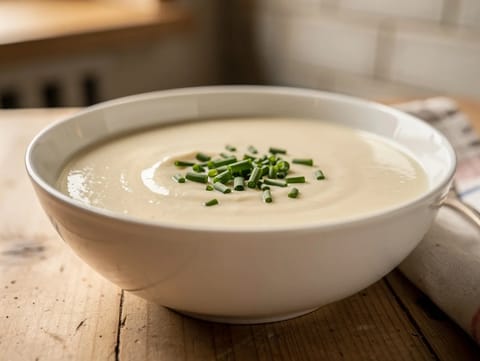
Chilled leek and potato soup blended with double cream
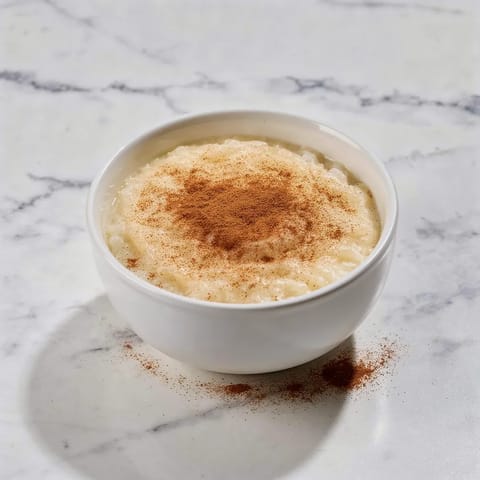
Greek rice pudding with cinnamon, vanilla and lemon zest
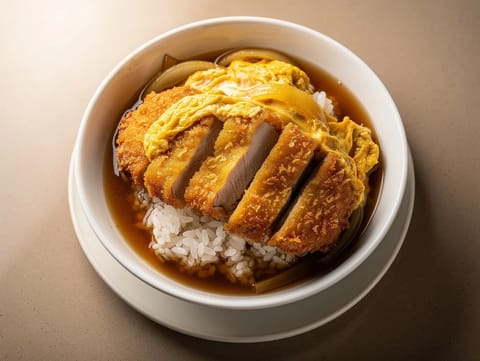
Breaded pork cutlet and lightly set egg over rice
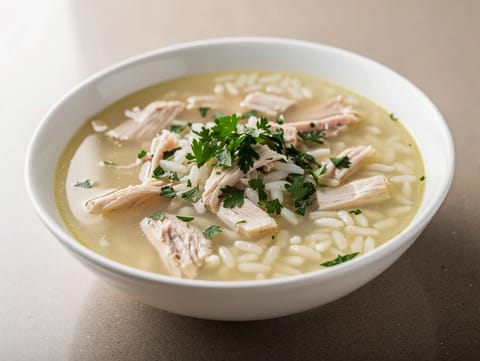
Greek chicken and rice soup thickened with egg and lemon
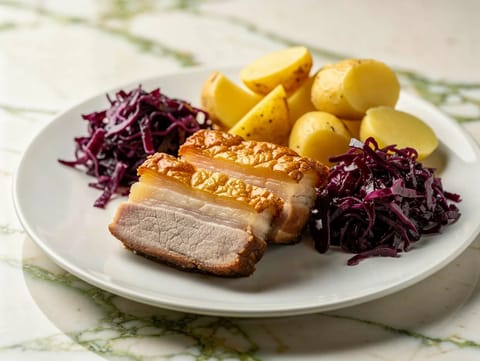
Norwegian roast pork belly with crisp crackling
Not necessarily. Many stews are spoon-coating rather than heavily thickened. The key is that the liquid is meant to be eaten as part of the dish, not just as a cooking medium.
Soups are typically more liquid-forward, often served as a broth or purée. Stews usually have larger pieces and a sauce that clings to the ingredients, with a higher ratio of solids to liquid.
No. Browning adds roasted depth and colour, but a stew can be built around gentle simmering for a cleaner taste where herbs, spices or vegetables lead.
It often comes down to evaporation and starch. A tight lid, a narrow pot, or adding watery vegetables late can keep the liquid thin. Simmering uncovered for part of the cook, or letting starchy ingredients break down, can add body.
Some cuts need enough time at a gentle heat for collagen to convert and soften. If the heat is too high, the meat fibres can tighten and dry before the connective tissue has had time to relax.
Yes. Body can come from beans, lentils, potatoes, squash or other ingredients that naturally thicken the liquid as they cook, alongside a well-seasoned base.
When you are deciding between stews, picture the final spoonful: glossy and reduced, brothy and herb-led, or softly thickened and velvety. That one choice will guide the method, the pot and what you serve alongside.
