A bunch of basil and a jar of dried oregano can both be useful, but they are rarely doing quite the same job. Sometimes herbs make up the substance of a dish; sometimes they season it quietly or add a fresh finish. Look for that job before deciding which form to reach for.
When the leaves are the sauce
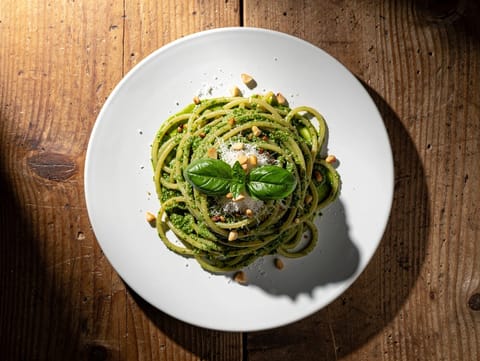
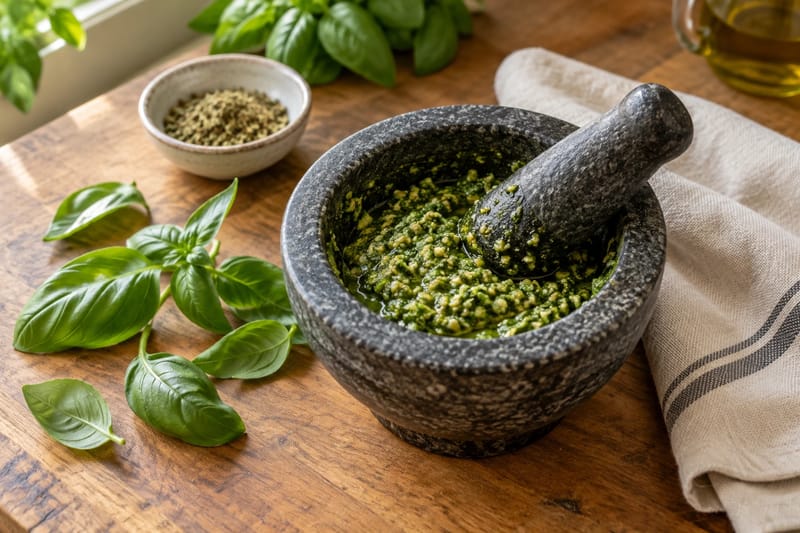
Our basil pesto pasta depends on fresh leaves for more than flavour. The basil is ground with nuts and garlic, then worked together with cheese and olive oil. Those leaves provide much of the pesto’s volume and texture, so dried basil cannot take their place by a simple spoonful calculation.
The way the sauce meets the pasta matters too. The pesto is tossed with hot pasta and a little cooking water, rather than boiled in a pan. That is enough to bring the dish together while keeping the character of the fresh leaf sauce.
When a little seasoning is enough
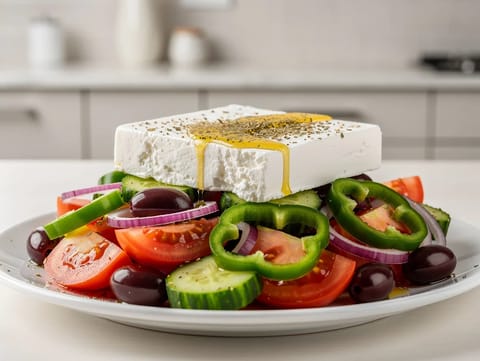
Dried oregano has a smaller but distinctive role in horiatiki, Greek village salad. The tomatoes, cucumber, olives and feta provide the substance; oregano is scattered over the feta to season it. It belongs in this fresh, uncooked dish even though it comes from a jar.
The recipe also suggests fresh oregano for a brighter herbal note. For a small seasoning swap like this, dried herbs usually need less volume than fresh, but their strength depends on the herb and how it has been stored. Start with the recipe’s seasoning and taste; the decision is about the herb’s job, not simply whether the dish is hot or cold.
Fresh herbs can belong at different stages
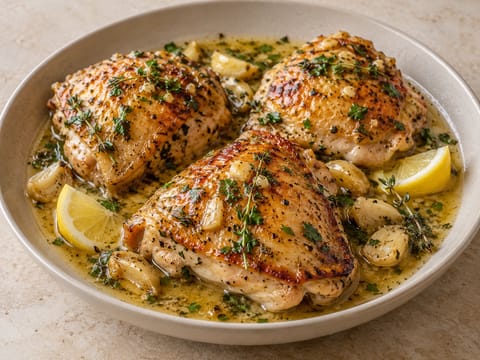
The recipe for garlic and herb chicken bake uses fresh thyme during roasting and fresh parsley after the pan sauce comes off the heat. The thyme has time to season the dish as it cooks; the parsley brings its leafy character to the finish.
That is why “fresh means last” is too simple. Sturdy thyme sprigs and tender chopped parsley are not interchangeable. Prepare the parsley near serving time and add it where the method calls for it, while letting the thyme take its place in the roasting dish.
Make the choice before reaching for a ratio
If the herbs make up most of a sauce, use the form the recipe was built around. If they are a small seasoning, look at how long they will cook and how strong they taste. For a final scattering, decide whether the dish needs the texture and aroma of fresh leaves.