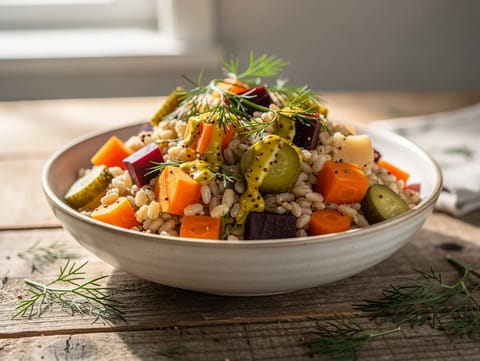
Fresh herbs are easier to cut when their leaves are dry. Prepare them before heating the pan if they belong in the cooking, or close to serving if they are a delicate garnish. Stop at the texture the dish needs rather than chopping every herb into a paste.
Step by step
Wash and dry the herbs
Rinse away soil under cool running water, then dry well in a salad spinner or with a clean towel. Wet leaves cling together and make it harder to see how finely you are cutting.
Choose which stems to keep
Remove tough, woody stalks from herbs such as rosemary and thyme. Tender parsley or coriander stems can be finely chopped if the recipe uses them; keep them separate from delicate leaves when they need longer cooking.
Cut for the intended texture
Gather parsley or coriander into a loose pile and slice through it, then turn the pile and chop again if needed. For basil or mint ribbons, stack a few leaves, roll them gently and slice across the roll. Line up chives and cut across them with curled guiding fingertips.
Stop while the pieces look fresh
Regather with a scraper, not your fingers against the knife edge. Stop when the pieces are evenly cut and add them at the recipe’s specified stage.
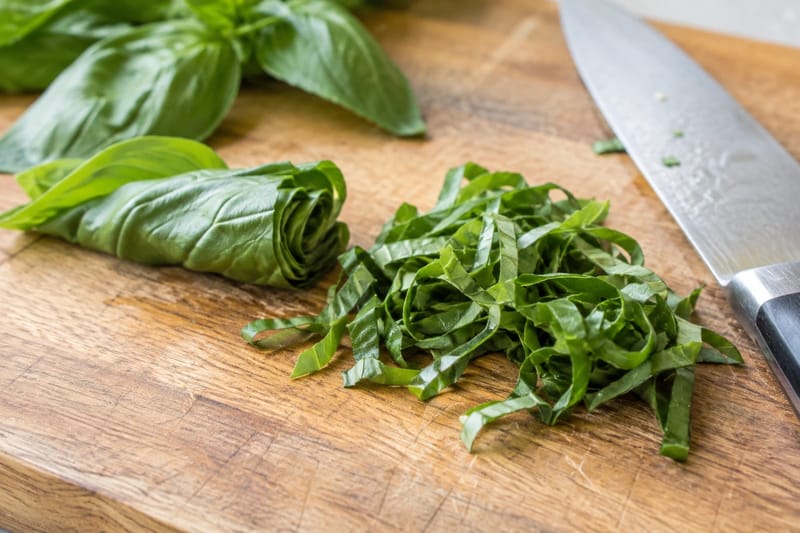
Dark, crushed leaves
A blunt blade or repeated heavy chopping can bruise tender herbs. Use a sharp knife and fewer clean cuts. Darkened basil is mainly an appearance issue, but slimy or spoiled herbs should be discarded. Keep prepared herbs chilled if you are not using them promptly.