Sometimes dinner starts with the tomatoes that smell especially good at the shop, or the first bunch of asparagus you want to bring home. At other times, the weather simply makes a warm bowl or a chilled lunch appealing. Seasonal recipe ideas are most useful when they connect those ingredients and appetites to something you will enjoy cooking.
Let a good ingredient lead
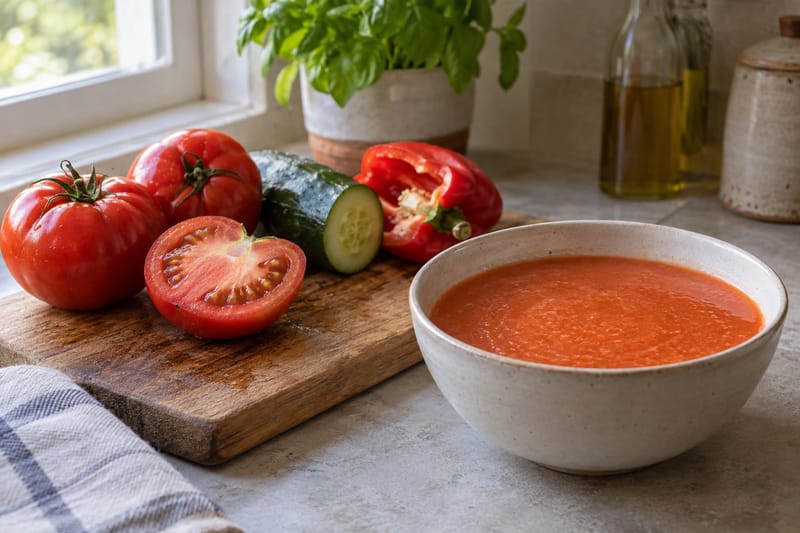
When the tomatoes are very ripe, our gazpacho gives them a starring role. Cucumber, pepper, garlic and sherry vinegar join them in the blender, while bread and olive oil give the soup body.
The cold finish matters too. Gazpacho needs time in the fridge before serving, so it fits well when you can prepare lunch or a starter ahead. A summery dish can involve very little hob time and still need more than a few minutes before it is ready to eat.
Keep the ingredient’s place in the method
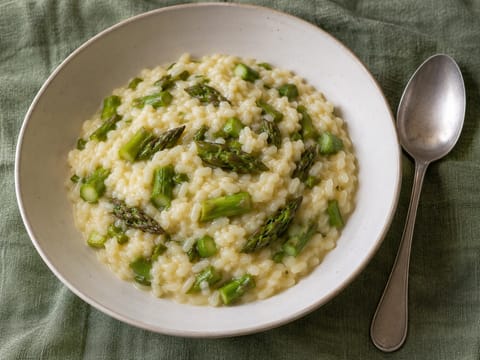
Good asparagus offers a different starting point. In asparagus risotto, it joins the rice towards the end of cooking, with the tips added later if kept separate. That timing lets the rice develop its creamy texture while the asparagus stays tender and distinct.
Choosing a seasonal ingredient does not change the rest of the meal’s rhythm. The risotto still needs hot stock, frequent stirring and a freshly finished serving. Choose it for an evening when you want to spend time at the hob, rather than expecting every spring dish to be quick or hands-off.
Leave room for the meals you want all year
A bowl of green lentil soup with Dijon mustard makes sense whenever you want something warming. Lentils, onion, carrot, celery and stock form the base; mustard stirred in near the end brings a little sharpness. It is a useful combination of familiar vegetables and cupboard ingredients, without needing one particularly special piece of produce.
That flexibility is useful when fresh produce is unappealing, plans change or you would rather cook from what is already in the kitchen. A cupboard-based dish and a seasonal ingredient can also share a meal. The season can suggest where to begin without deciding every part of dinner.
Shop for your place, then cook for your day
Look at what is good where you shop. Weather, growing conditions and the place you live affect what is available; a recipe does not stop being useful because a month has changed. Preserved and frozen ingredients also give you options, provided you use the form the method expects or follow a suitable substitution.
Then think about how you want to eat: hot or chilled, freshly finished or prepared ahead. Check the ingredient that matters most and the stage that takes the longest. Together, those two details turn a seasonal idea into a meal that fits today.