The same bag of carrots can become a silky soup, a salad with distinct slices or a tray of golden batons. The first decision happens on the chopping board: the cut should help you reach the texture you want to eat. Keep that finished dish in mind when you pick up the knife and again when you check the pan.
For a smooth soup, aim for evenly tender pieces
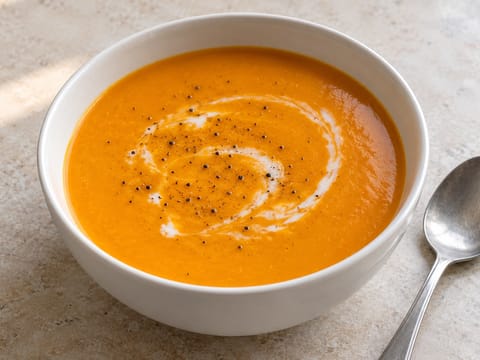
Our spiced carrot soup starts with carrots sliced into even rounds, then simmered until very tender before blending. Neat decorative cuts would disappear, but reasonably even pieces still matter because they cook at a similar rate.
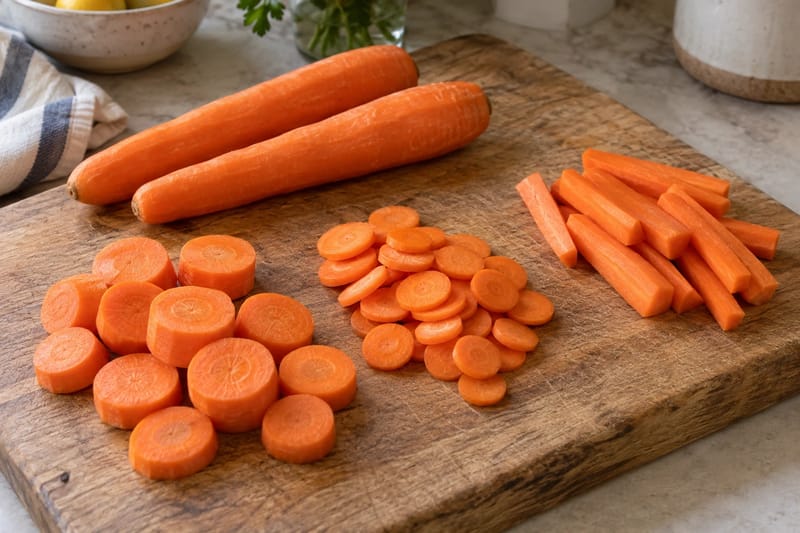
A carrot often widens considerably at one end. Split that thicker part before slicing if it will otherwise leave much larger pieces among the small ones. You are looking for a practical, even cook, not identical little discs.
Check tenderness before reaching for the blender. It can break up pieces, but undercooked carrot can leave a coarse texture where you wanted a smooth soup. Give the vegetables time to soften fully in the stock.
For salad, leave enough structure to toss
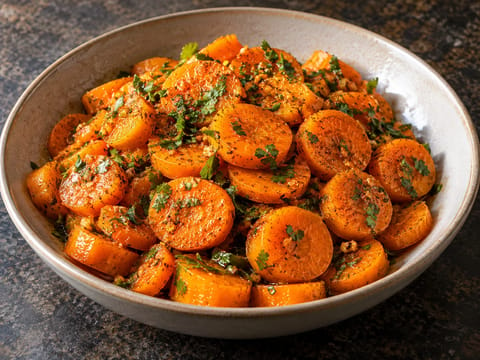
A bowl of Moroccan carrot salad needs the carrots to hold their shape. The coins are about 5 mm thick and cooked only until just tender, ready to meet the lemon and cumin dressing. The soup’s very soft endpoint would take them too far.
A knife should slide into a slice easily while the slice stays intact. Drain the carrots well and let their surface steam dry before dressing them warm. That keeps water from diluting the dressing and lets the finished salad retain its distinct pieces.
For golden edges, give the batons room
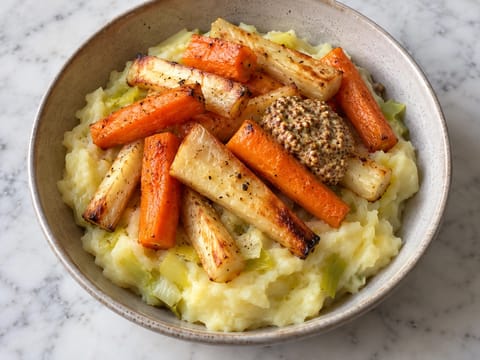
For roast vegetables with mash, try the roasted vegetable stoemp bowl. Carrots and parsnips are cut into chunky batons while the potatoes cook separately for the mash. Similar sizes help you roast the pieces together without thin slivers darkening long before the thicker centres soften.
Spread the batons out on the tray and turn them as directed. The goal is both a coloured surface and a tender centre. If you cut the pieces much thinner than the recipe suggests, begin checking earlier rather than carrying over its cooking time unchanged.
Decide what you want the vegetable to do
Let the carrot disappear into a blended soup, stay recognisable in a dressed salad or develop browned surfaces on a roasting tray. Each result asks for a different combination of cut and cooking endpoint.
Once you have chosen that result, the checks become clearer. For soup, test softness all the way through; for salad, test tenderness without collapse; for roasting, check the middle as well as the colour. The knife starts the texture, and the cooking finishes it.