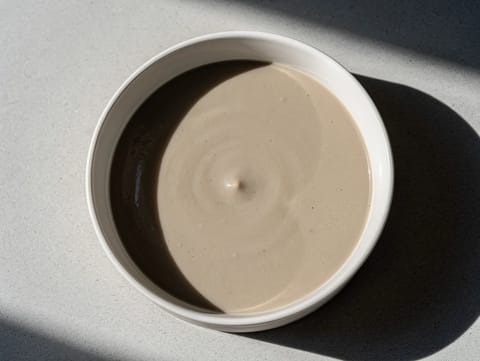
A smooth soup starts with ingredients cooked tender enough to blend. For hot soup, the blender and container must be designed for the job. Sealed personal blending cups are unsuitable for hot liquids because pressure can build inside them.
Step by step
Check ingredients and equipment
Remove bones, bay leaves and other items that should not be blended. Check the blender manual for hot-liquid use and its maximum fill. If the equipment is unsuitable, cool the soup using safe shallow-portion cooling before blending.
For an immersion blender, submerge before starting
Take the pot off the heat and set it securely. Fit the approved attachment, place the blade guard below the liquid surface and start gently. Keep it submerged while moving through the soup, and switch off before lifting it out.
For a jug blender, follow its hot-liquid method
Work in batches within the manufacturer’s hot-liquid limit. Fit the lid and vent exactly as instructed; do not improvise by sealing a steam vent with a towel. Start at the recommended low speed and increase only as directed.
Check smoothness and adjust
Stop the machine before opening or scraping. Add a little appropriate liquid if the soup is too thick to circulate. Return to the pan for the recipe’s final heating and seasoning, handling the hot purée carefully.

Splashes and grainy texture
Blending longer cannot easily soften undercooked fibrous vegetables. Cook them until tender first. If an immersion blender splashes, use a deeper container or a smaller batch and keep its head submerged. Unplug or disconnect the machine before clearing a blade, and never put fingers or utensils near moving blades.