An unfamiliar dish can feel much more approachable when you recognise part of the cooking. Softening an onion, keeping a gentle simmer or stirring a sauce gives you somewhere familiar to begin. From there, the interesting work is noticing what the new recipe does with that skill: which ingredients come first, what texture you are aiming for and how the dish is finished.
Begin with a stage you recognise
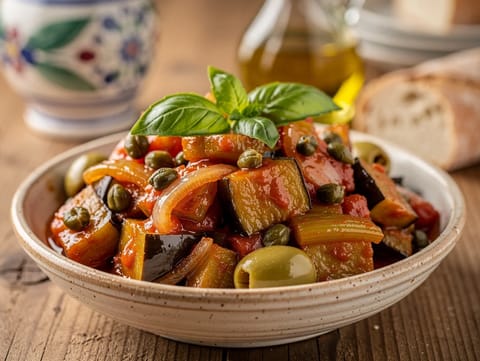
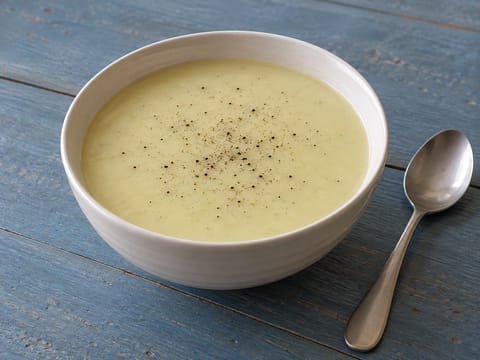
If you are comfortable keeping a pan at a gentle simmer, you have a useful starting point for two of our recipes: Sicilian caponata and leek and potato soup. In the caponata, browned aubergine returns to a tomato mixture with vinegar, olives and capers. For the soup, potatoes simmer with softened leeks in stock before blending. The familiar heat control serves two quite different dishes.
The desired finish gives you the next clue. Caponata keeps tender pieces of aubergine coated in a glossy sweet-sour sauce; the soup is blended smooth and finished with cream over low heat. Read those texture cues before starting so that you know what the simmer is meant to achieve.
Notice what the lid is doing
The same attention to a quiet simmer helps with chicken tagine with preserved lemon. The chicken cooks gently under a lid in a base of softened onions and spices. Preserved lemon peel and olives arrive later, when the pot is uncovered so the sauce can reduce a little. Knowing when to remove the lid is the detail that shapes the finish.
Look for that change as you read a new recipe. A covered cooking stage retains liquid, while an uncovered finish lets more moisture escape. Follow the sequence and watch the sauce, rather than assuming that every simmering dish should end with the same amount of liquid.
Pay attention to what happens alongside the base
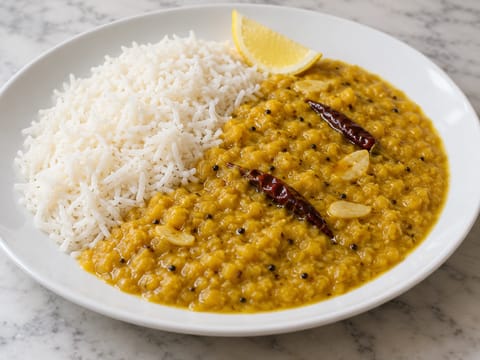
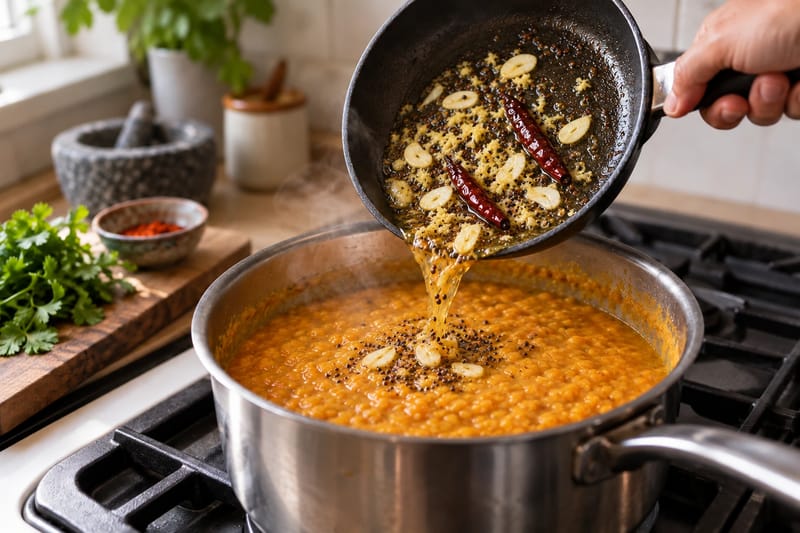
Our tarka dal with basmati rice gives familiar simmering another finish. The red lentils cook with turmeric and ground cumin while a small pan heats the ghee for the tarka. Mustard seeds and dried chilli go in first, followed by sliced garlic and grated ginger. That hot tempering is poured over the creamy lentils near the end.
If simmering lentils feels familiar, the tarka may be the part worth reading more closely. Prepare its ingredients before heating the ghee, keep their order clear and watch the garlic so it stays fragrant without browning. You can give that brief stage your attention while the cooked rice waits covered for serving.
Give yourself one new thing to learn
Choose a new flavour combination with a method you enjoy, or practise a new method with ingredients you know. Read the recipe for the points that deserve attention: the heat when spices meet fat, the moment liquid is added, a lid left on or off, and the texture at serving.
Those details let you explore confidently without assuming that dishes from the same cuisine all cook alike. Start with what feels familiar, then give the recipe’s distinctive steps the time they need. That is often enough to make an unfamiliar dinner feel within reach.