There is a particular appeal to dinner bubbling away in one pot, with the flavours coming together and no separate sauce to manage. The preparation can still vary widely: one dish needs a boardful of chopped vegetables, another finishes with a blender. Decide which kind of simplicity you want, then follow the food through the method.
One pot can hold several stages of cooking
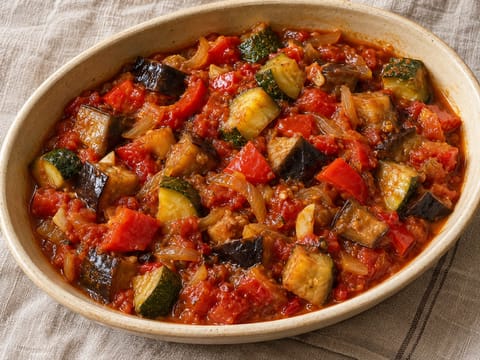
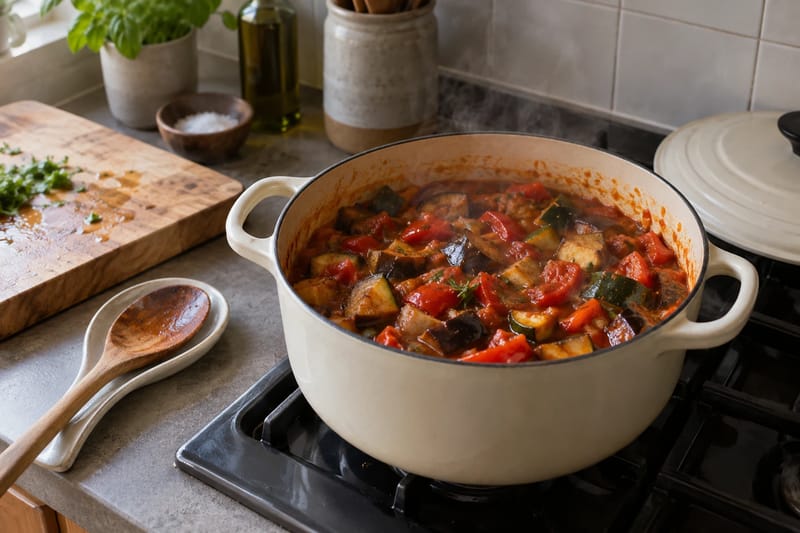
Our ratatouille builds up in stages. The onion softens first, followed by garlic and pepper, then aubergine and courgette. Tomatoes and herbs turn it into a gentle simmer. The same casserole carries the dish through these stages, giving each addition time to cook before the next arrives.
The main work happens before and during those additions: peeling, chopping and stirring several vegetables. Once everything is simmering, the kitchen feels different from the busy first few minutes. It is a good fit when you want one main cooking vessel and are happy to spend some time at the board.
The finish can add another job
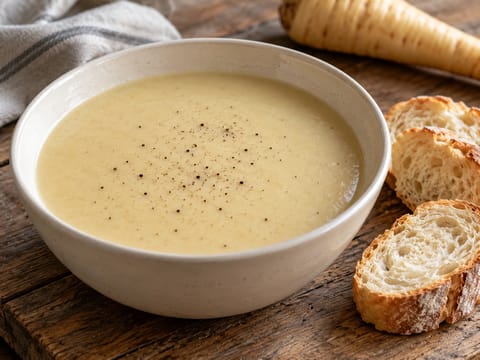
For a smooth bowl of spiced parsnip soup, the saucepan is only part of the plan. The onion and parsnips soften in the pan before an immersion blender turns them into a smooth base for the cream. The soup stays in one vessel, yet the blender still becomes part of the washing-up.
Bring the blender out before the soup is ready, check its instructions for hot liquids and clear a place to put it afterwards. If a recipe finishes with blending, straining or a separately mixed topping, count that job when deciding how simple the evening will feel.
Count heated pans when hob space matters
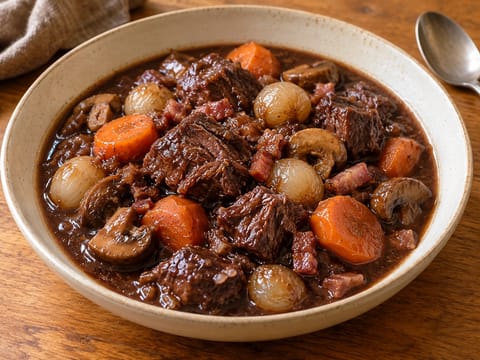
If your real constraint is a small hob, distinguish another cooking pan from a bowl or chopping board. In boeuf bourguignon, the beef simmers in a casserole and a separate frying pan browns the mushrooms. They join the stew near the end, so the finished bowl does not reveal how much pan space the method needs.
Read for a topping fried separately, a side boiled in another saucepan or a component kept warm. Then check the main vessel’s capacity. It needs room for the full batch and for stirring; if it moves from hob to oven, the pan, handles and lid all need to be suitable.
Keep the accompaniment in the same plan
Rice, mash or a separately cooked vegetable can add a pan to an otherwise simple dinner. Read the serving suggestion before deciding how much work the meal involves, and choose an accompaniment that fits the space and time you have.
For fewer jobs at the end, prepare what you can before the main pot goes on and clear the board as the dish cooks. The useful promise of one-pot cooking is a manageable sequence. A few minutes spent reading that sequence will tell you whether it is the kind of evening you had in mind.