
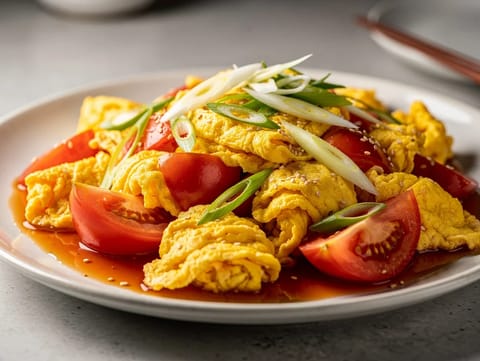
Tomato and Egg Stir-Fry (Classic Chinese Home-Style Dish)
Soft eggs stir-fried with juicy tomatoes and spring onions

Umami is the savoury, mouth-filling taste that makes food feel deeply satisfying and long-lasting. It is not “salty” or “meaty” as such, though it often travels with both. You notice it as depth and roundness, especially in broths, slow-cooked sauces, roasted vegetables and dishes that use fermented or aged ingredients. Umami can be subtle, but it changes the overall shape of a recipe, making flavours seem more complete and less sharp at the edges.
Umami comes from naturally occurring compounds (notably glutamates and nucleotides) that are concentrated by ageing, fermentation, drying, browning and long cooking. That is why ingredients such as tomatoes, mushrooms, aged cheeses, cured meats, seaweeds and fermented sauces are often described as “savoury”. Technique matters as much as ingredients. A well-browned base, a reduced stock, or a long-simmered sauce can build umami even without strongly flavoured additions, because water evaporates and flavours concentrate. Umami is also cumulative: small amounts from several sources can add up to a noticeable depth without any single ingredient standing out.
Soft eggs stir-fried with juicy tomatoes and spring onions
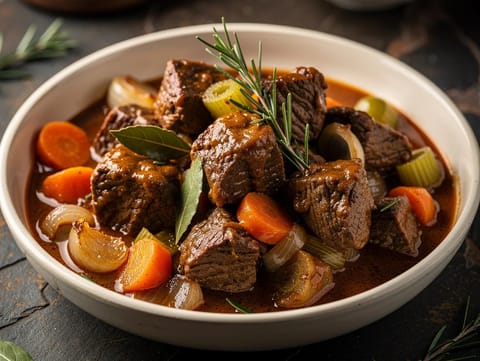
Italian beef stew simmered with tomato, red wine and herbs
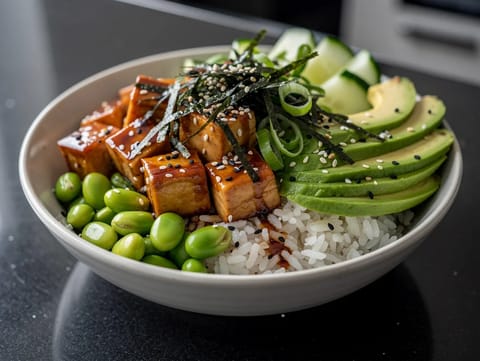
Vegetarian poke bowl with tofu, sushi rice and vegetables.
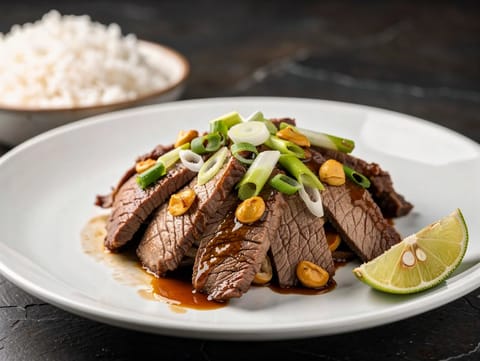
Thai beef stir-fry coated in oyster sauce and light soy
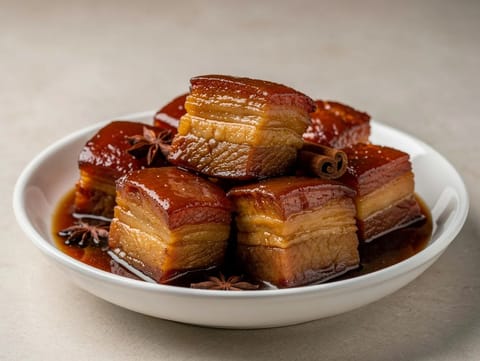
Tender red-braised pork belly in a glossy soy sauce
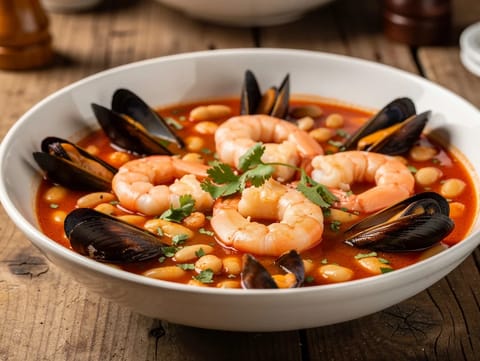
Seafood and white bean stew in a tomato and wine broth
Umami likes contrast. Acidity (wine, citrus, vinegar, tomatoes used for their sharpness) can stop savoury dishes tasting heavy, while bitterness from greens or char can add definition. Heat and spice can ride on an umami base without tasting thin, which is why chilli pastes and peppery sauces often feel fuller when paired with fermented or slow-cooked elements. Texture plays a role too: a glossy sauce, a silky soup, or a juicy roasted vegetable tends to carry savoury flavour more evenly than something very dry. If a dish tastes flat, it may need brightness or aroma rather than more umami.
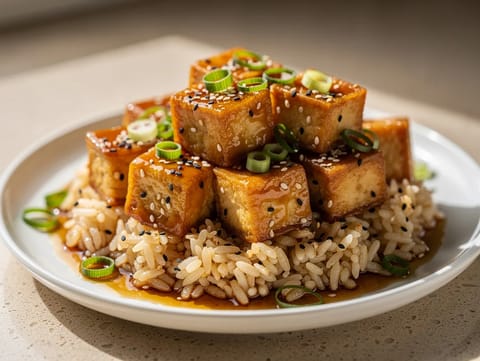
Crispy air-fried tofu in a sesame soy glaze.
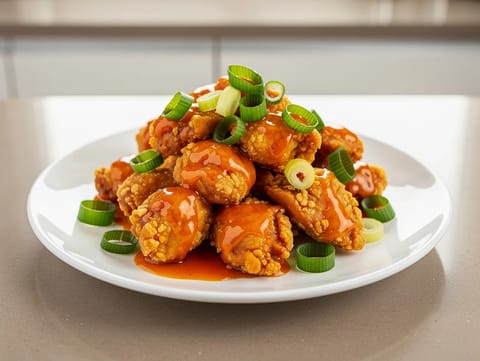
Crispy air fryer orange chicken tossed in a sticky sauce.
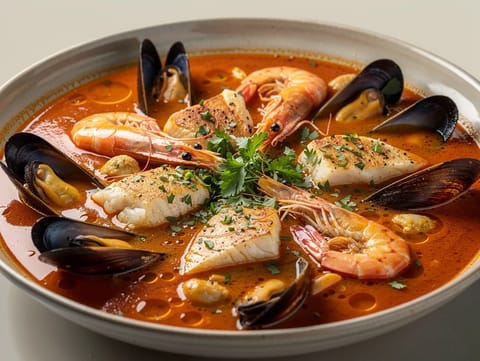
Spanish seafood casserole in saffron tomato broth
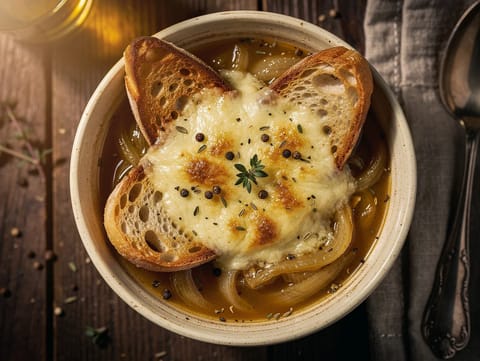
French onion soup gratin with Gruyère and baguette
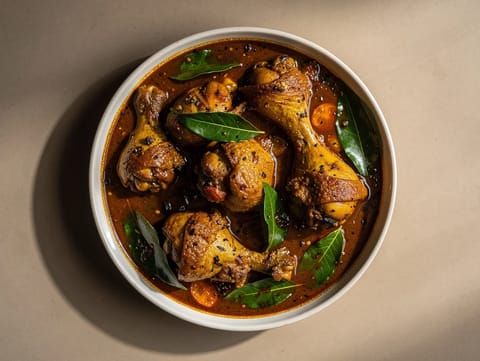
South Indian chicken curry with coconut milk and curry leaves
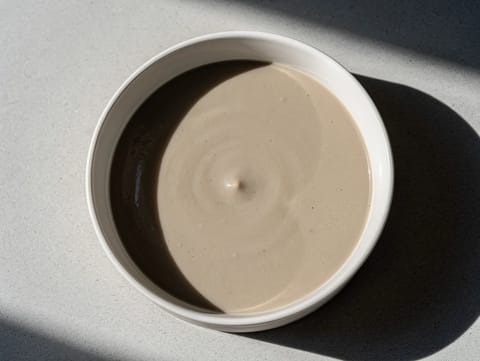
Blended mushroom soup finished with double cream

One-pot chicken and rice with peppers, peas, lime and coriander
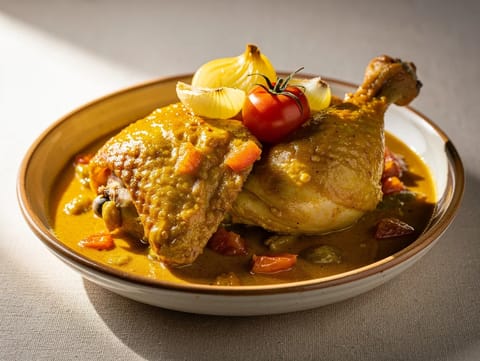
Chicken in smooth mole amarillo thickened with masa harina
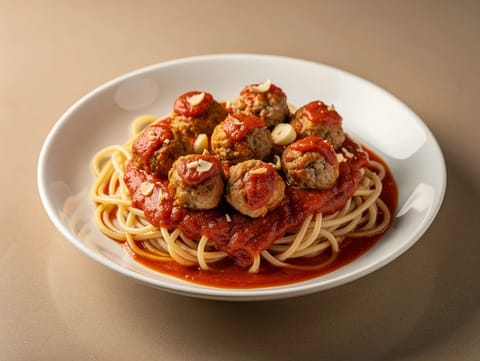
Turkey meatballs simmered in marinara sauce and served with spaghetti
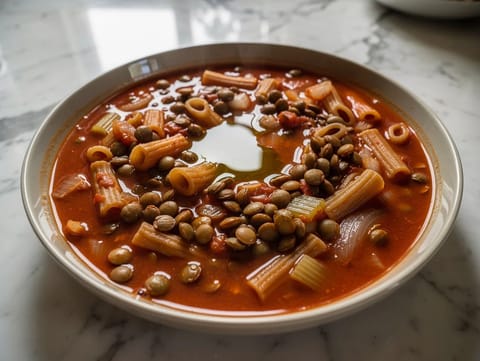
One-pot vegan pasta and lentil stew with rosemary

Piquillo peppers stuffed with creamy salt cod béchamel
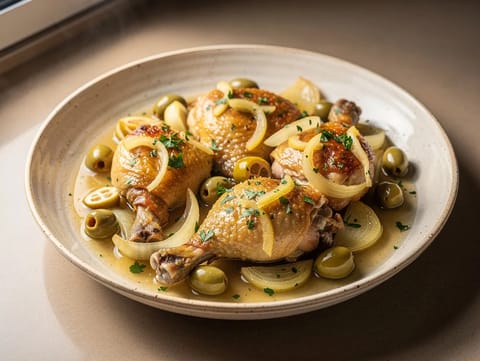
Braised chicken thighs with preserved lemon, olives and white wine
For a clean, brothy kind of umami, look for recipes that build a base with stock, seaweed, mushrooms or gentle fermented seasonings. For a darker, more roasted depth, browning and reduction are usually the drivers, often alongside tomatoes, caramelised onions or pan juices. If you want umami with a creamy feel, aged cheeses and slow-cooked sauces tend to give both savouriness and a rounded texture. Pay attention to salt: many umami-rich ingredients are also salty, so the best results often come from seasoning later, once the dish has reduced and the savoury elements are fully present.
Ingredient browsing is especially helpful for umami, because the same savoury depth can come from very different sources, from mushrooms to tomatoes to fermented sauces. Dish type is a good companion when you want that flavour in a particular format, such as soups, sauces, noodles or vegetable sides.

Pork sausages baked in Yorkshire pudding batter with gravy
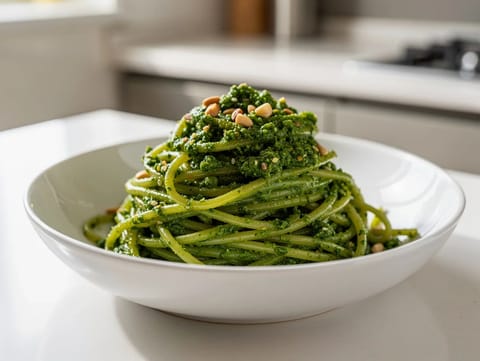
Spaghetti tossed with fresh basil pesto, pine nuts and Parmesan
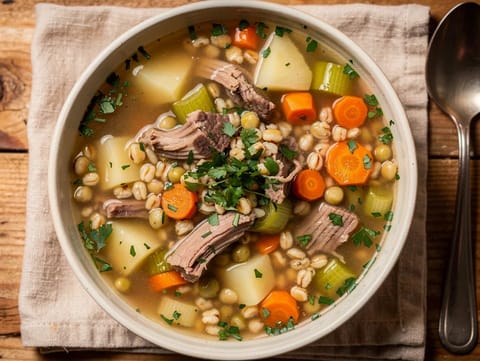
Hearty Scotch broth with lamb, barley, split peas and vegetables
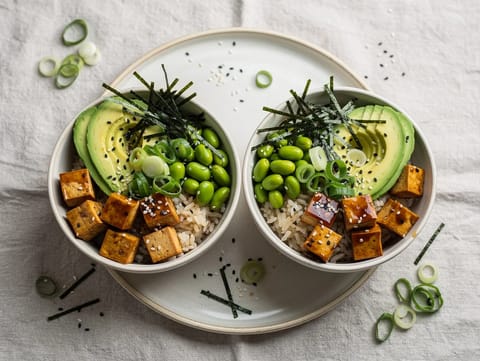
Vegan poke bowl with tofu, sushi rice and vegetables.
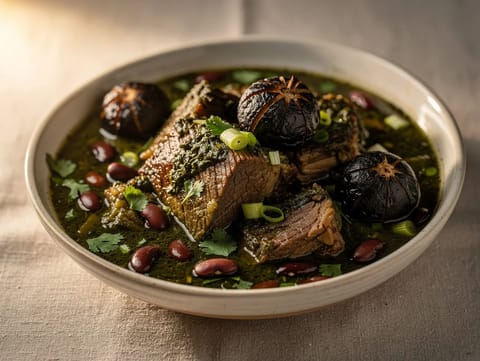
Persian herb and lamb stew with kidney beans and dried lime
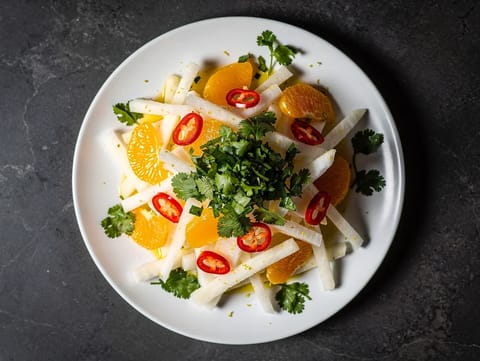
Crunchy jícama salad with orange, lime and chilli
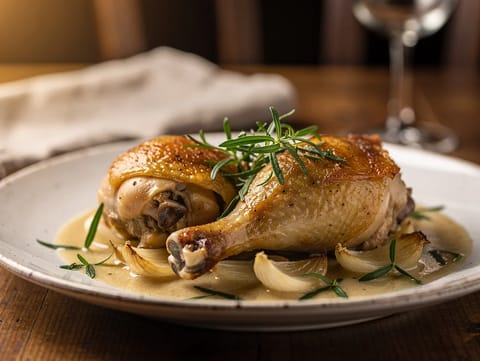
French chicken fricassée in a tarragon and cream sauce
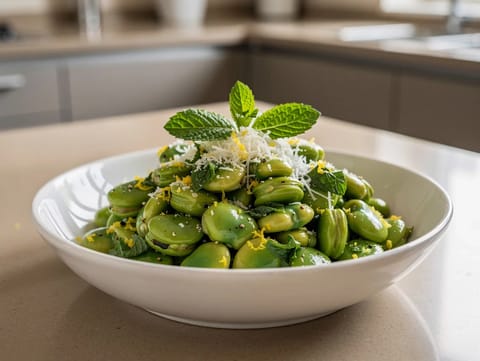
Broad bean salad with pecorino, mint, lemon and olive oil
It tastes savoury and rounded, with a lingering depth. It often makes food feel fuller on the palate, even when the seasoning is not especially salty.
No. Salt enhances flavour and can make umami easier to notice, but umami is a distinct taste. Many umami-rich ingredients are salty, which is why they are sometimes confused.
Common examples include tomatoes, mushrooms, aged cheeses, cured meats, seaweeds and fermented sauces. Drying, ageing and fermentation tend to concentrate savoury compounds.
Long cooking and reduction concentrate flavours, and browning reactions add complexity. Together, they build a deeper savoury profile that reads as umami.
Yes. Mushrooms, tomatoes, seaweed and fermented ingredients can provide strong savoury depth, and roasting can intensify it by concentrating flavours and adding browning.
Add contrast rather than more savouriness. A little acidity, fresh herbs, citrus zest, or a bitter green element can sharpen the overall flavour and make the umami feel purposeful.
Think of umami as structure: it supports other flavours and helps a dish taste complete. Choose the source that suits the mood you want, then balance it with brightness, aroma and texture so the savoury depth stays clear rather than muddy.
