An air fryer is appealing when you want crisp food without filling a large roasting tin. Whether it makes dinner quicker, though, depends on what fits in the basket and how the food is prepared. Look at the whole batch before turning an oven time into an air fryer plan.
Give the whole meal room to cook
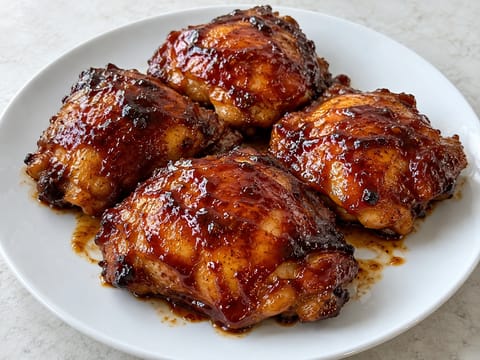
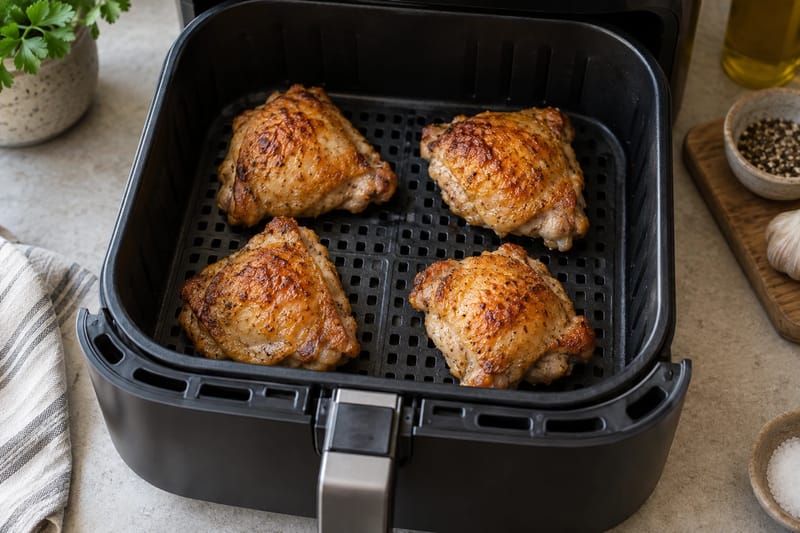
Start by checking the quantities: our air fryer barbecue chicken thighs recipe calls for eight bone-in thighs in a single layer, with space around them. That may mean more than one batch in your appliance. If they do not fit comfortably, allow time for the extra batch rather than piling them up.
For a larger meal, consider the oven-baked barbecue chicken thighs instead. Check the size of your roasting tin, too, and choose the method that gives your portions room. Then plan the rest of the meal around its cooking stages.
Notice when the sauce goes on
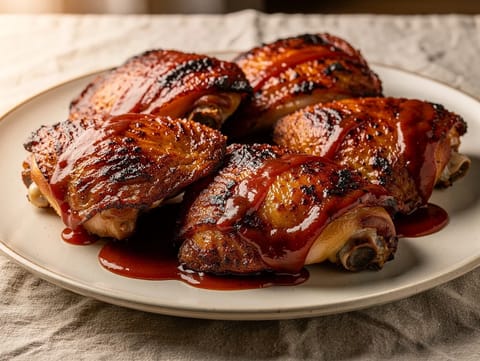
These chicken recipes also use their barbecue sauce differently. The oven version coats the thighs before roasting, while the air fryer recipe cooks the chicken first and brushes on its sweet glaze towards the end. The later addition helps keep that glaze sticky without exposing it to the whole cooking time.
A recipe name will not tell you those details. Read through the turns, brushing stages and resting time before you start. Moving the temperature dial alone cannot account for a change in how the chicken is coated.
Let thickness and coating guide the comparison
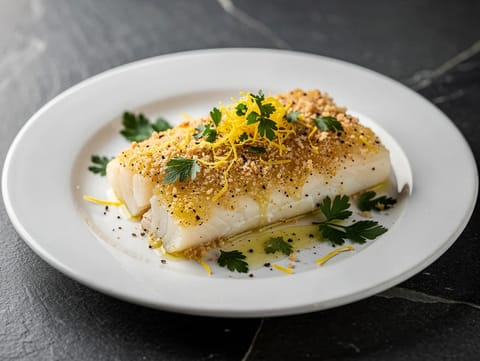
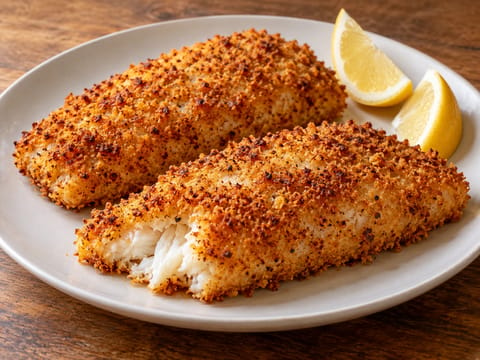
Fish gives you another reason to read the method before choosing the appliance. New England baked cod has a buttery crumb topping, while air fryer cod fillets are coated in flour, egg and breadcrumbs all around. They are both crisp fish dinners, but the coating and the exposed surfaces are different.
Look at the thickest part of your fillets as well as their number or weight. A thick piece needs a different check from a thin tail end. Keep space around air fryer fillets and follow the recipe’s turning instructions so the coating can colour evenly.
Use the timer to remind you to check
Chicken can brown before it is cooked through. Use a clean probe in the thickest part, clear of the bone. The Food Standards Agency gives 75°C (165°F) held for 30 seconds as one safe cooking combination.
For cod, check the thickest part: the flesh should be opaque and separate easily with a fork. Keep cooking if it is still translucent, even if the timer has finished. Follow your appliance’s instructions, and let these doneness checks decide when the food is ready to serve.