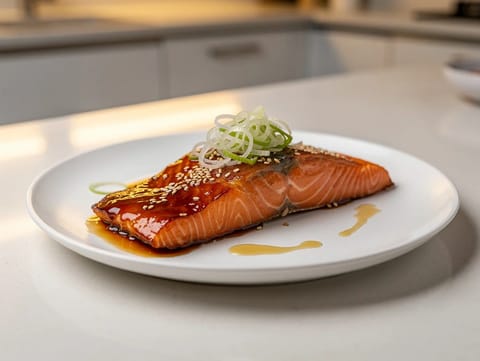
A food thermometer gives a more direct check of a fish fillet’s centre than colour alone. For ordinary cooked fish, use a minimum internal temperature of 63°C (145°F). Choose a thin probe that can read accurately inside the thickest part.
Step by step
Use a suitable clean probe
Check the thermometer’s instructions so you know where its sensing area is and how deeply it must enter. A thick probe may be unsuitable for a very thin fillet.
Aim for the centre of the thickest flesh
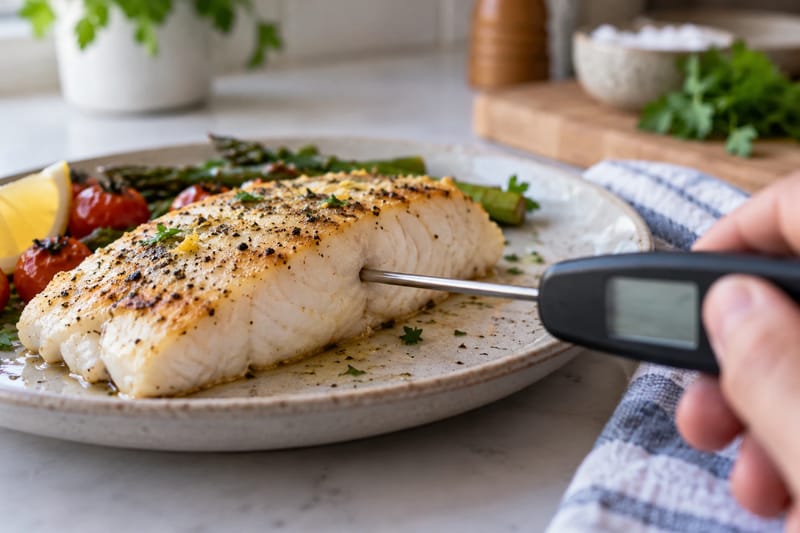
Insert from the side into a thin fillet so the sensing area lies in the centre rather than passing straight through. Avoid touching the pan, bones or a hot surface, which can distort the reading.
Wait for a stable reading
Let the thermometer settle according to its instructions. Check another thick area or more than one piece in an uneven batch. The lowest reading needs to reach 63°C (145°F).
Cook longer if needed and recheck
If the fish is below that temperature, return it to the heat, then check again with a clean probe. Serve on a clean plate with utensils that have not just touched raw fish.
Flaking, colour and different seafood
Flaking and opacity help describe texture, but do not give you a numerical reading of the coolest centre. A browned surface can still hide a cooler thick section. This guide is for cooked fish, not raw or lightly cured preparations, shellfish-specific checks, or deciding whether spoiled fish can be rescued by cooking.