The outside of frozen food can warm while the centre remains icy. Controlled thawing keeps that outer layer from spending unnecessary time warm. Plan ahead for the refrigerator whenever possible, and follow product instructions for foods designed to cook from frozen.
Step by step
Read the packaging first
Check whether the food should be cooked from frozen and whether packaging must be removed. Before thawing vacuum-packed fish in the refrigerator, remove it from its sealed vacuum packaging and put it in a clean container that catches drips. Follow the product’s instructions for any other thawing method.
Use the refrigerator for planned thawing
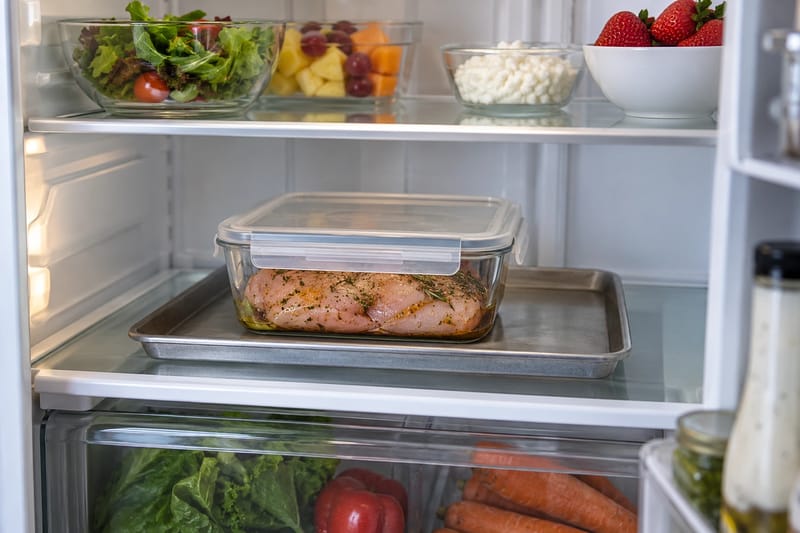
Place food in a covered leakproof container or tray in a fridge at 4°C (40°F) or below, below ready-to-eat foods. Allow enough time for the centre to thaw. Large pieces can take much longer than small portions.
Use cold water only with active attention
For a suitable product, use a leakproof food bag and submerge it in cold tap water. Change the water every 30 minutes so it stays cold. Cook immediately after thawing; do not return it to a long raw marinating stage.
Cook immediately after microwave thawing
Follow the appliance’s defrost instructions, turning or separating pieces as directed. Transfer straight to cooking because some parts may already have warmed or begun to cook.
Avoid worktop and hot-water thawing
Do not thaw perishable food on a worktop or in hot water. A frozen centre does not show that the outer layers are safe. Refrigerator-thawed food can sometimes be refrozen if it stayed safely cold, but food thawed with water or a microwave should be cooked before refreezing. Use the product’s storage limits after thawing.