A bread recipe can take an afternoon without keeping your hands busy for all of it. The trick is knowing when it needs you back: to stretch the dough, stir a topping or shape a tray of buns. Choose the pattern of work that suits your day, then leave some room for the dough to take its time.
Focaccia leaves space between the jobs
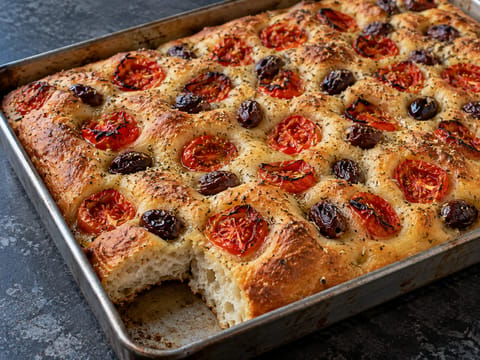
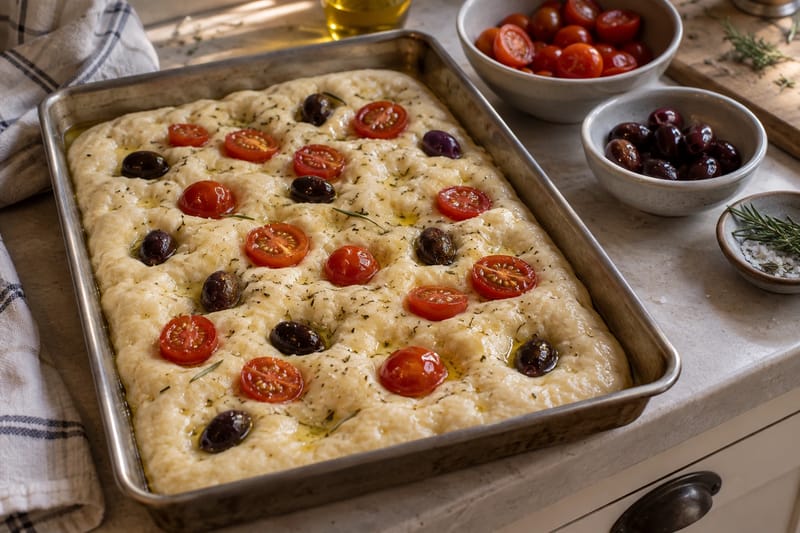
In our focaccia Barese recipe, the early work is mixing a sticky dough and folding in olive oil. Then it has a substantial first rise before you stretch it into its tray. If it springs back, a short rest makes the next stretch easier; forcing it only turns a simple job into a struggle.
After another prove, you return to dimple the dough and press in tomatoes and olives. That gives the afternoon a few clear stopping points rather than one long kneading session. Keep the tray and toppings ready for the later stage, and remember that the bread needs a little cooling time after baking before you cut it.
A rising dough can share the kitchen
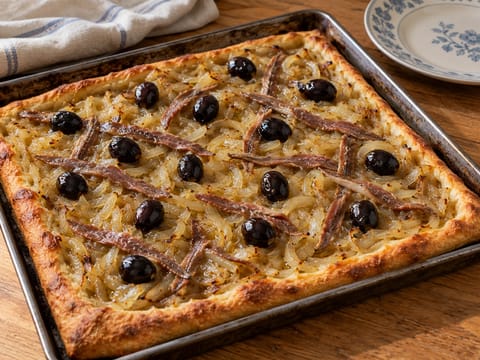
If you would rather keep cooking while the dough rises, try pissaladière, the onion and anchovy tart. The sliced onions cook gently for the topping during the rise. You get useful work done while you wait, but you still need to be nearby to stir the onions and keep them from browning.
This suits a stretch of time when you are happy to stay in the kitchen. Slice the onions before their pan needs attention, read the assembly stage, and have the tray ready. The dough’s quiet hour becomes part of making the topping rather than an hour you can necessarily spend elsewhere.
Individual buns need a shaping session
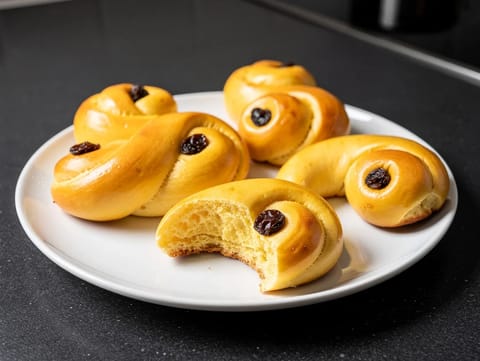
A tray of lussekatter (Swedish saffron buns) has a different rhythm. There is a little work even before mixing: the saffron infuses in warm milk, which then needs to be warm rather than hot when it meets the yeast. After kneading and the first rise, the dough is divided into twelve pieces. Each is rolled into a rope and curled into an S shape.
That shaping session is the part to make room for. Have the lined tray ready, then add the raisins and leave the buns to prove until puffy. They also need a short rest on a rack after baking so the crumb can settle before serving. A tray of individual buns asks for more repeated handwork than stretching one piece of dough into a tin.
Make a plan, then watch the dough
Before starting, mark the points where the method needs your attention and notice which jobs can overlap. A focaccia tray asks for different work from individual buns; an onion topping keeps you at the hob during part of the rise. That is a more useful choice than picking whichever recipe has the fewest active minutes.
Set reminders to check the dough, then use the recipe’s signs of readiness: doubled, bubbly or puffy, depending on the stage. A cooler kitchen can slow things down. Give the dough the rise it needs. When time is tight, a bake with fewer shaping and finishing jobs is easier to fit into the day.