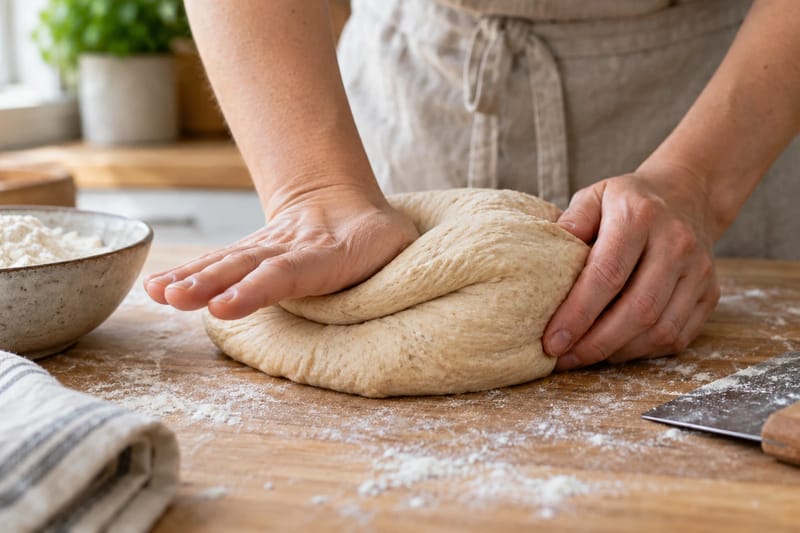
Kneading helps a wheat bread dough develop the strength to hold gas as it rises. A manageable dough becomes smoother and more elastic as you work. Very wet doughs, rye doughs and gluten-free doughs may need different methods, so start with the technique your recipe specifies.
Step by step
Mix before moving to the worktop
Combine the ingredients until no dry flour remains. Follow any prescribed rest before kneading. Lightly flour or oil the worktop only as the recipe directs; extra flour changes the dough’s balance.
Fold and press
Fold the far side of the dough towards you. Press forward with the heel of your hand to stretch it without tearing it into separate pieces. Turn the dough and repeat with a steady rhythm.
Use a scraper when it sticks
Lift sticky dough with a dough scraper instead of repeatedly burying it in flour. A short covered rest can make it easier to handle. Some tackiness may be normal for the recipe.
Check development
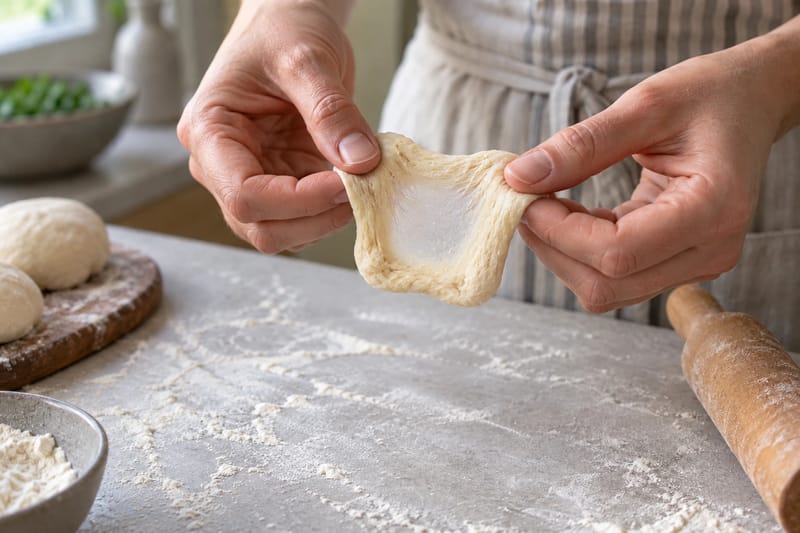
Look for a smoother surface and a dough that stretches rather than immediately tearing. If the recipe uses a windowpane test, rest a small piece briefly and stretch it gently into a thin membrane. Follow its expected result, especially with wholegrain flour.
Dough that stays sticky or tears
Check the original measurements before adding more flour. High-hydration dough may need folding rather than firm worktop kneading. A dough that resists stretching can need a rest, not more force. Wash hands and the worktop after handling raw dough, and do not taste it before cooking.