A good sauce does more than stay on the spoon: it suits the food around it. A creamy ragout needs enough body to sit in pastry, while a sauce for crisp pork should give it a gloss without weighing it down. Knowing what creates that texture makes it much easier to judge the pan in front of you.
From a creamy filling to a glossy coating
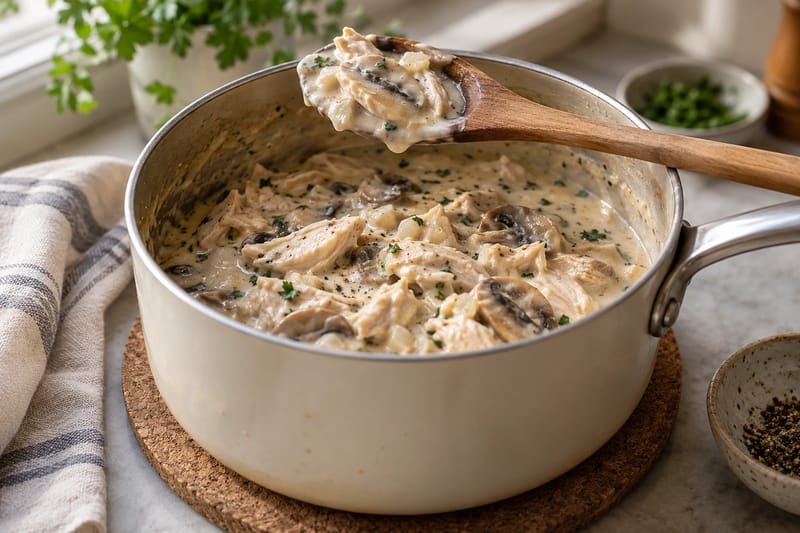
Our chicken ragout in puff pastry needs a sauce with enough body to hold the chicken inside the pastry cases. Leek and mushrooms cook in butter before the flour goes in, then stock and milk are whisked in gradually. The flour gives the filling its creamy body as the sauce simmers.
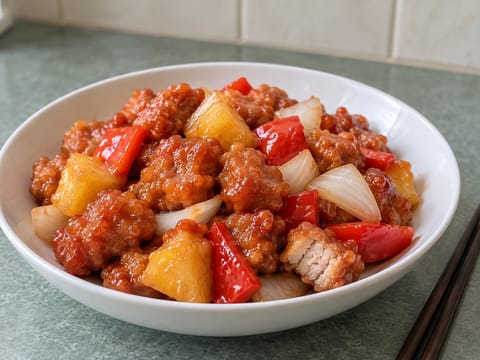
A lighter coating is the aim in sweet and sour pork. The sauce is made separately before it meets the fried pieces: cornflour is whisked with cold water, then stirred into the ketchup, vinegar and soy mixture. A short simmer turns it glossy and lightly thickened, ready to coat the pork in a quick final toss.
Both methods spread the starch through the sauce before it thickens. That is why a prepared cornflour mixture needs another stir if it has settled, and why a spoonful of dry flour dropped into a hot sauce tends to make lumps. Give the recipe’s thickening stage time to work before adding more.
Sometimes the sauce simply needs to simmer
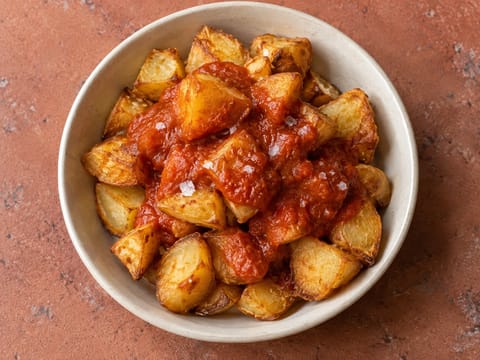
The smoky tomato sauce for patatas bravas gets its body without flour or cornflour. After garlic and spices have warmed in olive oil, the tomatoes simmer gently until the sauce is thick enough to spoon over the crisp potatoes. Sherry vinegar goes in afterwards for a final tang.
Here, water leaving the pan is part of the method. Stir occasionally so the sauce does not catch, and look for a spoonable texture rather than a dry paste. Turning up the heat sharply may make the base scorch before the rest has reduced.
A custard has its own balance
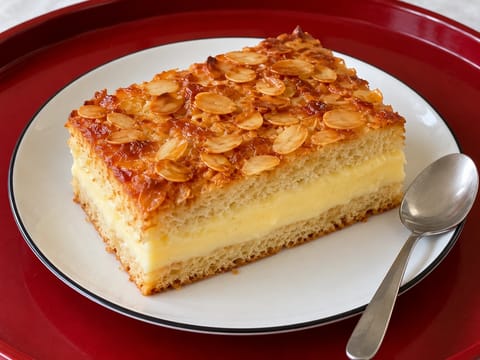
A filling that holds its shape matters for cake, too. In Bienenstich, the honey and almond cake, the vanilla custard combines egg with cornflour. Both contribute to a filling firm enough to sit between the cake layers. Follow the whole method, including its brief bubbling stage and cooling.
That bubbling instruction belongs to a starch-containing filling. A plain stirred egg custard needs gentler handling. If you leave out the cornflour, you have changed how the mixture thickens and cannot simply carry on with the same cooking instructions.
Taste before you make it thicker
When a sauce looks thin, taste it before deciding to reduce it. More simmering can help a watery sauce, but it also concentrates salt and acidity. If those flavours are already strong, boiling away more liquid may take it in the wrong direction.
A sauce that has become too heavy often needs a small amount of its original liquid: stock for the ragout, for example. Add a little, stir it through and look again. Aim for the texture the dish needs, whether that is a filling that stays in its pastry case or a light coating for freshly fried pork.