Reducing a sauce means evaporating part of its water to concentrate it. Flavour, salt and sweetness become stronger as the volume falls. It works best when the sauce can tolerate that concentration; a salty but thin sauce may need another thickening method.
Step by step
Check whether reduction suits the sauce
Remove cooked meat or delicate vegetables that would overcook while the liquid reduces. Consider how salty or sweet the sauce already is. Leave final seasoning until the concentration is closer to the intended result.
Simmer with the lid off
Use a pan with enough surface area for evaporation and maintain the heat the sauce can tolerate. Stir more often as it thickens, especially at the base and edges. Avoid a violent boil for delicate cream or egg sauces.
Check volume and consistency
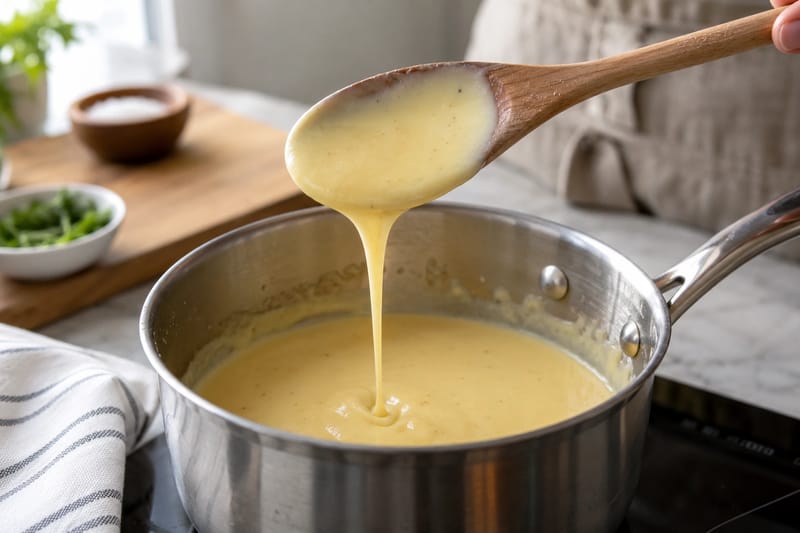
If the recipe says reduce by half, aim to leave about half the starting volume. For a coating sauce, check how it runs from a spoon. Cool a small sample on a plate to judge it nearer its serving temperature.
Stop before it becomes too concentrated
Take off the heat once it reaches the intended consistency, then adjust seasoning. Add any finishing butter, cream or herbs at the stage specified rather than boiling them aggressively throughout.
Too thick, salty or sticky
Loosen an over-reduced sauce with a suitable unsalted liquid, a little at a time. If it is already too salty, further reduction makes the problem worse. Burnt flavour cannot be removed by thinning. Some sauces thicken more as they cool, so a hot spoon test alone can lead you too far.