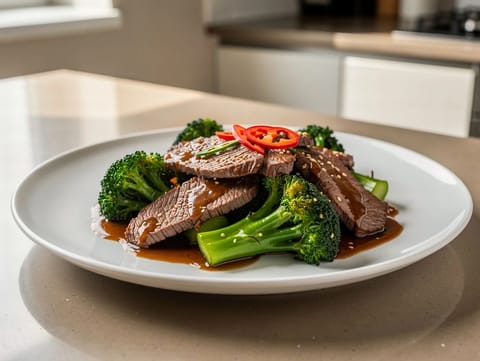
Blanching briefly heats vegetables in boiling water before the next stage of a dish. It can soften them for a quick finish or prepare them for rapid cooling. The right endpoint depends on the vegetable and what will happen to it afterwards.
Step by step
Prepare both the hot and cold stages
Wash and cut the vegetables evenly. Bring a roomy pan of water to a boil. If cooking needs to stop immediately, prepare a bowl of cold water with ice before adding the vegetables.
Add a manageable batch
Lower the vegetables into the boiling water carefully. Do not add so much that the water stays cool for a long time. Keep the batch small enough to lift or drain safely.
Cook to the next stage’s needs
Use the recipe’s timing and check a representative piece. A vegetable that will be stir-fried afterwards should retain more firmness than one ready to serve. Colour alone does not tell you whether the centre has softened.
Drain and cool when required
Lift out with a slotted spoon or drain carefully. For rapid cooling, transfer straight into the prepared cold water, then drain well once cool. If continuing immediately in a hot dish, follow its instructions without an unnecessary cold bath.

Waterlogged vegetables and freezing
Drain cooled vegetables thoroughly before frying or adding to a dressing. For freezing, use an authoritative vegetable-specific blanching time and cooling method; a brief dip based on colour may not adequately control the enzymes that affect frozen quality. Blanching is not a canning or sterilising process.