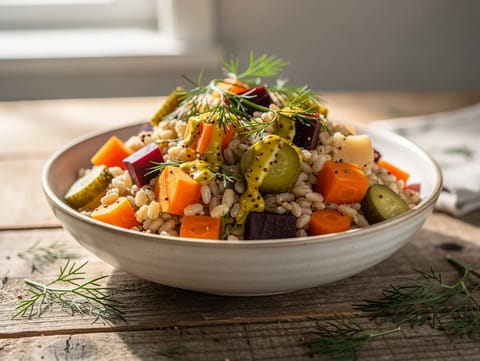
A hot tray and space for moisture to escape help vegetables develop browned edges. A crowded pile can soften without browning. Match the size and timing to each vegetable so the tender pieces do not burn while dense pieces remain hard.
Step by step
Prepare for even cooking
Preheat the oven to the recipe’s temperature. Wash, trim and dry the vegetables. Cut dense vegetables into manageable pieces and plan to add delicate or watery vegetables later if the recipe calls for it.
Coat lightly and spread out
Toss with enough oil to lightly coat the surfaces and the specified seasoning. Spread on a suitable rimmed tray in one layer, leaving gaps. Use another tray rather than piling pieces on top.
Let surfaces colour
Roast as directed, turning or stirring when needed to expose another face. Leave enough time between turns for browning. Rotate trays if your oven cooks unevenly.
Check edges and centres
Pierce a thick piece to check tenderness. Remove vegetables that are ready before the rest. Add delicate herbs or dressings at the recipe’s finishing stage so they do not scorch during a long roast.

Pale, burnt or uneven results
If vegetables sit in liquid, spread them more widely and check that the oven is fully heated. If edges burn before centres soften, use smaller dense pieces or a gentler temperature appropriate to the recipe. Blackened garlic and dried herbs often mean they were added too early, not that the vegetables needed less cooking.