
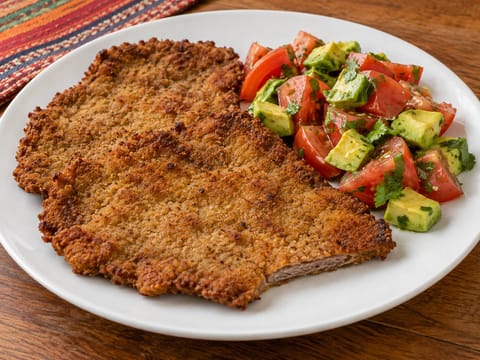
Milanesa de Res (Breadcrumbed Beef Steaks) with Tomato and Avocado Salad
Fried breadcrumbed beef steaks with tomato and avocado salad
Schnitzel is a thin cutlet with a crisp coating, cooked quickly so the meat stays tender while the outside turns golden. The weeknight advantage is that most of the work is in preparation: getting the cutlet evenly thin, setting up a simple breading line, and choosing a cooking method that browns without making the coating greasy. Small changes, such as the type of crumb or the pan temperature, have an outsized effect on crunch and on whether the coating stays attached.
At its core, schnitzel is a thin piece of meat, usually pounded, coated and cooked fast. The coating is typically flour, egg and breadcrumbs, though the exact crumb and seasoning vary by region and household. Thinness matters because it allows the meat to cook through before the coating overbrowns. The coating should set into a distinct layer rather than turning into a soft batter; that’s why the cutlet is usually dried before breading, and why excess flour and crumbs are shaken off. Schnitzel is often pan-fried rather than deep-fried, but either way the goal is the same: brisk browning and a crisp, dry finish.
Fried breadcrumbed beef steaks with tomato and avocado salad
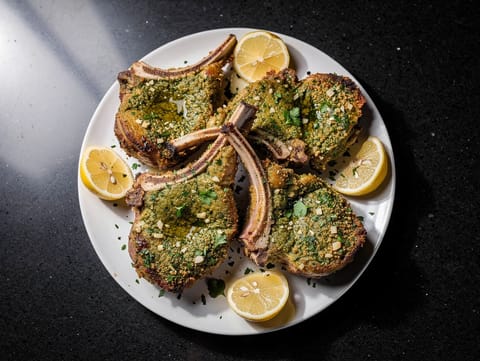
Crisp herb-crusted lamb cutlets finished with lemon
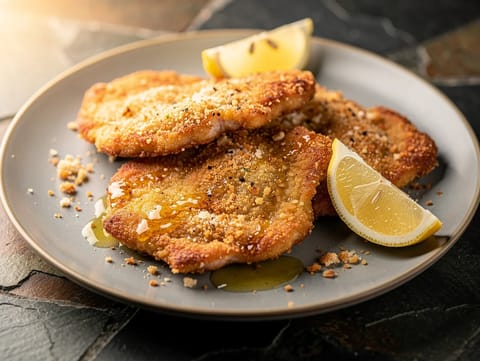
Breaded pork cutlets air-fried until crisp, served with lemon.
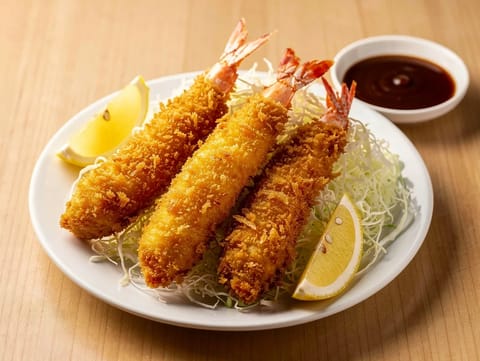
Golden, crunchy panko-breaded prawns served with tonkatsu sauce
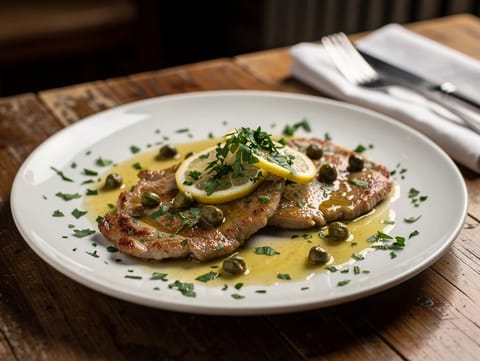
Veal escalopes in a lemon, caper and butter sauce
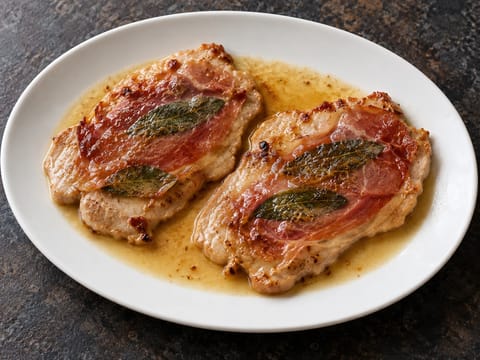
Pan-fried pork with prosciutto, sage and white wine butter sauce
Pan-frying gives good control and suits a single layer of cutlets; it also means you need enough fat in the pan for even browning, and space so the cutlets fry rather than steam. Shallow-frying in a slightly deeper layer of oil can produce a more even crust, but it asks for careful turning and draining. Oven-baking can work when you want less hands-on cooking, though the coating may brown more slowly and can benefit from a preheated tray and a light coating of oil. Air-frying tends to give a drier, more brittle crust, which can be appealing, but it depends on the crumb and how well the surface is oiled. Whatever the method, avoid crowding and serve promptly to keep the coating crisp.
Pan-fried pork with prosciutto, sage and white wine butter sauce
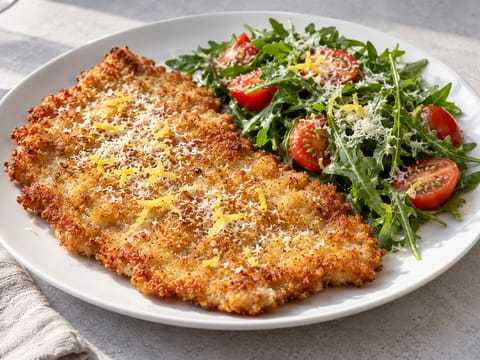
Crisp breadcrumbed veal with rocket and tomato salad
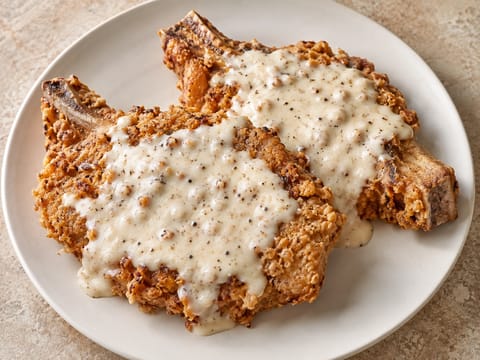
Crisp pork chops topped with peppery white gravy
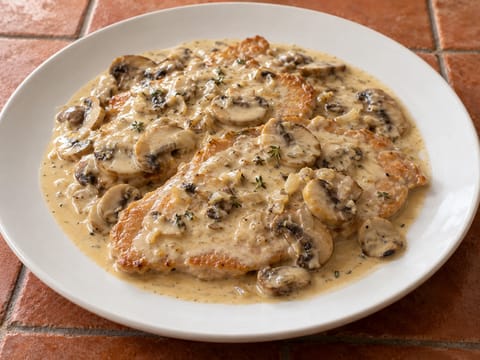
Pan-fried veal escalopes with creamy cider sauce and mushrooms
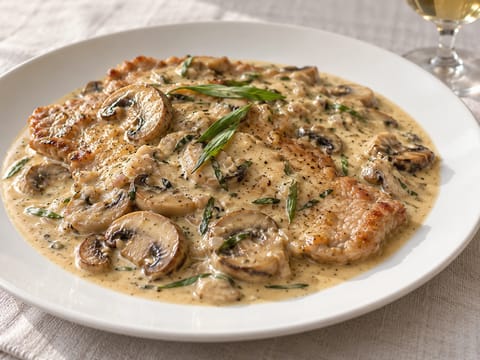
Pan-fried veal escalopes with mushroom and tarragon cream sauce
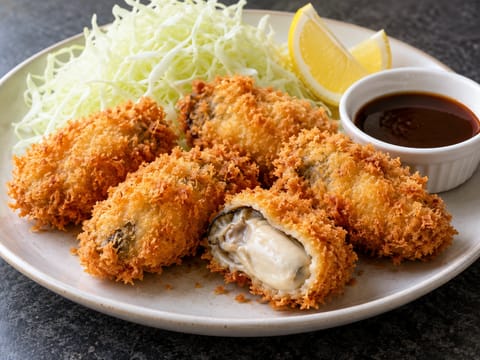
Crisp panko-breaded oysters fried until golden
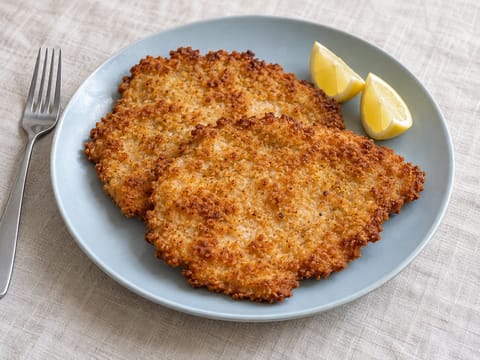
Crispy air-fried pork schnitzel with lemon.
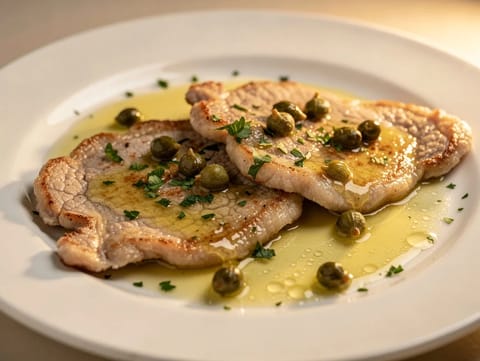
Pan-fried veal in a lemon, white wine and caper sauce
Golden, crunchy panko-breaded prawns served with tonkatsu sauce
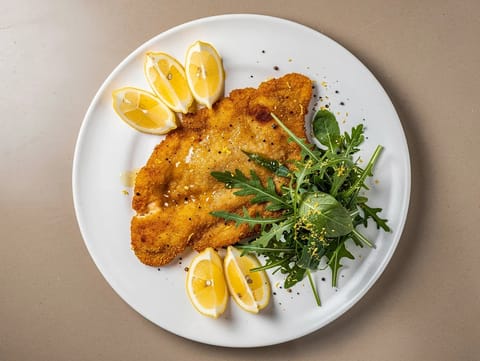
Crisp chicken Milanese served with rocket and lemon
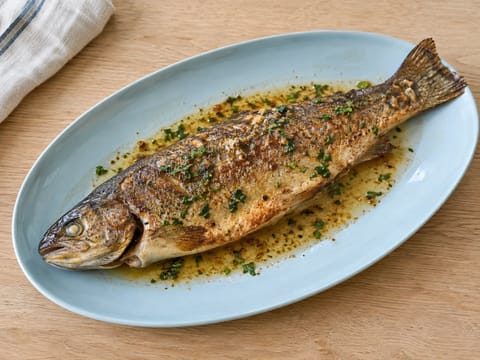
Pan-fried trout finished with brown butter, lemon and parsley
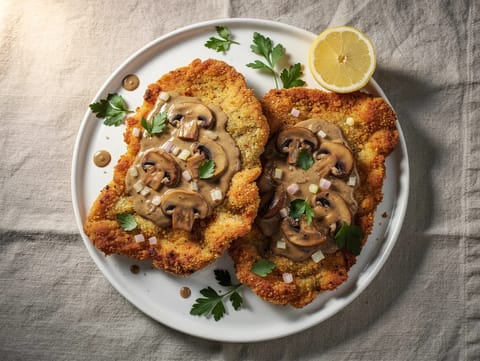
Crisp pork schnitzel topped with creamy mushroom sauce
Schnitzel is rich and crisp, so it pairs naturally with acidity and something soft. Lemon wedges are classic for a reason: a squeeze cuts through frying fat and brightens the crumb. Potato in some form, whether mashed, boiled or in a salad, sits comfortably alongside and catches any juices. Cabbage, cucumber or other lightly dressed vegetables add crunch and sharpness without competing. If you’re serving a sauce, keep it separate or spoon it alongside rather than over the top, so the coating stays crisp. A simple pan sauce made after frying can work well if it’s served as a dip or drizzle at the last moment.
Cooking method is the most useful next lens for schnitzel because the choice between pan-frying, shallow-frying or oven-style approaches changes the crust and the workflow. Cuisine can also help when you want a particular regional direction, such as Central European styles or variations that use different seasonings and accompaniments.
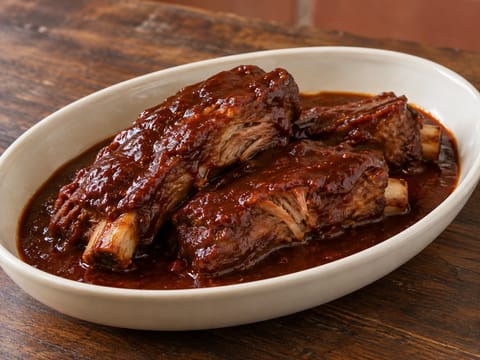
Tender pork ribs braised in ancho chilli and tomato sauce
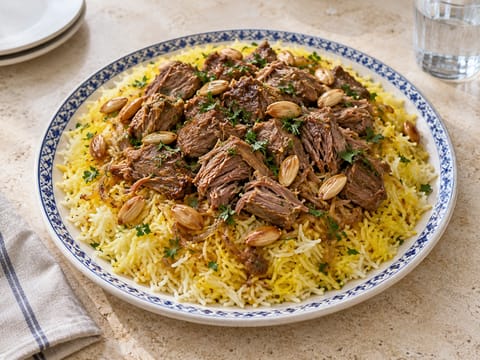
Spiced lamb served over saffron basmati rice with almonds
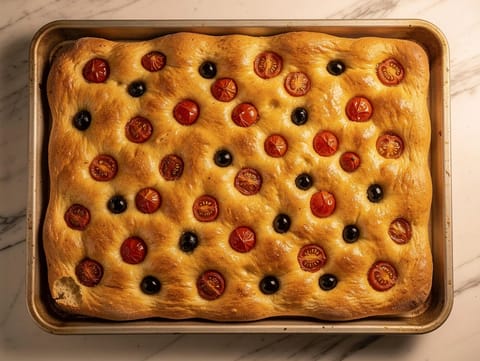
Focaccia topped with cherry tomatoes and olives
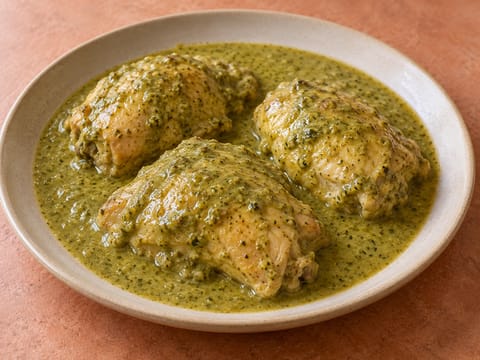
Chicken simmered in a thick green pumpkin seed and tomatillo sauce
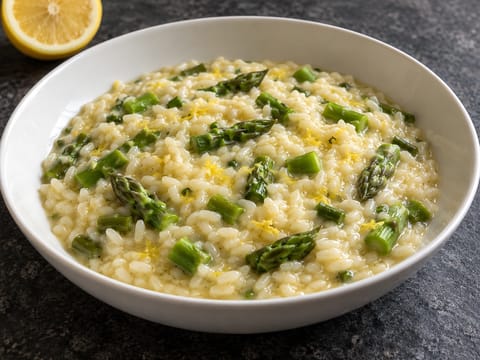
Creamy lemon and asparagus risotto finished with butter and Parmesan
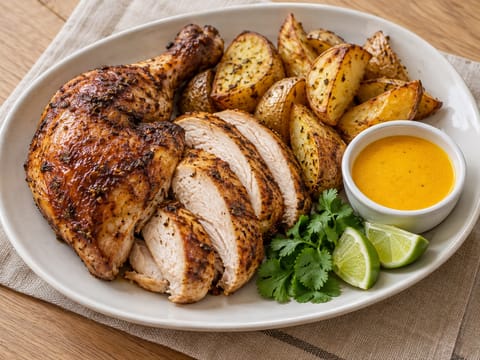
Peruvian roasted chicken with lime and aji amarillo sauce
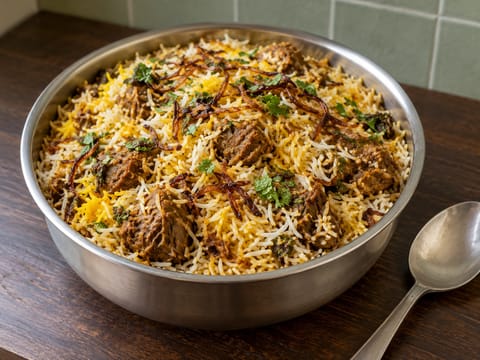
Hyderabadi mutton biryani layered with basmati rice and saffron milk
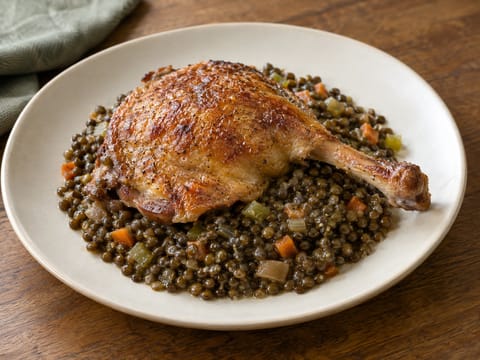
Crisp duck legs with Puy lentils
Thin cutlets cook through quickly, so the coating can brown and crisp without the meat drying out. Even thickness also helps the cutlet cook at the same rate across the pan.
Dry the meat, shake off excess flour, and press the crumbs on lightly so they adhere. Letting the breaded cutlet sit briefly can help the coating hydrate and bond before frying.
Oil that’s not hot enough lets the crumbs absorb fat before they set. Crowding the pan also drops the temperature and encourages steaming rather than frying.
Yes. Schnitzel is a method as much as a specific meat. The key is a thin, even cutlet and cooking it quickly so it stays tender.
If you want a sauce, serve it alongside or add it at the very end. Pouring sauce over the top softens the crust quickly.
Choose a method that keeps the pan hot and the cutlets in a single layer, and treat the coating as something you want to set quickly. With schnitzel, crispness is mostly decided before the meat even hits the heat.
