
Banana Cocoa Nib Smoothie Bowl
A thick banana smoothie bowl blended with kefir and oats, topped with cocoa nibs.

A smoothie bowl is a smoothie you eat with a spoon, which means the blend needs to be thicker and more stable than a drink. The format shifts the focus from “easy to sip” to “holds toppings”, and that changes both the ingredient ratios and the order you add things to the blender.
When comparing recipes, look first at how they create spoonable texture, usually through frozen fruit, banana, yoghurt or other thickening ingredients, and then at the topping strategy: crunchy, juicy and creamy elements behave very differently once they hit a cold, wet surface.
The defining feature is texture: thick enough to mound in a bowl and support toppings without immediately turning into a drink. That thickness is usually achieved by using more frozen ingredients and less liquid than you would for a standard smoothie. Because the bowl is eaten slowly, temperature matters too. A very icy blend can feel numb and dull the flavour; a slightly softer, creamier blend tastes more aromatic but may loosen faster.
Unlike porridge or yoghurt bowls, the base is blended smooth. Unlike ice cream, it is not churned, so it will melt and slacken as it sits. Recipes often build in ingredients that help the base stay cohesive, such as yoghurt, nut butter or oats, but the bowl is still best assembled and served promptly.
A thick banana smoothie bowl blended with kefir and oats, topped with cocoa nibs.
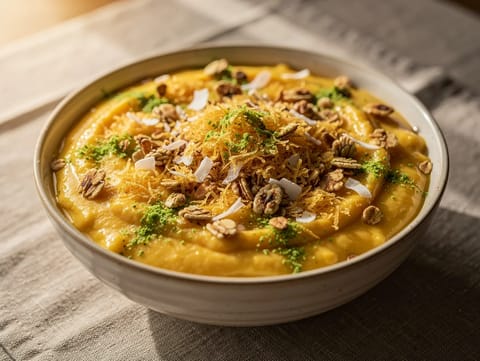
Mango and pineapple smoothie bowl with coconut yoghurt and granola.
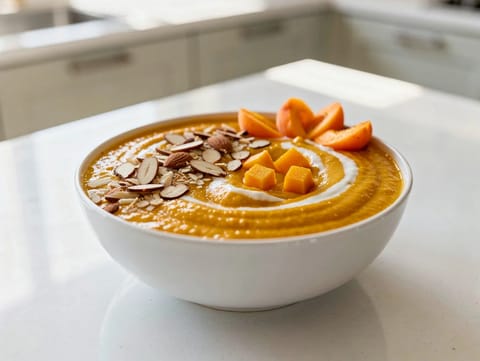
A thick apricot almond smoothie bowl with Greek yoghurt.
A creamy fig smoothie bowl blended with banana and Greek yoghurt, drizzled with honey.
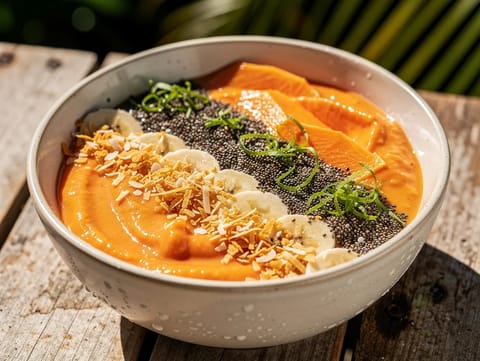
Papaya smoothie bowl with coconut milk and fresh lime.
Kale, apple and banana blend into a creamy bowl with walnuts.
Fruit-and-banana bases are the classic: banana adds body and sweetness, while berries, mango or pineapple bring colour and acidity. These bowls tend to be smooth and thick, but they can become very sweet if the fruit is ripe and the toppings are also sugary.
Yoghurt-based bowls are creamier and slightly tangy, which can make the fruit taste brighter. They also tend to blend more easily, which is helpful if your blender struggles with large frozen pieces.
Nut-and-seed bowls use ingredients such as peanut butter, tahini or chia to add richness and a more filling mouthfeel. These can taste heavier, so they often suit sharper fruits or a squeeze of citrus to keep the flavour clear.
Green smoothie bowls exist too, but stronger greens can dominate when the bowl is thick, so they usually need confident fruit partners and careful balancing.
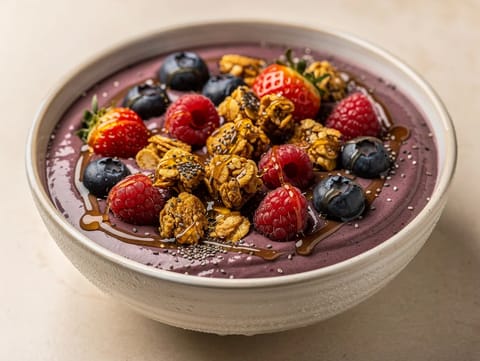
A thick açaí bowl topped with berries and granola.
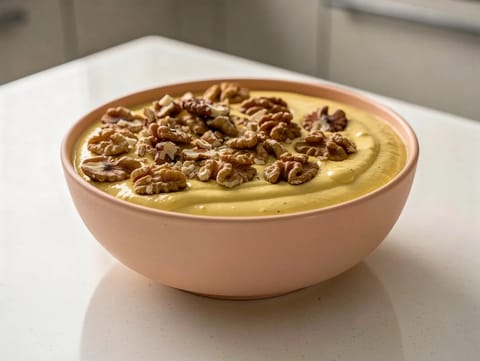
Banana bread smoothie bowl with yoghurt, oats, cinnamon and walnuts.
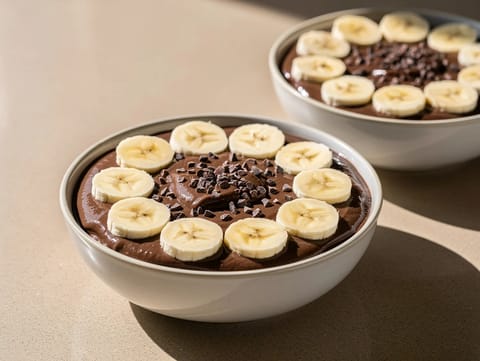
A thick avocado and cacao smoothie bowl with banana.
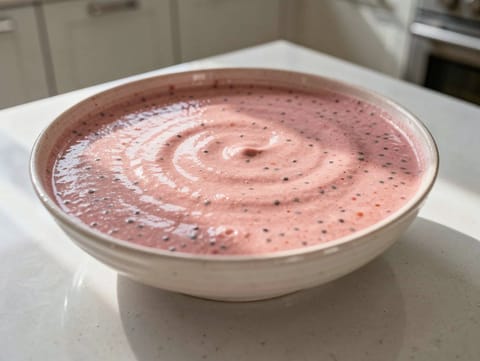
A thick strawberry smoothie bowl with yoghurt and chia seeds.
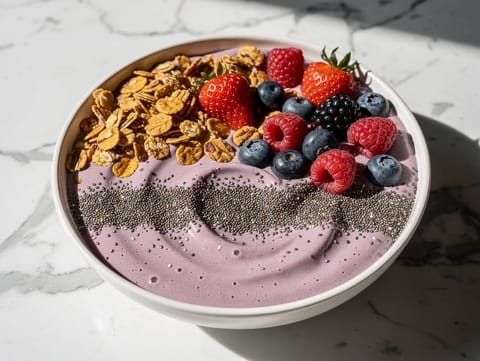
Kefir smoothie bowl with berries, banana, granola and chia.
Papaya smoothie bowl with coconut milk and fresh lime.
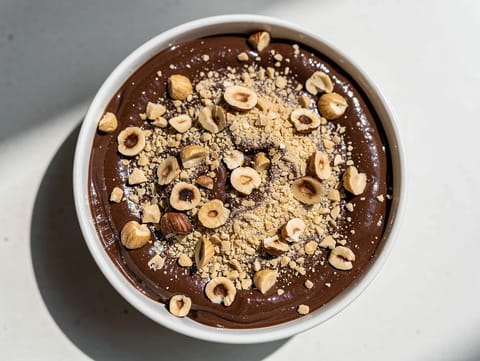
Chocolate hazelnut smoothie bowl with banana, yoghurt, cocoa and nuts.
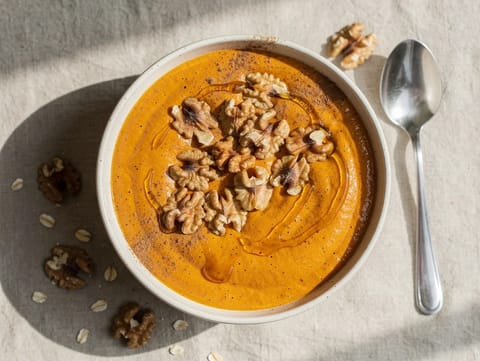
Carrot cake smoothie bowl with banana, yoghurt, oats and spice.
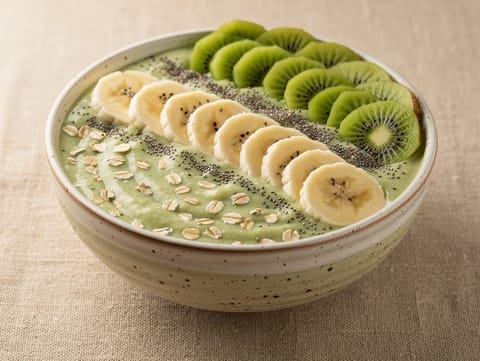
A thick kiwi and banana smoothie bowl with Greek yoghurt.
Mango and pineapple smoothie bowl with coconut yoghurt and granola.
A thick apricot almond smoothie bowl with Greek yoghurt.
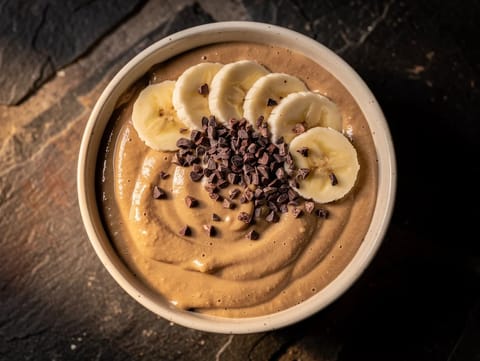
A thick coffee banana protein bowl with Greek yoghurt.
Choose toppings by contrast and by how quickly they soften. Crunchy toppings such as granola, toasted nuts or cacao nibs give immediate texture, but they will lose crispness once they sit on the wet base. If you like crunch, add them at the last moment or keep them in a line so you can scoop through gradually.
Fresh fruit toppings add brightness and make the bowl feel lighter, but very juicy fruit can bleed into the base. Dried fruit stays distinct longer, though it can make the overall bowl taste sweeter.
Creamy toppings such as yoghurt, nut butter or coconut cream blend into the base as you eat, which can be pleasant, but they also make the bowl richer. If the base is already heavy, a sharper topping, citrus zest, a few berries, can keep the finish from feeling cloying.
Cooking method is a helpful next step because smoothie bowls depend on blending technique and ingredient temperature more than on cooking. If you are deciding whether a smoothie bowl is serving as breakfast, a snack or dessert, Meal time can help you compare similar bowl-style recipes by when they tend to fit best.
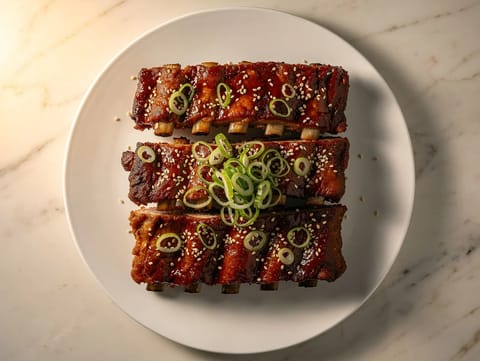
Oven-baked pork ribs with sticky gochujang glaze
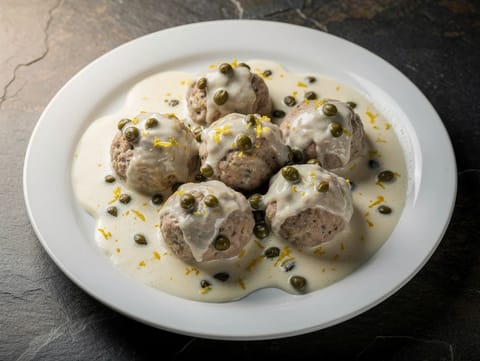
Poached meatballs in creamy caper sauce with lemon
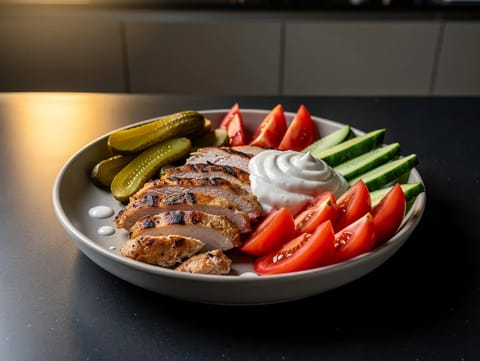
Roasted chicken shawarma with garlic sauce, pickles and salad
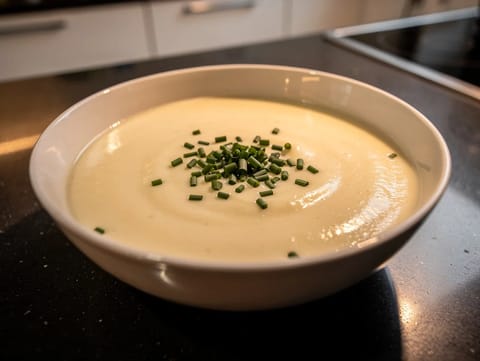
Chilled leek and potato soup finished with double cream
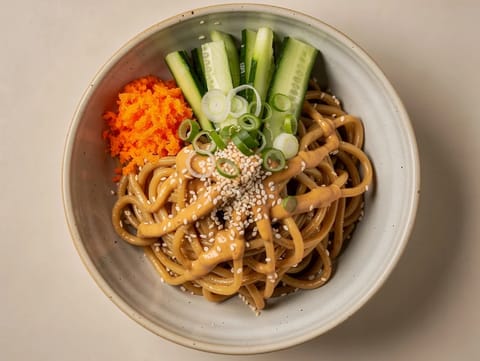
Sesame noodles with peanut and tahini dressing and crunchy veg
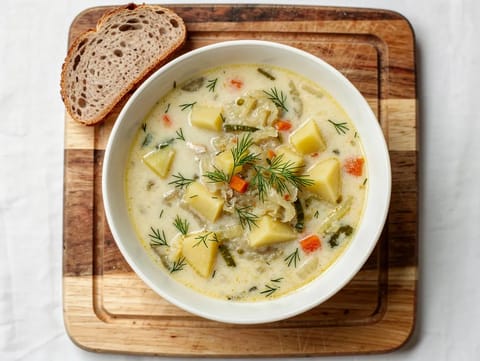
Tangy Polish pickle soup with potatoes and dill
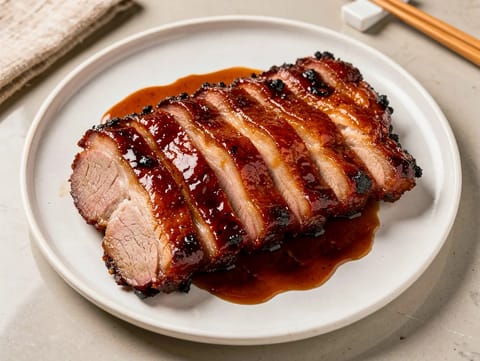
Cantonese barbecued pork with hoisin, honey and soy glaze
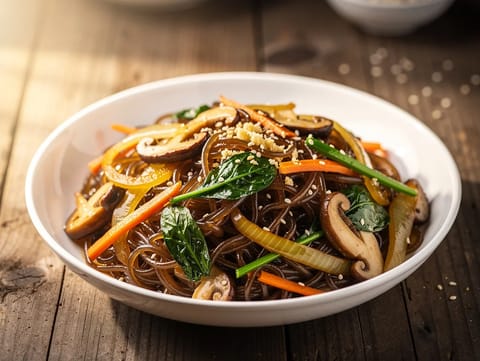
Glass noodles tossed with stir-fried vegetables and sesame dressing
Mainly in thickness and serving. A smoothie bowl is blended to be spoonable and to hold toppings, so it usually uses more frozen ingredients and less liquid.
It is often too dry. Add liquid in small splashes, pause to scrape down the blender, and start on a lower speed if your machine needs the mixture to catch first.
Warm ingredients, too much liquid, or blending for a long time can warm the mixture. Using well-frozen fruit and assembling the bowl promptly helps it hold its shape longer.
They are best assembled just before eating. If you want to prep, portion and freeze the base ingredients, then blend and add toppings at the last moment.
Granola, toasted nuts and seeds, and cacao nibs give crunch, but add them right before serving so they do not soften on the wet base.
No, but banana is a reliable thickener. Other options include yoghurt, oats, nut butter or using a higher proportion of frozen fruit.
A good smoothie bowl is built around spoonable texture and contrast. Choose a base that blends thick without tasting icy, then top with a mix of crunch, fruit and something creamy, added in a way that stays distinct as you eat.
