Cooking ahead feels useful when you can picture how the food will come back to the table. You might be saving a complete meal or just getting the baking done before guests arrive. Think about what you will want to thaw, how many portions you will need and which parts will taste best finished fresh, before you double the ingredients.
Sometimes the best thing to freeze is one part
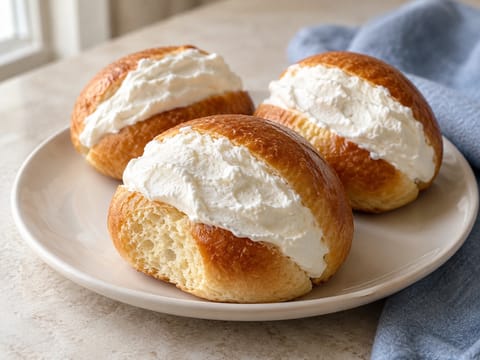
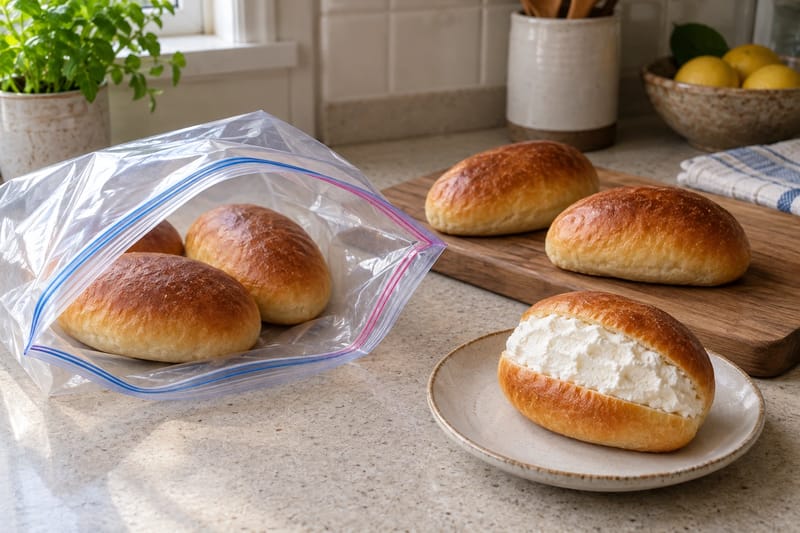
Our maritozzi with whipped cream make this distinction easy to see. The baked buns can be frozen unfilled, while the cream is added for serving. You get the useful baking done ahead and keep the cool, fresh filling for the day you want to eat them.
Freeze the cooled, unfilled buns in suitable wrapping. When you need them, follow the recipe’s thawing and refreshing instructions, then let the buns cool completely before filling. Keep the cream chilled until needed. Filled buns belong in the fridge and should be served within a day, with the best texture on the day they are filled.
Pack the amount you will want to use
Before filling containers, decide whether you are preparing an individual lunch, dinner for two or part of a larger meal. Smaller portions let you take out what you need without thawing the whole batch. They also make it easier to leave a fresh garnish, dressing or topping until serving.
Use packaging suitable for freezing, close it securely and label it with the food and date. Add a short reminder if the contents are only one part of a dish, such as unfilled buns or a sauce waiting for its accompaniment. Future you should be able to tell what dinner still needs without opening every container.
Make cooling part of the cooking plan
For cooked meals, divide the food into smaller portions so it cools promptly, and get it into the fridge within one to two hours. Eat refrigerated leftovers within 48 hours or freeze them sooner if you will not use them in that time. Follow stricter instructions for particular foods, especially cooked rice, and keep any packaging guidance with the food.
A complete cooked meal needs a little more planning than a batch of unfilled buns. Leave time and space for cooling before starting a large batch. A deep pan of food takes longer to cool than smaller portions, and a freezer cannot put right food that has been left warm for too long. Preparing the containers before cooking makes the transfer easier at the end.
Plan the return to the table
Defrost cooked meals in the fridge, allowing enough time for the centre to thaw fully, and use them within 24 hours of complete thawing. When reheating leftovers, heat them until steaming hot throughout and reheat only once. Stir where appropriate so the middle heats as well as the edges, and follow the food and appliance instructions.
For a cooked meal, prepare the garnish or make the accompaniment while it heats. For the buns, add the chilled cream after the bread has cooled. Keeping these finishing jobs separate lets you do much of the work ahead and still serve the parts that are best fresh.