
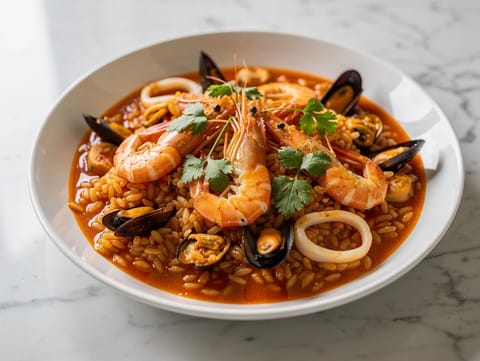
Arroz de Marisco (Portuguese Seafood Rice)
Portuguese seafood rice with prawns, mussels, squid and tomato

Crustaceans are a defined group of shellfish, including prawns and shrimp, crab, lobster and crayfish. They can be the main ingredient, but they also appear as concentrated flavour in stocks, pastes and sauces, which is where avoidance becomes trickier. This page clarifies what is usually meant by crustaceans in cooking, the kinds of ingredients that can contain them, and the practical kitchen points that help reduce accidental exposure.
In everyday cooking, crustaceans are the hard-shelled shellfish such as prawns (shrimp), crab, lobster and crayfish. They are used fresh, frozen, cooked or raw, and they can be peeled or served in the shell. Beyond whole seafood, crustaceans are also used to make intensely flavoured bases: prawn stock, crab bisque-style soups, and shellfish reductions. Some cuisines use shrimp paste or dried shrimp as a seasoning, and those ingredients can be easy to miss because they are used in small amounts. Crustaceans are distinct from molluscs (such as mussels, clams, oysters and squid), though people who avoid one group sometimes avoid both depending on their needs.
Portuguese seafood rice with prawns, mussels, squid and tomato
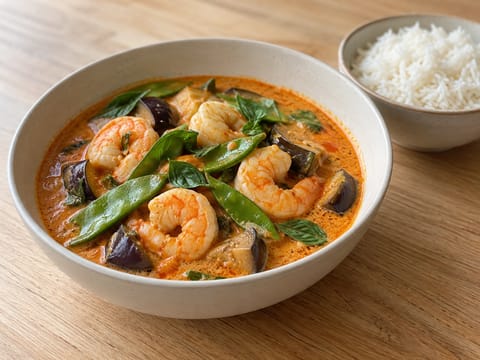
Thai red prawn curry with coconut milk, basil and lime
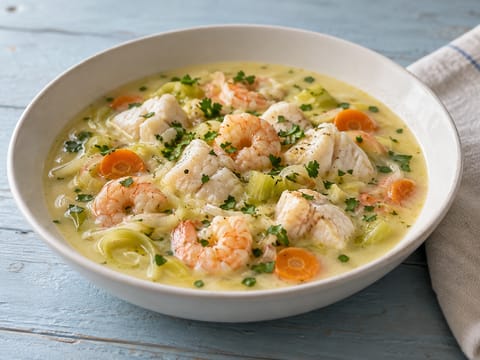
Creamy Ghent-style fish stew with prawns and vegetables
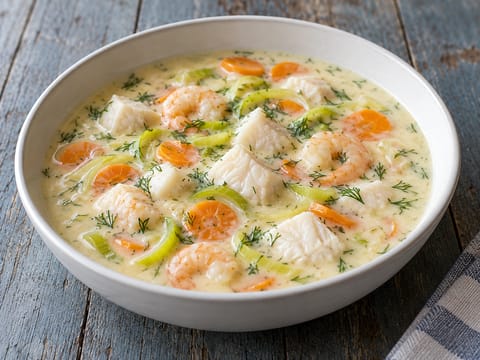
Creamy fish soup with prawns, lemon and dill
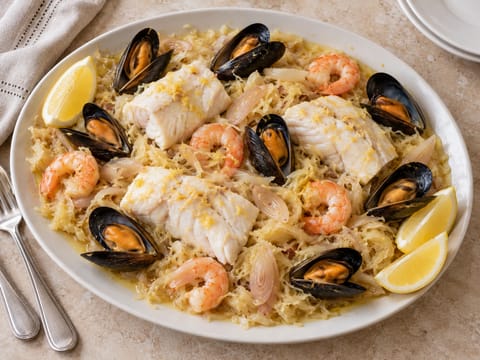
Sauerkraut warmed with white wine, then steamed with seafood
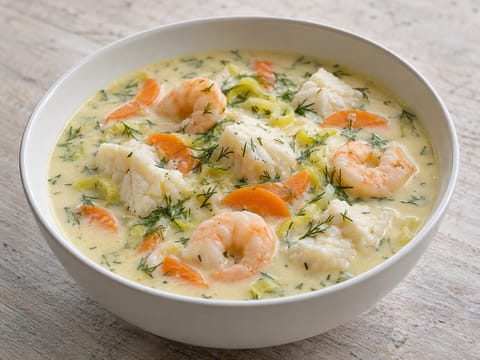
Creamy fish soup with cod, prawns, leeks and carrots
This label supports allergen-aware browsing, but it cannot guarantee a recipe is safe for you. If you avoid crustaceans, check for prawns/shrimp, crab, lobster and crayfish, plus ingredients such as shrimp paste, dried shrimp and shellfish stocks. Cross-contact is common with shared frying oil, grills, steaming baskets and prep surfaces in mixed-seafood kitchens. Even at home, utensils and boards used for peeling prawns or cracking crab can spread residue unless washed thoroughly.
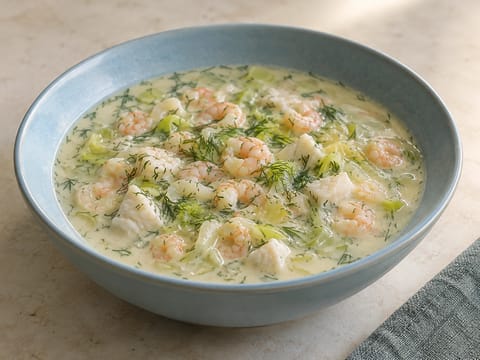
Creamy Dutch fish soup with prawns and white fish
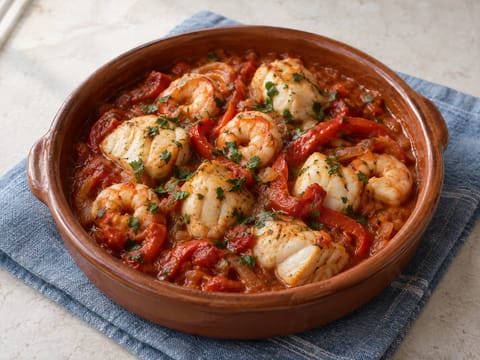
Monkfish and prawns in saffron tomato and white wine sauce
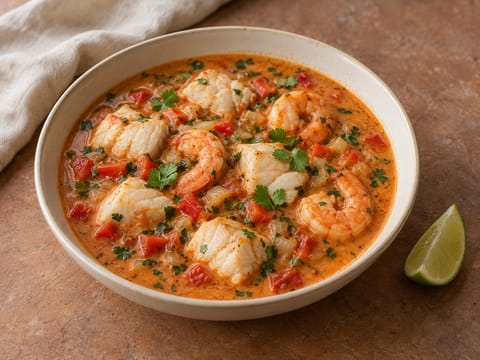
Tomato and coconut seafood stew with white fish and prawns
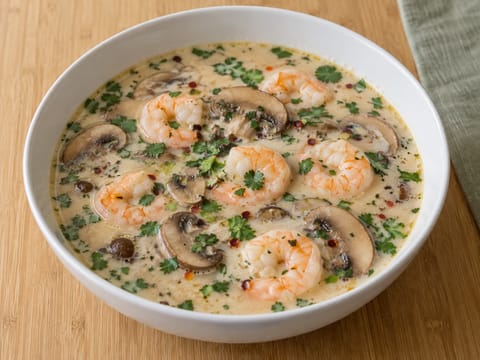
Thai coconut lime soup with prawns and mushrooms
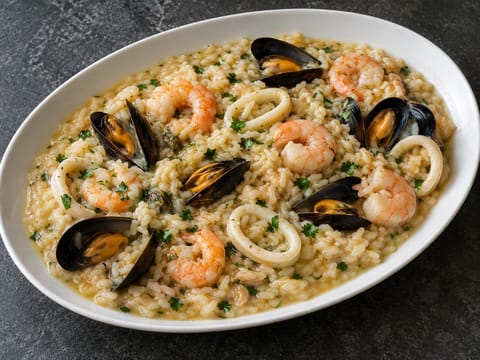
Creamy risotto with prawns, mussels, squid and parsley
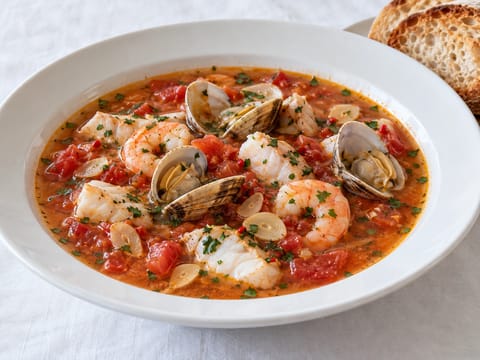
Venetian fish soup with mixed seafood in tomato and white wine
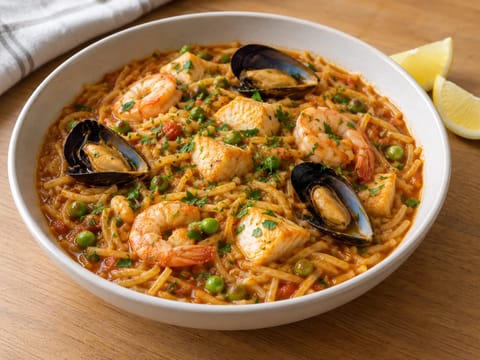
Catalan fideos casserole with seafood in tomato and saffron broth
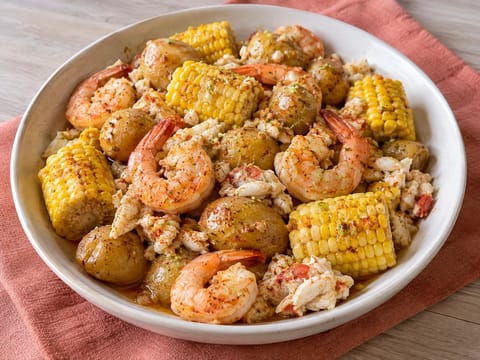
Seafood boil with prawns, crab, corn and baby potatoes
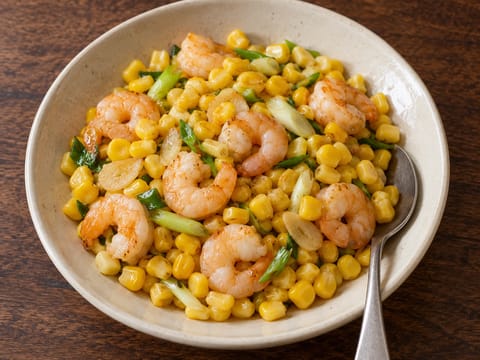
Sweetcorn stir-fry with prawns, spring onions and fish sauce
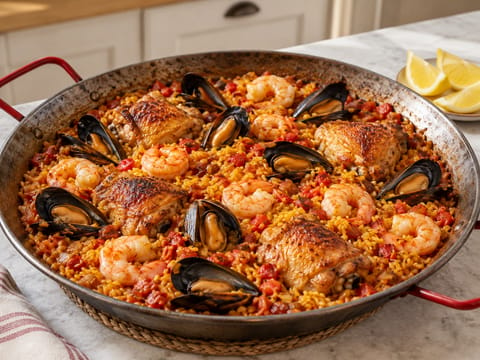
Mixed paella with chicken, prawns, mussels and saffron rice
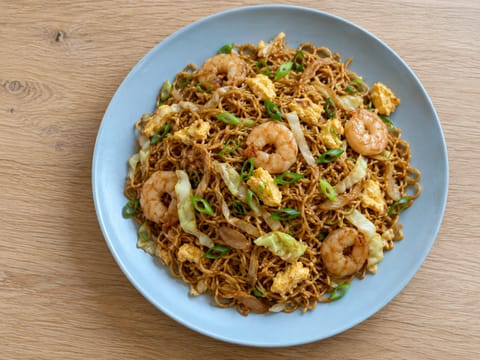
Indonesian stir-fried noodles with prawns, cabbage and egg
Portuguese seafood rice with prawns, mussels, squid and tomato
If crustaceans are there for texture, you will usually get a better result by choosing a different centrepiece rather than trying to mimic prawn or crab exactly. Firm fish, tofu, mushrooms or vegetables can take on a similar cooking method, but they will not bring the same sweetness and briny depth. If the recipe relies on crustacean stock or paste for savoury intensity, build flavour with alternatives such as vegetable stock, browned aromatics, tomato, seaweed for a marine note, or fermented seasonings where appropriate. The goal is to replace depth and savouriness, not to recreate shellfish flavour precisely.
Ingredient browsing is a practical next step when you are avoiding crustaceans, because it lets you explore alternative proteins and flavour-builders such as fish, seaweed, mushrooms or different stocks. Diet categories can also help if you are balancing seafood avoidance with other requirements, so you can narrow in on recipes that fit your overall approach to eating.
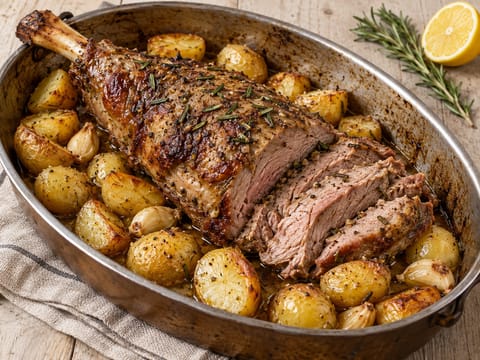
Oven roasted lamb with potatoes, garlic, rosemary and lemon
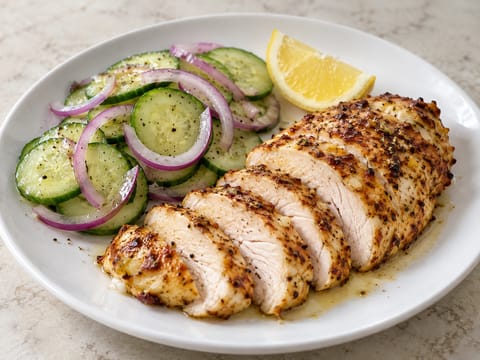
High protein air-fried yoghurt-marinated chicken with cucumber salad.
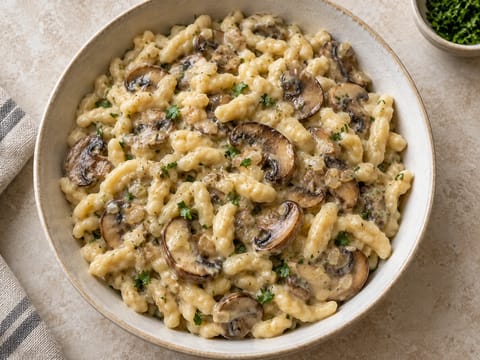
Spätzle with creamy mushroom sauce, onion, garlic and parsley
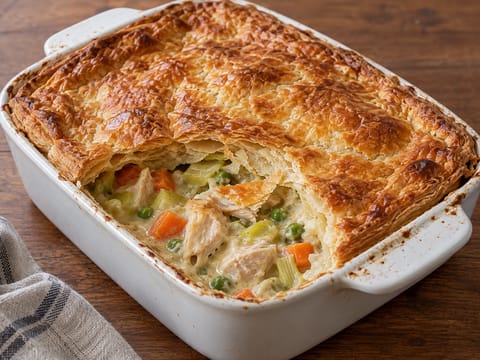
Chicken and vegetable pie topped with golden puff pastry
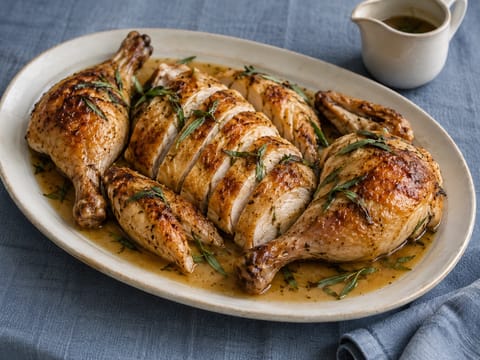
Roast chicken with garlic, lemon and tarragon jus

Crisp pestiños pastry fritters dipped in warm honey
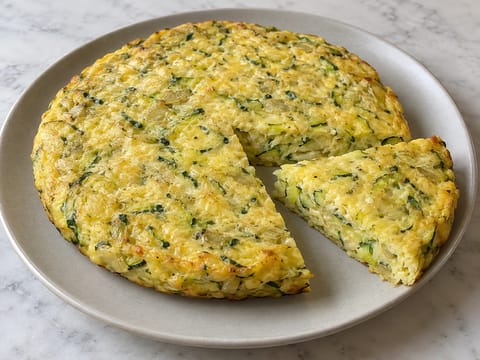
Italian courgette frittata with Parmesan
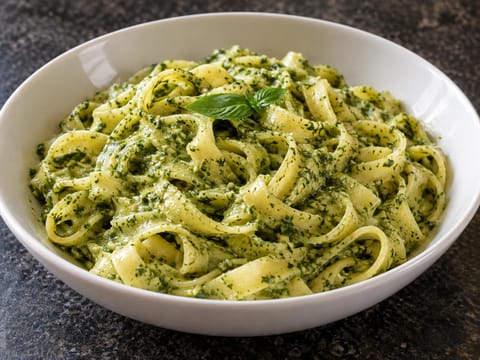
Basil pesto pasta with pine nuts, Parmesan and garlic
Yes. Prawns and shrimp are crustaceans, along with crab, lobster and crayfish.
No. Mussels, clams, oysters and squid are molluscs, a different group of shellfish. Some people avoid both groups, but they are not the same category.
Shrimp paste, dried shrimp, shellfish stocks and some seafood-flavoured sauces or soups. These can be used in small amounts, so checking ingredients matters.
Fish sauce is typically made from fish, but recipes and brands vary. If you are avoiding crustaceans, read labels carefully, especially for blended seafood sauces.
Allergens are generally proteins, and cooking does not reliably remove the risk. If you need to avoid crustaceans, treat cooked and raw forms with the same caution.
Use separate boards and utensils for shellfish, wash hands and surfaces promptly, and be cautious with shared oils or grills if crustaceans are cooked alongside other foods.
Crustaceans are straightforward when they are whole, but they can be harder to spot when used as paste, dried seafood or stock. If avoidance is important, focus on those concentrated ingredients and on cross-contact points such as shared oil, grills and prep tools.
