
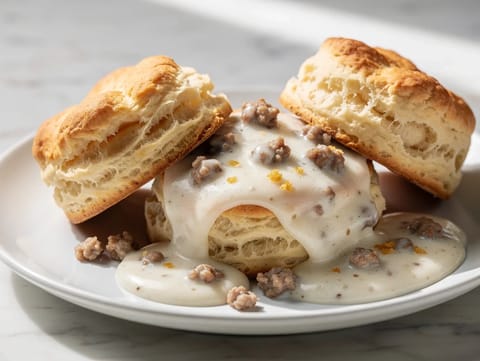
Biscuits and Gravy
Warm biscuits topped with creamy pork sausage gravy

A breakfast bowl is a composed meal built in layers: a base, a main topping, and smaller add-ons for texture and flavour. What makes it useful is how easily you can change the bowl by swapping the base, from yoghurt to oats to grains, without relearning the whole dish. The base determines whether the bowl is creamy, spoonable, chewy or brothy, and it also decides how well the bowl can be prepared ahead or assembled quickly when time is tight.
Yoghurt and similar dairy or dairy-free bases give a cool, creamy bowl that pairs naturally with fruit, nuts and crunchy toppings. Oat-based bowls range from loose and porridge-like to thick overnight oats, with sweetness and spice often built in. Grain bowls made with rice, quinoa or other grains tend to be chewier and more savoury-leaning, especially when topped with vegetables, beans or eggs. Smoothie bowls sit somewhere between drink and dessert: thick enough to hold toppings, but quick to melt and soften anything crisp. Some breakfast bowls are essentially soups or broths with noodles or grains, where the warmth and saltiness are the point. Each style asks different things of toppings, particularly whether they should stay crisp or soften into the base.
Warm biscuits topped with creamy pork sausage gravy
Chilaquiles verdes topped with fried eggs, Mexican crema, queso fresco and red onion
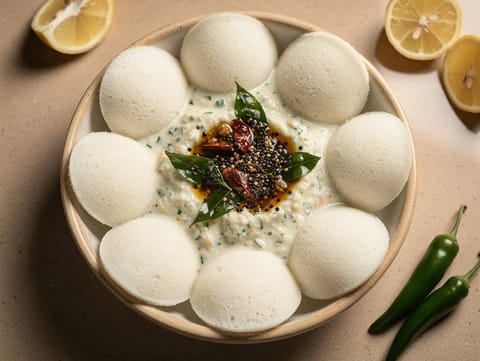
Warm idli with coconut yoghurt chutney and tempering
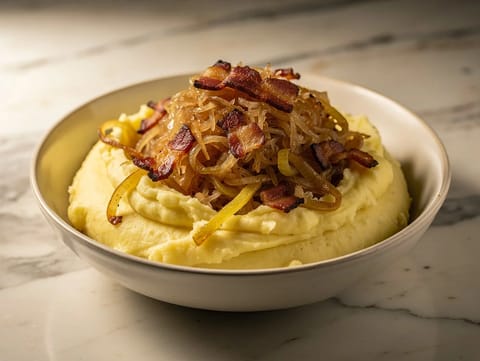
Mashed potatoes topped with sauerkraut, bacon and sautéed onion
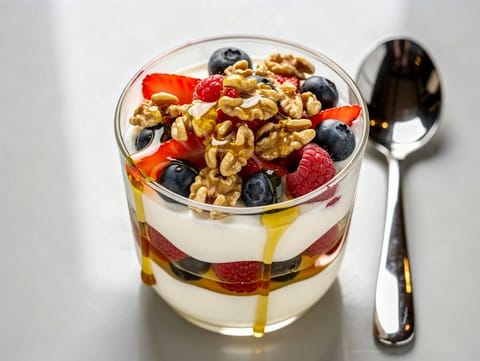
Greek yoghurt parfait layered with honey, berries and toasted walnuts

Creamy polenta with butter, Parmesan and fried eggs
If you need something you can eat immediately, look for bowls where the base is already cooked or requires only brief heating, and where toppings are simple to add. For make-ahead, choose bases that improve as they sit, such as overnight oats or cooked grains that reheat well, and keep crunchy elements separate until serving. If you are feeding different appetites, pick a “neutral” base and offer toppings in small bowls so people can build their own, sweet or savoury. Texture is a practical guide: creamy bases benefit from something crisp (toasted seeds, granola-style toppings), while chewy grains often want something juicy or saucy to stop the bowl feeling dry. Finally, consider portability. Thicker bowls travel better than very hot, brothy ones, which are harder to keep at a pleasant temperature.
Creamy polenta with butter, Parmesan and fried eggs
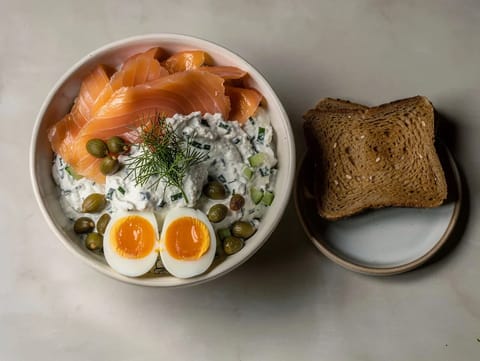
Smoked salmon bowl with yoghurt, egg and capers
Warm idli with coconut yoghurt chutney and tempering
Greek yoghurt parfait layered with honey, berries and toasted walnuts
Mashed potatoes topped with sauerkraut, bacon and sautéed onion
Warm biscuits topped with creamy pork sausage gravy
Huevos rancheros with warm tortillas, ranchero sauce, coriander and queso fresco
Chilaquiles verdes topped with fried eggs, Mexican crema, queso fresco and red onion
Turkish poached eggs served on garlicky Greek yoghurt with Aleppo butter and dill
Chilaquiles rojos with tortilla chips, tomato chilli sauce, chicken, crema and cheese
Aim for one main flavour direction, then add contrast. Sweet bowls often work best when you balance fruit sweetness with acidity (citrus, berries) and a pinch of salt, which keeps flavours from tasting flat. Savoury bowls benefit from a bright element too, commonly something pickled, a squeeze of lemon, or a sharp sauce. Add crunch with toasted nuts or seeds, crisp vegetables, or a brittle topping, but only if the base will not immediately soften it. If you are using eggs, think about how the yolk behaves: a runny yolk becomes a sauce for grains, while a firmer egg is easier for packed bowls. Spices and herbs are most effective when they are used to reinforce the base, not compete with it.
Cooking method can help you decide whether your bowl starts with something simmered, baked, or simply assembled, which changes both texture and morning timing. Meal time is also useful when you want bowls that lean more towards brunch-style savoury dishes or quick, lighter starts.
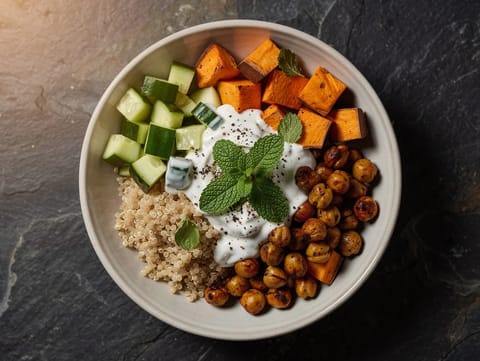
Quinoa bowl with spiced chickpeas, sweet potato, cucumber and yoghurt
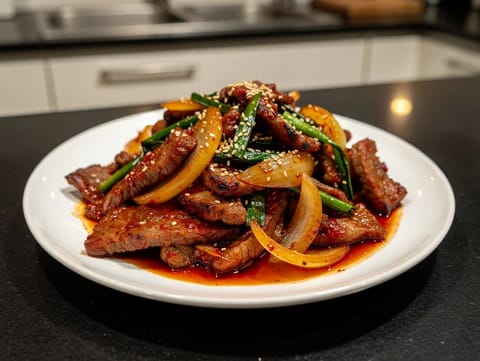
Spicy Korean pork stir-fry with onion and spring onions
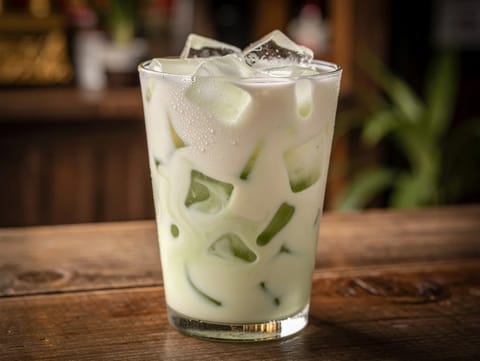
Creamy pandan iced milk sweetened with condensed milk
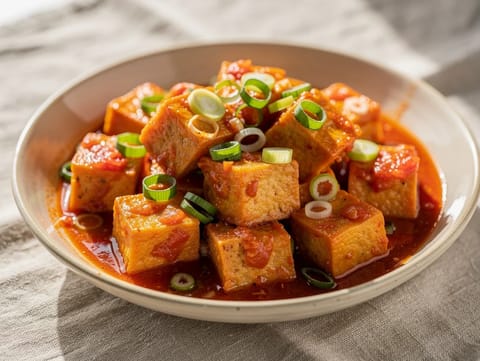
Tofu simmered in a light tomato sauce with garlic
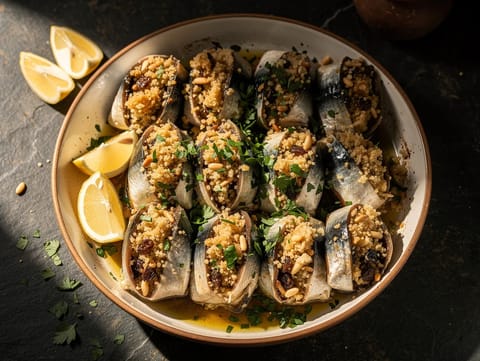
Baked stuffed sardines with breadcrumbs, pine nuts and raisins

Crisp fritters made with salted cod, spring onion and chilli
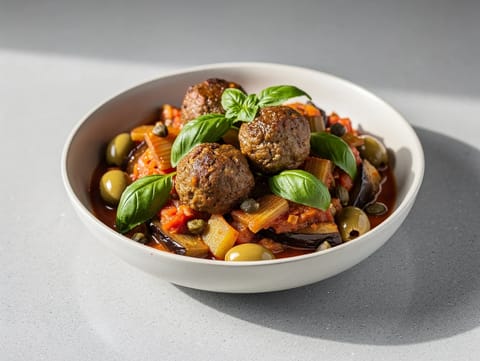
Aubergine caponata with tender beef meatballs, capers and olives
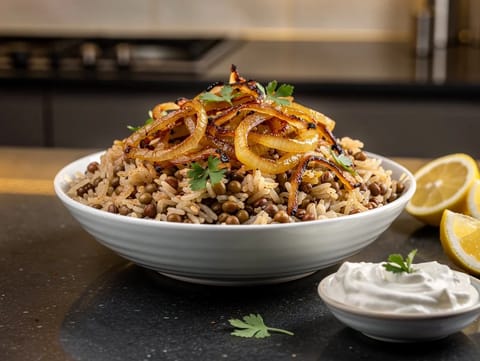
Lentils and rice topped with caramelised onions
It is usually the structure and portion: a bowl built around a substantial base with toppings that make it feel like a complete, spoonable meal rather than a small bite.
Yes. Many bowls use grains, vegetables, beans and eggs, with sauces and seasonings that would not feel out of place in a lunch bowl.
Add crunchy elements at the last moment, or pack them separately. Anything dry and crisp will soften quickly on contact with yoghurt, porridge or smoothie bases.
They share ingredients, but the texture is different. Overnight oats soften without cooking and tend to be thicker and cooler, while porridge is cooked and usually served warm.
Include a saucy or juicy element, such as sautéed vegetables with their juices, a dressing, a runny yolk, or a spoonable condiment that coats the grains.
Once you choose the base, the rest is straightforward: one main topping for substance, one bright note, and one crunchy element added at the end. That simple structure keeps breakfast bowls flexible without feeling random.
