
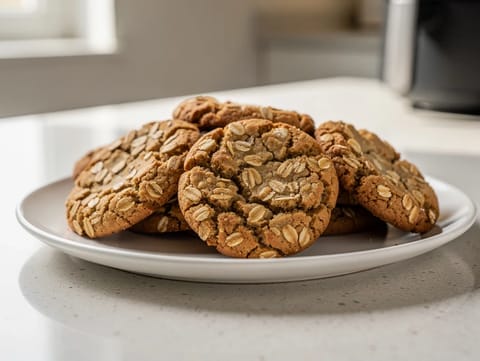
Air Fryer Oatmeal Cookies
Air fryer oatmeal cookies with a chewy centre and crisp edges.

Cookies are small bakes where tiny changes in dough and baking make a noticeable difference. The same basic ingredients can produce a crisp snap, a soft chew, or a tender, cake-like crumb, depending on fat type, sugar balance, moisture and how the dough is handled. When you are choosing a cookie recipe, it helps to think about spread and thickness first, then flavour. A cookie that spreads widely needs a different approach from one that holds its shape, and that choice affects everything from portioning to how many you can bake on a tray.
A cookie is a small, individually portioned baked sweet, usually made from a dough or thick batter and baked until set. Unlike cakes, cookies are typically baked in discrete pieces rather than in a single tin, and the surface-to-centre ratio is part of the appeal: edges brown, centres stay softer, and the aroma of toasted sugar and butter develops quickly. The category includes drop cookies, rolled and cut shapes, pressed or piped biscuits, and bar-style cookies that are baked in a slab and portioned afterwards. “Cookie” does not automatically mean soft, and it does not guarantee a particular flavour profile. What it does imply is a bake where structure comes from flour and eggs, tenderness from fat, and texture from how those elements are balanced and baked.
Air fryer oatmeal cookies with a chewy centre and crisp edges.
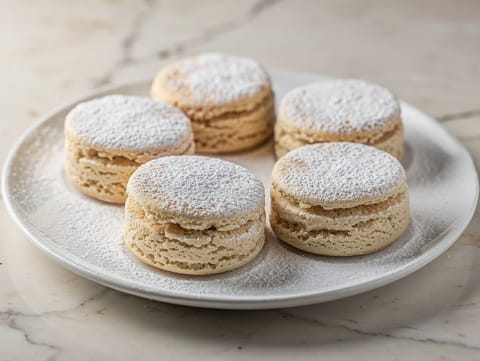
Crumbly Spanish lard biscuits with cinnamon, lemon and icing sugar
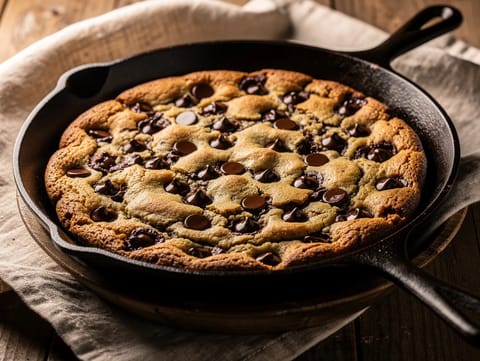
Giant skillet cookie with dark chocolate chips and vanilla
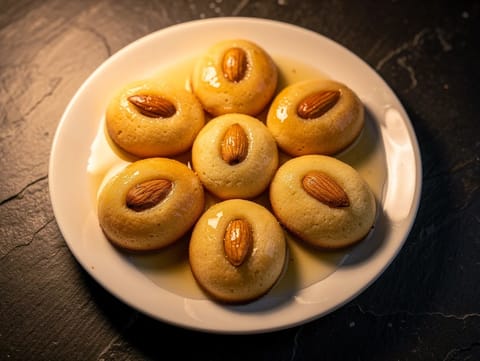
Tender semolina biscuits soaked in lemon syrup
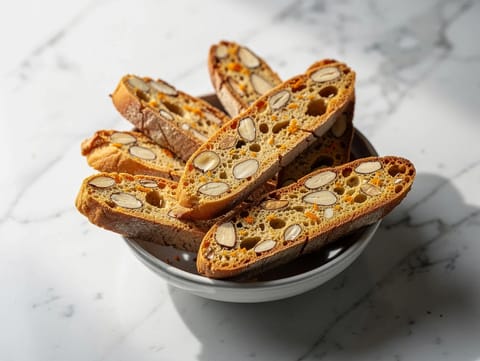
Twice-baked almond biscuits with orange zest
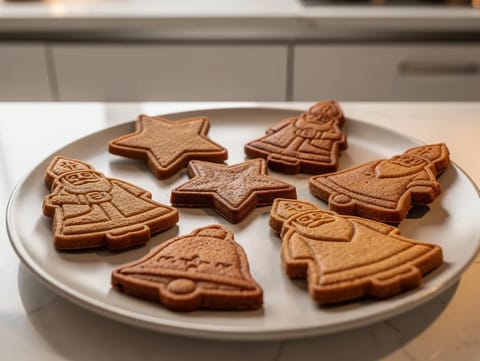
Crisp Belgian spiced biscuits with warm baking spices
For chewy cookies, look for recipes that retain moisture and set without drying out; they often bake to a slightly underdone centre that firms as it cools. Crisp cookies tend to be thinner, baked longer, or made with a sugar and fat balance that encourages spread and browning. If you want a thick, soft cookie, choose doughs that hold shape, whether through chilling, a higher flour content, or mix-ins that add bulk. Shortbread-style cookies are about tenderness and a fine crumb, so gentle mixing matters more than aeration. Consider add-ins as texture tools: nuts add crunch, chocolate can create soft pockets, and oats can make a cookie feel heartier and less delicate. Finally, think about portioning. Scooped dough gives rustic rounds; rolled dough gives clean edges and more even baking.
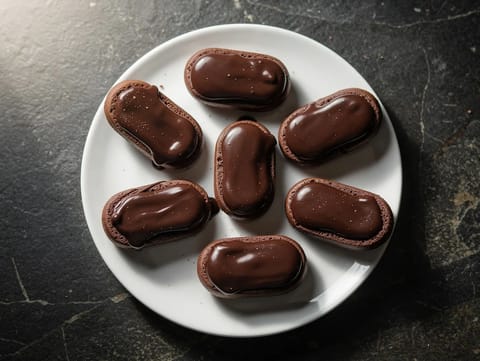
Spiced honey and cocoa biscuits finished with dark chocolate glaze
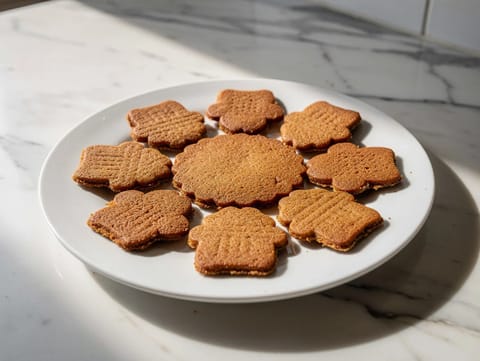
Crisp Dutch spiced biscuits with cinnamon and mixed spice
Giant skillet cookie with dark chocolate chips and vanilla
Crisp Belgian spiced biscuits with warm baking spices
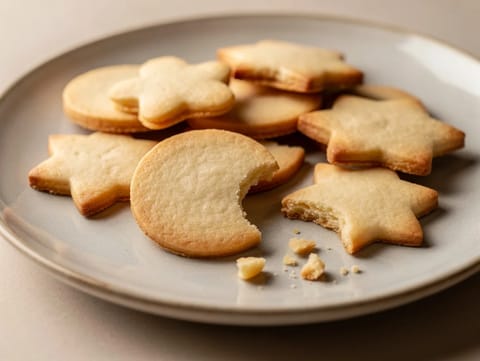
Crisp Nordic biscuits with vanilla and cardamom
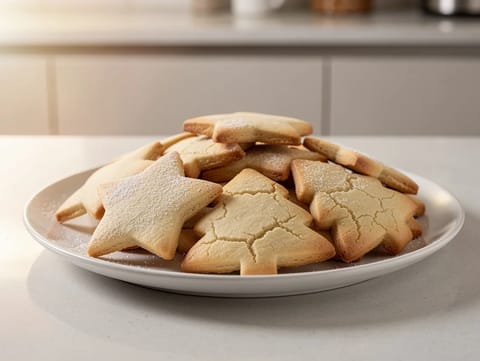
Buttery vanilla sugar cookies cut into festive shapes

Treacle gingerbread cookies with warm spices and crisp edges
Chewy New York-style cookies made with brown sugar dough and dark chocolate chips
Indian shortbread-style biscuits baked pale-golden with ghee, cardamom and pistachios
Air fryer chocolate chip cookies bake in small batches until lightly golden.
Pan-baked chocolate chip cookie with dark chocolate and a gooey centre
Turrón nougat made with whipped egg whites, honey syrup and roasted almonds
Drop cookies are the everyday workhorse: you portion the dough and let the oven do the shaping, with spread determining whether you get thick rounds or lacy edges. Rolled and cut cookies are chosen for defined shapes and a more uniform thickness, which makes them predictable for decorating. Pressed or piped cookies, such as butter-rich swirls, rely on a soft dough that holds detail, and they bake quickly because the pieces are small. Biscotti-style cookies are baked twice for a dry, crisp finish designed for dipping. Bar cookies and tray bakes sit between cookies and cake: they are portioned after baking, which suits layered fillings, swirls and toppings that would be awkward on individual pieces.
Crisp cookies pair well with hot drinks because they keep their snap and can be dipped without collapsing immediately. Chewy cookies are often better alongside cold milk or iced coffee, where the contrast highlights their softness. Butter-forward cookies sit naturally with tea, as the tannins cut richness. Chocolate-heavy cookies can be matched with coffee, where bitterness keeps the sweetness in check, or with a lightly sweet dessert wine if you want the drink to echo the cocoa. Cookies also work as components: crumbled as a base, sandwiched with ice cream, or served with fruit where a crisp biscuit adds structure. When pairing, match intensity. Delicate vanilla biscuits can be overwhelmed by strongly spiced drinks.
Cookie results are closely tied to cooking method, from creaming and mixing style to baking temperature and tray choice, so method is a useful way to compare outcomes. Course can also help if you are choosing between everyday biscuits, dessert-style cookies, or bakes intended for gifting and sharing.
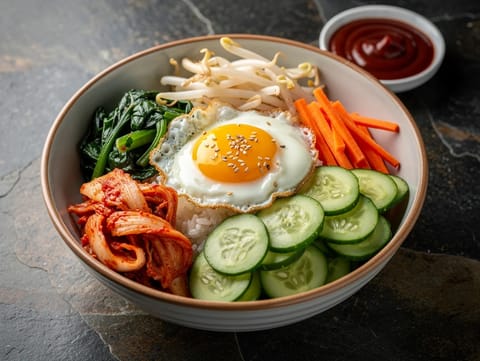
Bibimbap bowl with rice, vegetables, fried egg and gochujang
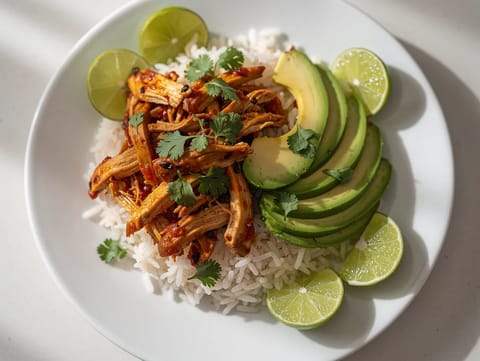
Chicken tinga rice bowl with chipotle tomato sauce and avocado
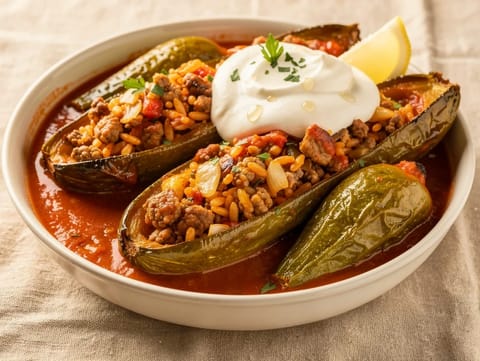
Courgettes stuffed with minced lamb and rice in tomato sauce
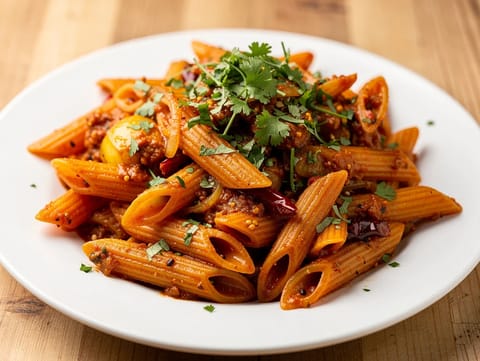
Penne in spiced tomato masala with garam masala
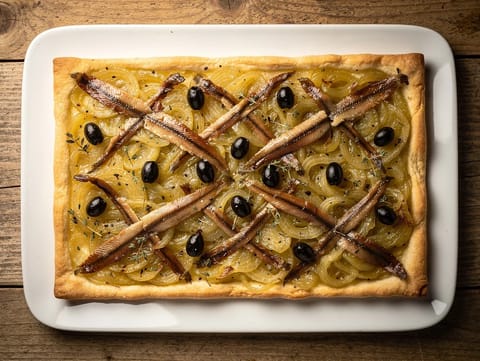
Onion tart with anchovy fillets and black olives
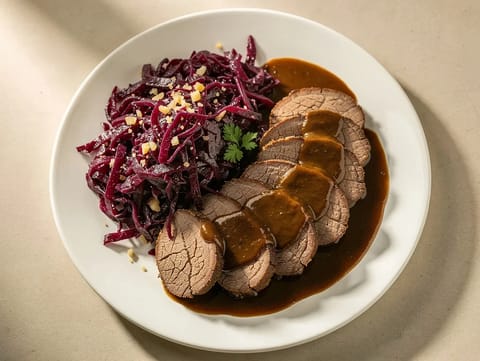
German pot roast in red wine vinegar with apple red cabbage
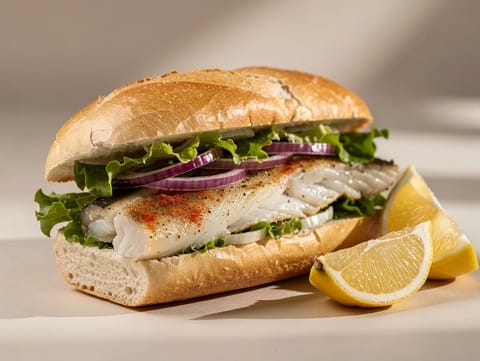
Fish sandwich in crusty bread with onion, lettuce and lemon
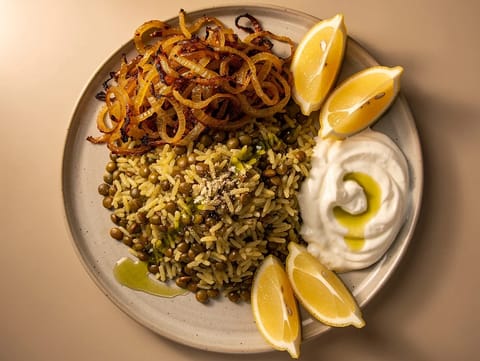
Lentils and rice topped with caramelised onions
Common reasons include warm dough, a high proportion of fat or sugar, or a hot tray. Some recipes control spread by chilling the dough or using a thicker dough that sets sooner in the oven.
They may be overbaked, or the dough may have too much flour for the fat and sugar balance. Cookies also continue to set as they cool, so taking them out when the centre still looks slightly soft can help for chewy styles.
The words vary by region. In British English, many cookies are a type of biscuit, often larger and softer. In American usage, “cookie” covers most sweet biscuits.
Not always, but chilling can reduce spread and deepen flavour as the dough hydrates. It is most useful for thick cookies or when the dough is very soft.
Creaming incorporates air and helps with lift and texture. Recipes that melt butter or use oil tend to spread more and can bake up chewier or denser, depending on the formula.
Keep portions consistent and leave space for spread. Baking on the middle shelf and rotating the tray partway through can help if your oven has hot spots.
Decide whether you want crisp, chewy, tender or thick, and let that guide your recipe choice and handling. Once the texture is right, flavours and mix-ins are easy to vary without changing what makes the cookie satisfying.
