
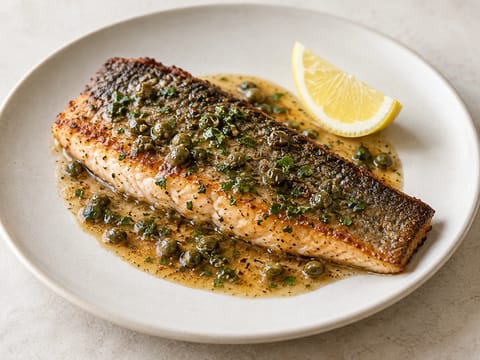
Pan-Fried Trout with Brown Butter and Capers
Crisp pan-fried trout with brown butter and capers
A sheet pan dish is less a single recipe type than a way of cooking: ingredients spread on a tray so they roast, brown and finish together. When you’re choosing between options, the key question is whether the ingredients want the same heat and the same amount of time. Get that right and you’ll have crisp edges and tender centres; get it wrong and you’ll be juggling half-cooked vegetables and overdone protein. This is the page to use when you want the simplicity of one tray, but still want control over texture and timing.
Sheet pan dishes are cooked on a shallow baking tray in a hot oven, relying on dry heat to brown and concentrate flavour. They often include a mix of vegetables and a protein, but the defining feature is the shared tray and the roasting method. Because the food is exposed, surface area matters: crowded trays steam, while well-spaced pieces roast and caramelise. The tray itself is part of the technique, too. A heavy metal pan holds heat and encourages browning; lining can reduce sticking but may slightly soften the underside. Many sheet pan dishes are finished with a sauce, dressing or fresh herbs after roasting, which restores brightness to flavours that have deepened in the oven.
Crisp pan-fried trout with brown butter and capers
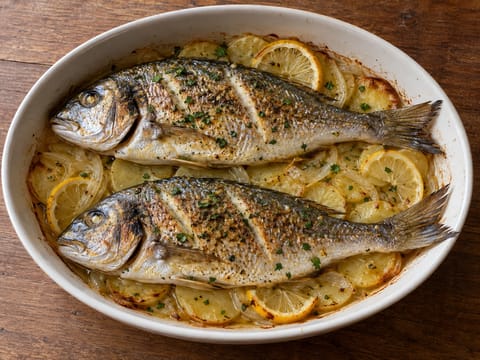
Baked sea bream with potatoes, onion, lemon and white wine
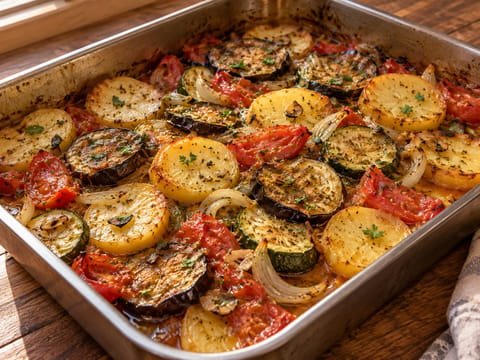
Greek olive oil roasted vegetable traybake
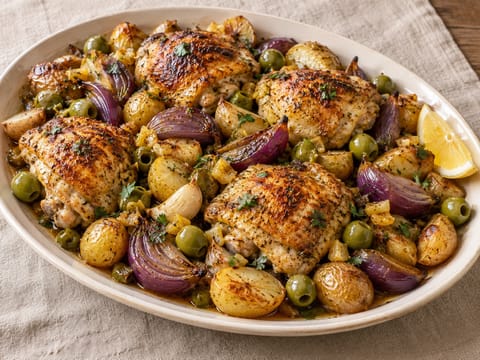
Chicken traybake with preserved lemon, olives, potatoes and red onion
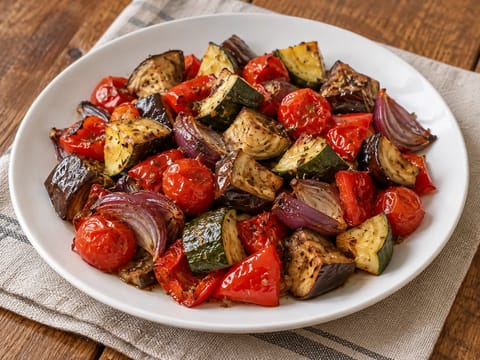
Roasted vegetable traybake with garlic, olive oil and oregano
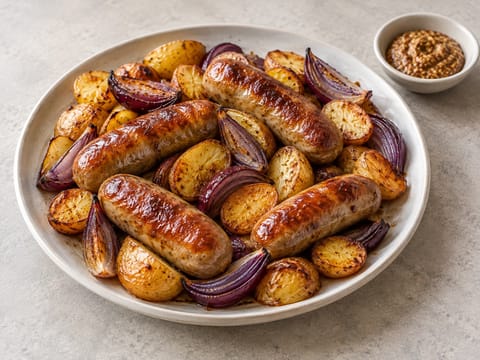
Air-fried sausages and potatoes with paprika and onion.
Choose by timing compatibility. Dense vegetables such as potatoes, carrots and squash usually need longer than quick-cooking items like asparagus, tomatoes or leafy greens, so look for recipes that stagger additions or cut everything to match. Choose by moisture. Ingredients that release water, such as mushrooms or courgettes, can soften the overall roast unless they’re given space or paired with items that benefit from that moisture. Choose by fat and sugar. Sausages and chicken thighs baste the tray and encourage browning; sugary glazes can burn if applied too early. Finally, choose by serving style: some traybakes are meant to be spooned over rice or couscous, while others are designed to be eaten straight from the pan with a squeeze of citrus or a yoghurt-style sauce.
Chicken traybake with preserved lemon, olives, potatoes and red onion
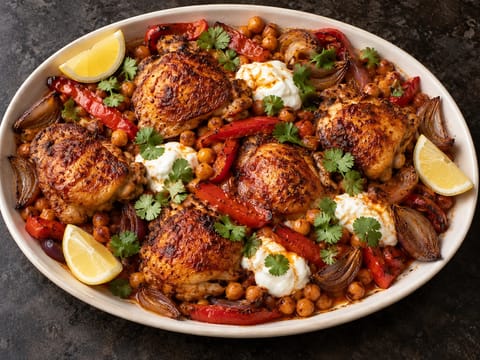
Harissa chicken traybake with chickpeas and peppers
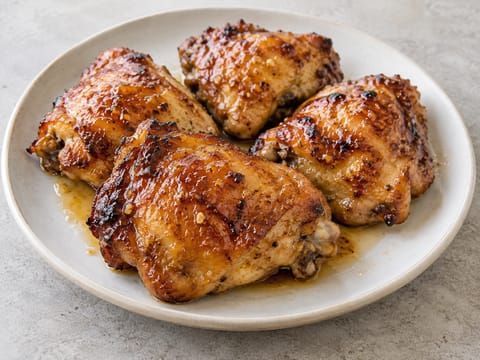
Air fried chicken thighs coated in honey Dijon mustard glaze.
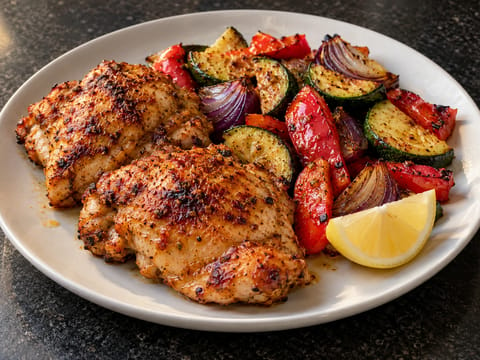
Air-fried chicken thighs with courgette, peppers and red onion.
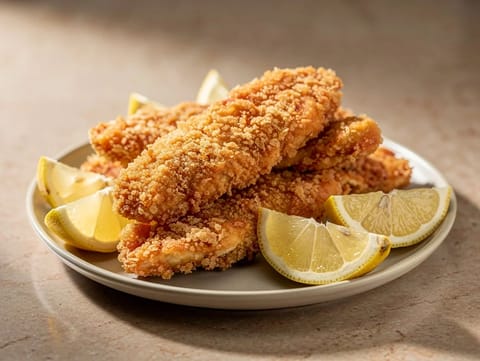
Panko-coated chicken tenders air fried until extra crispy.
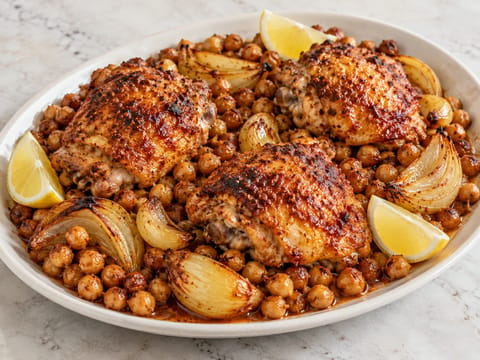
Harissa roasted chicken thighs with chickpeas
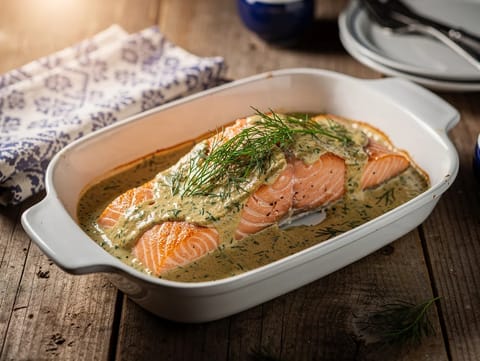
Baked salmon with mustard, dill and lemon
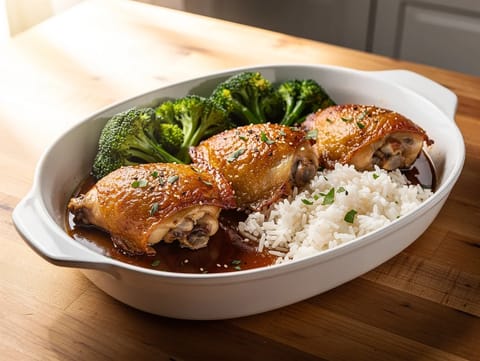
Baked chicken thighs with a sticky honey garlic soy glaze
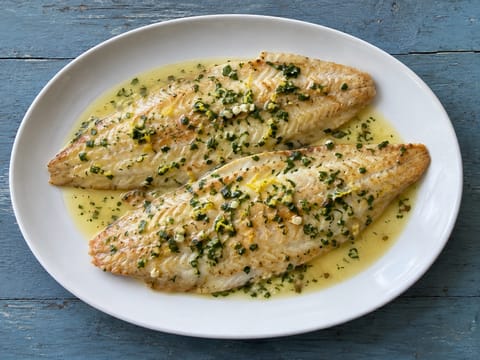
Pan-cooked sole with lemon butter sauce
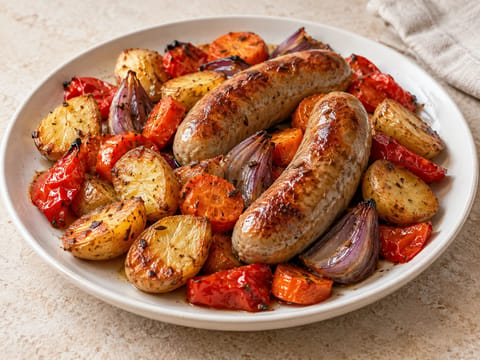
Traybake bratwurst with roasted vegetables, mustard and caraway
Crisp pan-fried trout with brown butter and capers
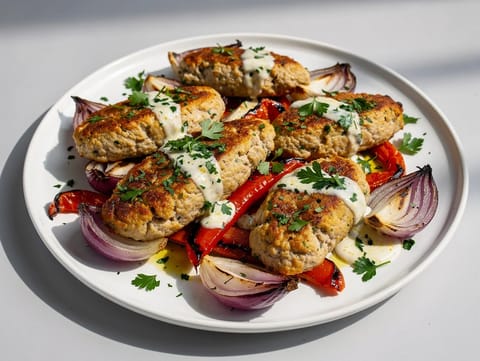
Chicken kofta traybake with peppers and yoghurt lemon sauce
Because roasting emphasises savoury, browned flavours, sheet pan dishes often benefit from a bright finish. Citrus juice or zest, vinegar-based dressings, pickled onions, capers or a spoonful of something tangy can lift the whole tray. Creamy elements, such as yoghurt, tahini or a soft cheese, add contrast to crisp edges and help bind bite-sized pieces into a cohesive plate. If the tray is mostly vegetables, a crunchy topping such as toasted nuts or breadcrumbs can add texture. If the tray is rich, keep sides simple: plain grains, flatbreads or a green salad are often enough.
Cooking method is the natural companion to sheet pan dishes, especially if you want to compare roasting with grilling, sautéing or one-pot approaches for similar ingredients. Cooking time can also help you choose between quick traybakes and slower roasts, since browning and tenderness depend on how long the pan stays in the oven.
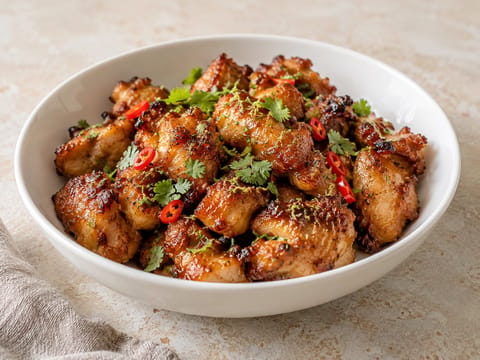
Crispy Thai chicken bites finished with lime and honey glaze.
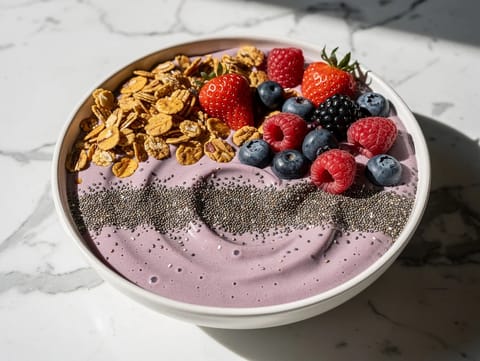
Kefir smoothie bowl with berries, banana, granola and chia.
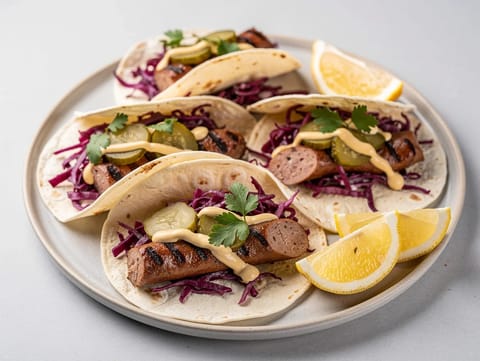
Bratwurst tacos with red cabbage, gherkins and mustard yoghurt sauce
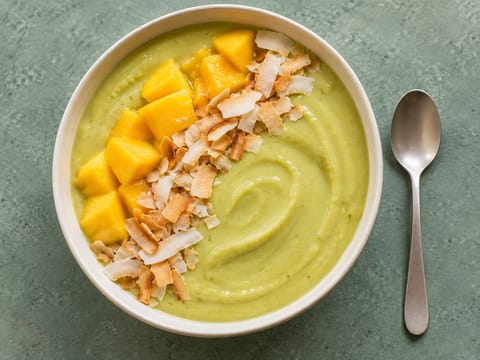
Coconut pandan smoothie bowl topped with mango and toasted coconut.
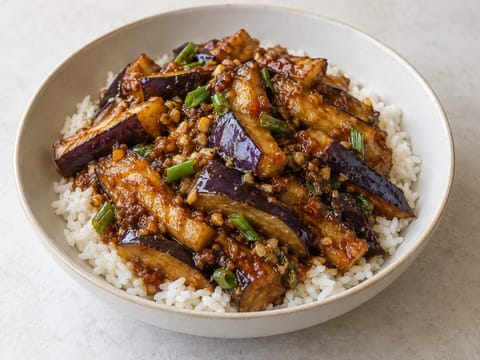
Sichuan-style aubergine with garlic sauce
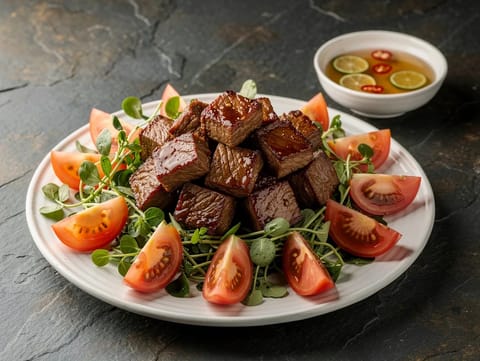
Quick-seared Vietnamese shaking beef with salad and lime dipping sauce
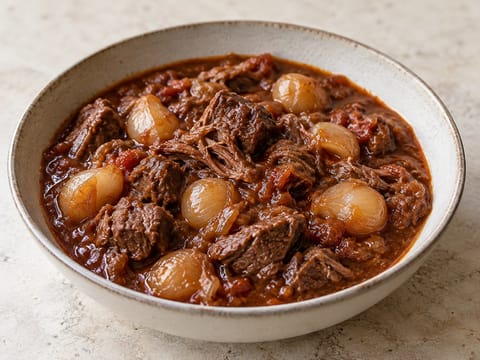
Greek slow-cooked beef stew with pearl onions and warm spices
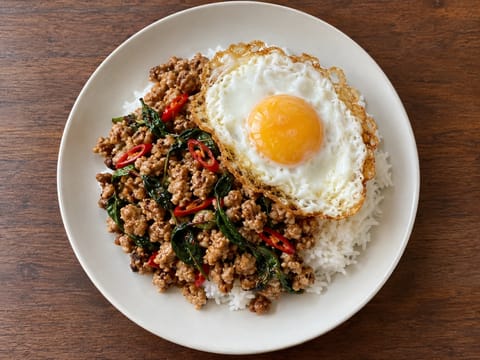
Thai basil pork stir-fry served with jasmine rice and fried egg
Usually the tray was crowded or the ingredients were too wet. Give pieces space, pat proteins and vegetables dry where possible, and use a hot oven so moisture evaporates quickly.
Lining helps with sticking and washing up, but it can slightly reduce browning underneath. If browning is the priority, a lightly oiled bare metal tray often gives better contact.
Match size to cooking time and add ingredients in stages. Start dense vegetables first, then add quicker-cooking vegetables and delicate items later.
Yes, but fish cooks quickly and can dry out. It often works best when added towards the end, or paired with vegetables that cook fast or have been started earlier.
Roasting deepens flavour but can mute freshness. Finish with acidity, herbs, a punchy sauce or a salty element such as olives or cheese to bring definition back.
The best sheet pan dishes are built around ingredients that roast at a similar pace, or a plan for adding them in stages. Once you choose with timing and moisture in mind, the one-tray promise becomes reliable.
