Rubbing butter into flour breaks cold fat into smaller pieces and coats them with flour. The size you leave affects the finished bake: a fine crumb for one recipe and larger flakes for another are both deliberate results. Keep the mixture cool instead of working it into a greasy paste.
Step by step
Start with cold pieces of butter
Measure flour and other dry ingredients into a bowl. Cut the butter into small cubes and keep it cold until needed. Use a bowl large enough to lift and move the mixture easily.
Toss the butter through the flour
Coat the cubes so they do not all stick together. Break larger pieces apart gently before beginning the rubbing motion.
Use fingertips rather than warm palms
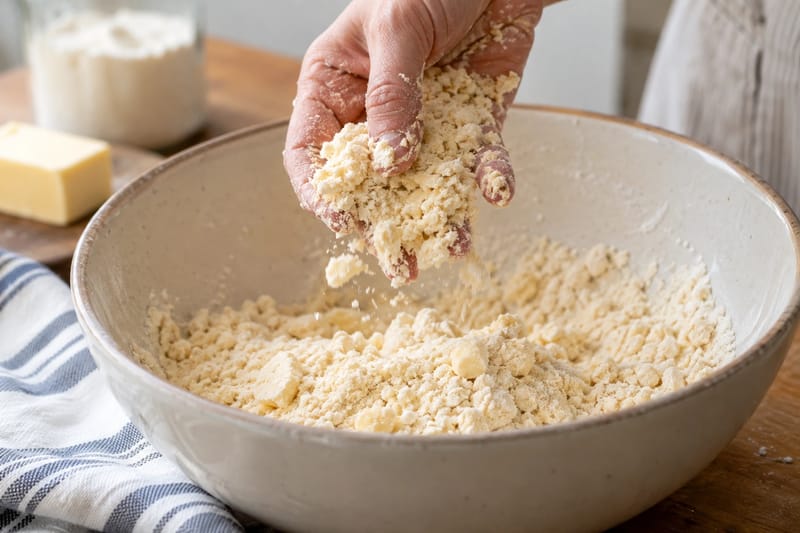
Pick up small amounts and rub butter and flour lightly between fingertips. Let the mixture fall back into the bowl, working around it rather than squeezing the whole batch into your hands.
Stop at the specified texture
Look for the crumb or flake size named in the recipe. Check the base for large untouched cubes. Add the next liquid only after the fat is distributed as intended, then mix according to that dough’s instructions.
Greasy crumbs or tough pastry
If butter smears or the bowl feels warm, refrigerate the mixture before continuing. More rubbing is not always better: some flaky doughs need visible fat pieces. Once liquid goes in, avoid treating pastry like a bread dough unless the recipe specifically asks for kneading. Do not taste raw flour mixtures.