Butter is easiest to measure by weight while it is still firm. A recipe may then ask you to soften, melt or brown it, and those instructions affect how it behaves in the mixture. Check whether the stated quantity is measured before or after that preparation.
Step by step
Read the preparation order
An amount of butter followed by “melted” usually means measure it first, then melt it. A recipe specifying a finished amount of browned butter needs attention to water lost during browning. Follow any explicit clarification in the recipe.
Tare and add butter
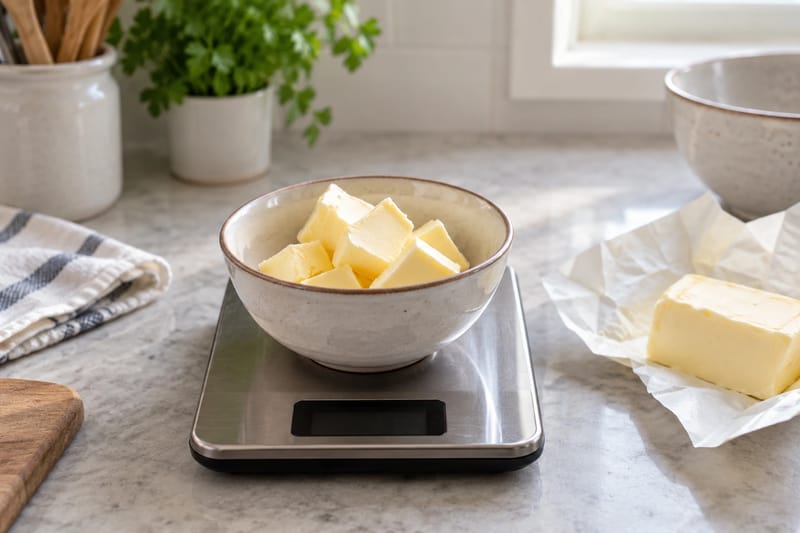
Place a bowl on the scales, tare and add pieces until you reach the required weight. If using wrapper markings, check the package’s total weight and divisions rather than assuming every stick or block has the same size.
Measure volume only in the required state
For a solid-butter cup measure, press pliable butter into the measure without large air gaps and level it. For melted butter measured by volume, use the specified liquid measure and allow foam to settle enough to read it.
Reach the mixing temperature needed
Soften, melt or cool the measured butter according to the recipe. Scrape it into the mixture thoroughly so you do not leave a substantial amount behind in the bowl.
Blocks, sticks and brown butter
Local package sizes vary, so a stick is not a universal unit. Melted butter cannot replace softened butter in a creaming step without changing the method. Browning removes water, while clarifying removes components; neither process should be treated as an unchanged volume of ordinary butter.