
Blind-baking cooks a pastry case before adding its filling. A partially baked shell will finish in the oven with a filling; a fully baked shell is ready for a filling that will not bake. Check which result your recipe needs before starting.
Step by step
Fit and chill the pastry
Ease the pastry into the tin without stretching, then trim and chill as directed. Preheat the oven to the recipe’s temperature. Prick the base only if the recipe calls for it; holes can be unsuitable for very liquid fillings.
Add paper and weights
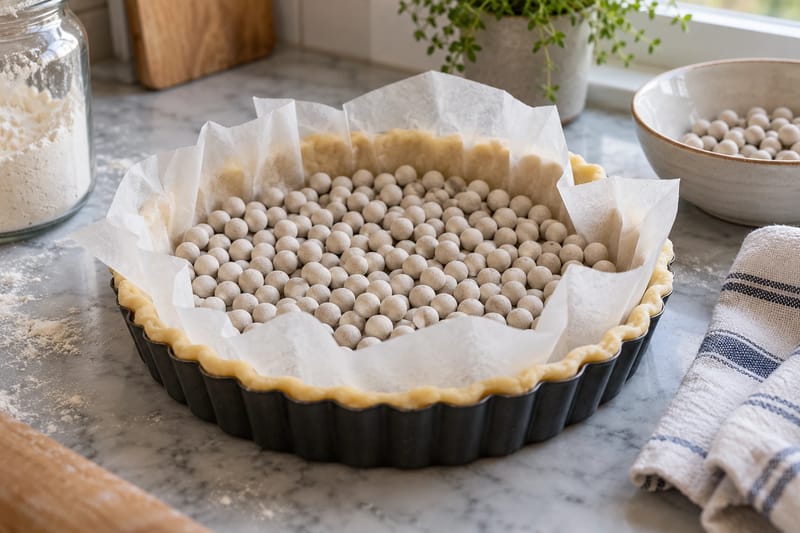
Line the pastry with oven-safe baking paper or foil and fill with suitable baking weights. Support the sides as well as the centre. Keep the paper large enough to lift later but clear of oven heating elements.
Bake until the sides hold their shape
Bake for the recipe’s initial stage. The edges should be set enough to stand when the weights come out. Use dry oven gloves to remove the tin and carefully lift the paper and hot weights into a heatproof container.
Return the base to the oven
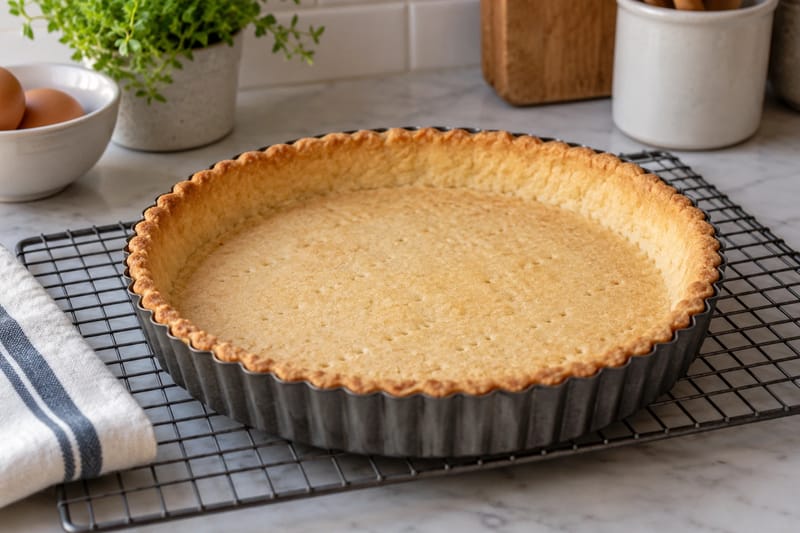
Continue baking until the base is dry. For a fully baked case, let it turn golden; for a partially baked case, stop at the stage your recipe specifies. Cool or fill at the temperature the recipe specifies. Do not call a pale, damp base fully baked just because the edges have coloured.
Slumped sides or a puffed base
Insufficient chilling, stretched pastry or poorly supported sides can cause shrinkage. Removing weights before the sides set can let them collapse. If the base begins to puff during the second stage, follow the recipe’s remedy carefully rather than pressing hot pastry with bare fingers. Keep used baking beans separate from food intended for ordinary bean cooking.
