Beating egg whites makes a foam that can lighten cakes or form a meringue. The required peak stage and sugar timing depend on the recipe. Whipping changes texture but does not cook the eggs or make an uncooked mixture safe.
Step by step
Prepare clean equipment and separate carefully
Use a clean, grease-free bowl and whisk. Separate each egg over a small bowl before adding its white to the main batch, so a broken yolk does not contaminate all the whites.
Begin at a moderate speed
Beat until a fine foam develops. Add any acid, such as cream of tartar, at the recipe’s specified stage. For a recipe served without thorough cooking, use a pasteurised egg product suitable for whipping.
Add sugar as the recipe directs
For meringue, gradual additions allow sugar to incorporate without weighing down the foam at the start. A cake recipe may use a different sequence; do not add extra sugar simply because you are beating whites.
Stop to check the peak
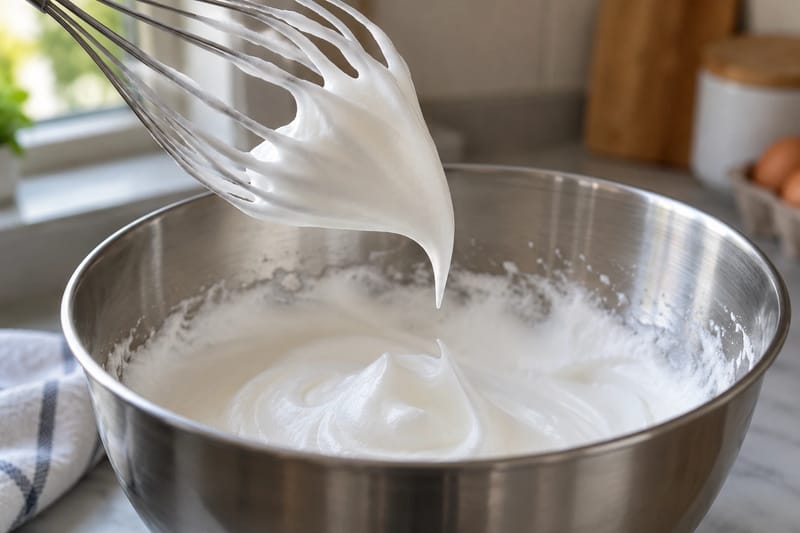
Switch off before lifting the whisk. A soft peak folds over; a firm peak stands while the foam remains smooth and glossy. Stop at the requested stage and use promptly before the foam loses its structure.
Foam that stays flat or becomes dry
Yolk or grease can hinder foaming; thoroughly clean the equipment and use uncontaminated whites for a reliable restart. Dry, clumpy foam is difficult to fold evenly and may need replacing. Do not judge egg safety by a stiff peak, and do not taste an uncooked meringue made with ordinary raw eggs.