

Cloudberry Oat Smoothie
Cloudberries, oats and skyr blended into a thick breakfast smoothie.

Nordic cooking is often recognised by its ingredients and restraint: rye and oats, potatoes and root vegetables, berries, mushrooms, dairy, and fish prepared with smoke, salt or gentle curing. Flavours tend to be clean and clearly defined, with acidity from pickles or vinegar and freshness from herbs such as dill. This is a useful place to browse when you want food that feels grounded in the larder and the landscape, whether that means a simple open sandwich, a warming soup, or a bake built around fruit.
In recipe terms, Nordic usually points to the countries of Northern Europe and their overlapping home-cooking traditions, rather than one fixed set of dishes. You may see Swedish, Danish, Norwegian, Finnish or Icelandic references, and sometimes broader ‘Scandinavian’ cues. It does not automatically mean a recipe is modern restaurant-style, nor does it guarantee a particular diet. Instead, look for familiar building blocks used in characteristic ways: rye breads and crispbreads, cured or smoked fish, creamy sauces sharpened with mustard or vinegar, and desserts that lean on berries and cardamom. When a recipe is Nordic-inspired, it often borrows these flavour notes while using locally available produce.
Cloudberries, oats and skyr blended into a thick breakfast smoothie.
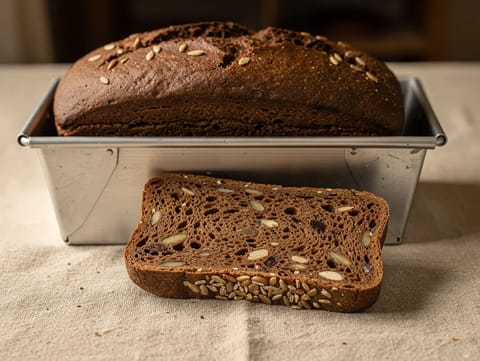
Dense Nordic rye bread with treacle and sunflower seeds
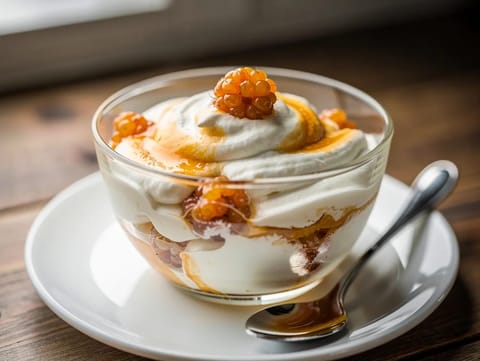
Cloudberries folded into lightly sweetened whipped cream

Spiced vodka infused with caraway, dill seed, fennel and lemon
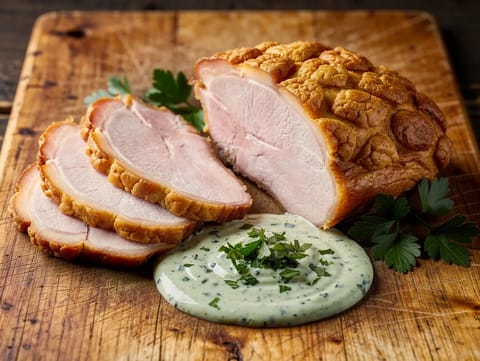
Slow-roasted pork with crisp crackling and warm parsley sauce
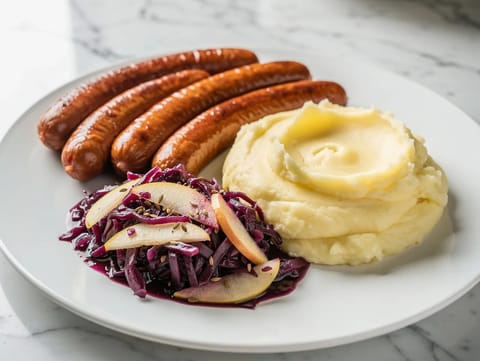
Smoked pork sausage with mashed potatoes and braised red cabbage
Rye brings a deep, slightly bitter edge that stands up to salty toppings and sharp pickles. Potatoes and root vegetables provide sweetness and body, especially in soups and gratins. Fish appears in many forms, from fresh fillets to smoked or cured preparations, where salt and time do much of the seasoning work. Dairy is common, but it is rarely just richness for its own sake: sour cream, yoghurt or cultured butter can add tang and a soft, rounded finish. Berries, apples and stone fruits show up in jams, compotes and bakes, often paired with vanilla or cardamom. Dill, chives and parsley keep savoury dishes tasting bright.

Nordic mulled wine with spices, raisins and blanched almonds
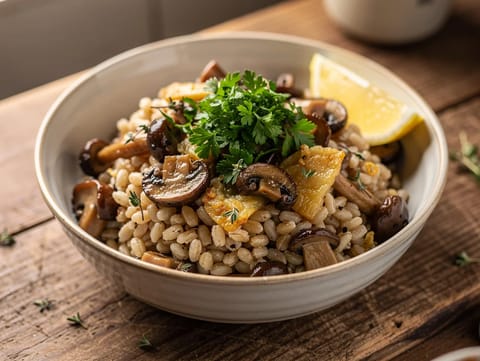
Pearl barley topped with sautéed wild mushrooms and crème fraîche
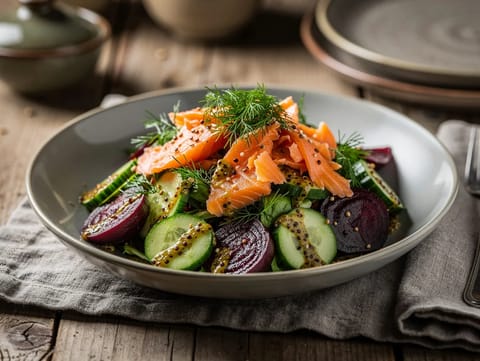
Hot-smoked salmon salad with roasted beetroot and dill
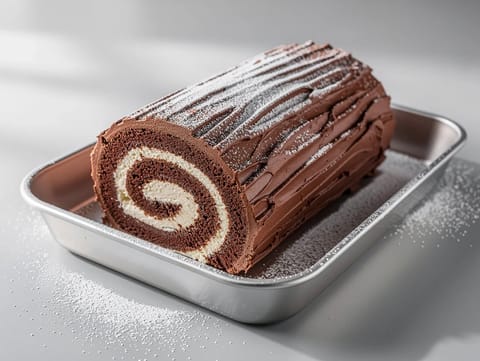
Cocoa Swiss roll filled with whipped cream and buttercream
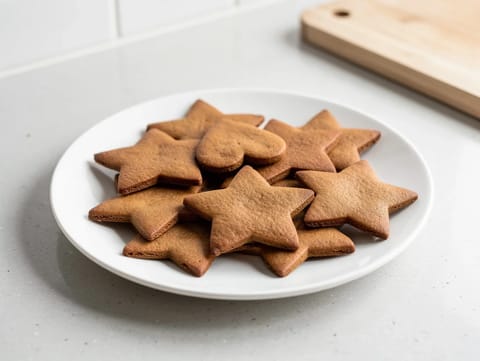
Thin Nordic gingerbread biscuits with warm spices

Soft Norwegian Christmas bread with raisins and mixed peel
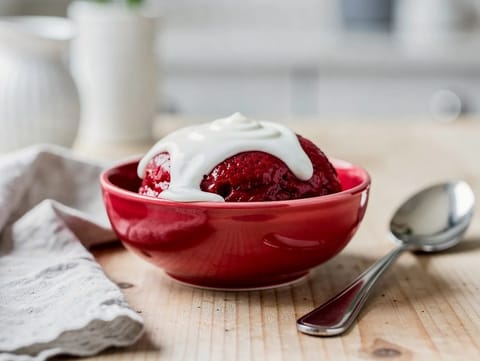
Chilled Nordic berry pudding served with cold double cream
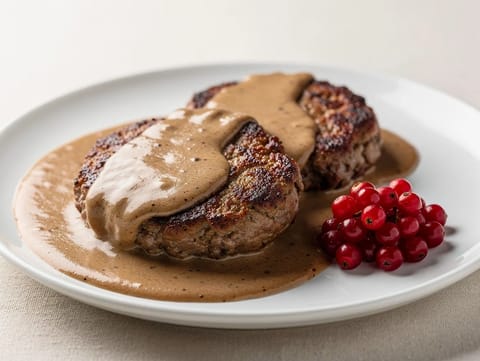
Swedish beef patties with cream gravy and lingonberries
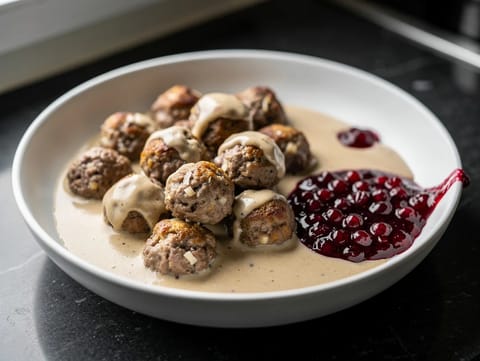
Air fryer Swedish meatballs with cream gravy and lingonberry jam.
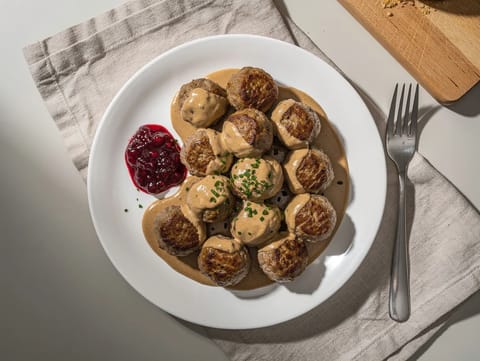
Swedish meatballs in creamy gravy with lingonberry
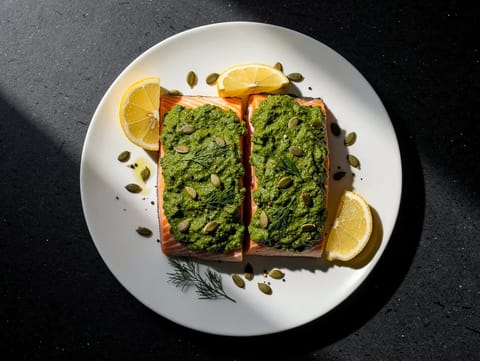
Baked salmon topped with dill pesto and toasted pumpkin seeds
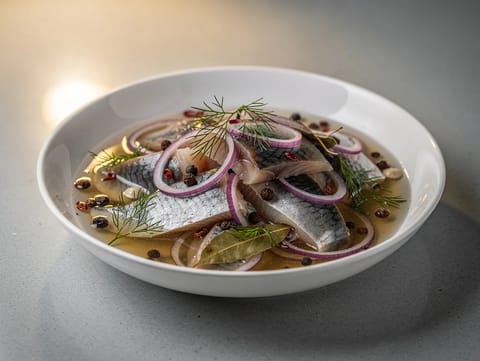
Pickled herring in sweet-sour brine with dill and red onion
Nordic home cooking often favours practical formats that suit a table of mixed tastes. Open sandwiches on rye or crispbread are a good example: the bread is part of the flavour, and toppings are chosen for contrast, such as creamy against crunchy, or salty against sharp. Soups and stews commonly rely on vegetables, fish or meat, with herbs and acidity added late so the bowl tastes fresh rather than muddy. Baking ranges from sturdy everyday loaves to buns and cakes scented with cardamom, cinnamon or citrus zest. If you are choosing between recipes, pay attention to texture: many Nordic dishes are at their best when you keep crisp elements crisp and add dressings just before serving.
Across the Nordic region, cooking has long been shaped by short growing seasons and a strong preserving culture. That influence still shows up in the fondness for pickled vegetables, jams, cured fish and smoked flavours, even when you are cooking with modern ingredients. At the same time, there is plenty of everyday freshness: salads with dill, cucumbers and radishes, or simple fish dishes finished with lemon and herbs. Regional variation matters. Coastal areas naturally lean more towards seafood, while inland cooking may feature game, mushrooms and hearty grains. Treat Nordic recipes as a set of related approaches rather than a single canon, and you will find it easier to cook them with what is available where you live.
Nordic recipes often hinge on technique, so Cooking method is a helpful way to separate baking, smoking-style flavours, pickling-style sharpness and gentle simmering. Ingredient browsing then lets you focus on the staples that define the style, such as rye, potatoes, salmon, berries or mushrooms, and see how they are used across savoury and sweet dishes.
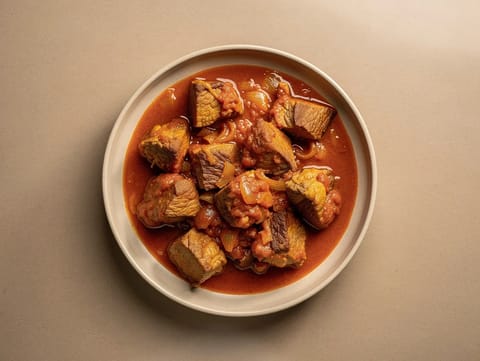
Andalusian pork simmered in a thick tomato and paprika sauce
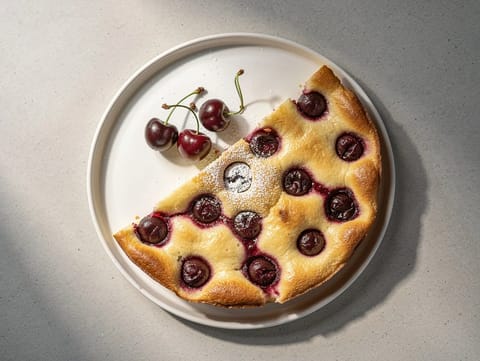
Cherry clafoutis baked in a lightly sweet custard batter
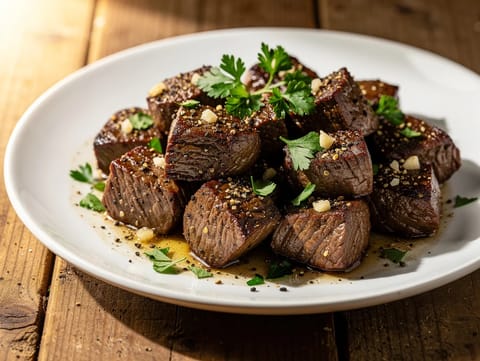
Seared steak bites tossed with garlic butter and parsley
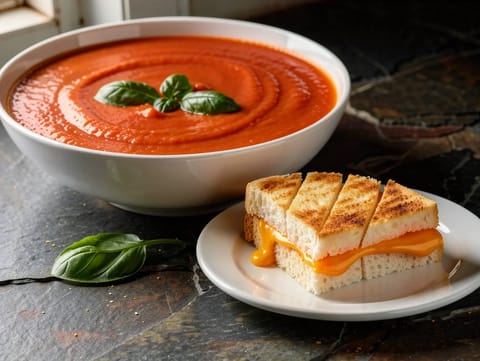
Cheddar grilled cheese served with smooth tomato soup
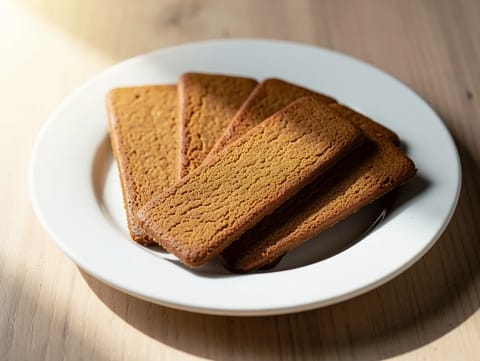
Thin, crisp speculoos biscuits with warming spices
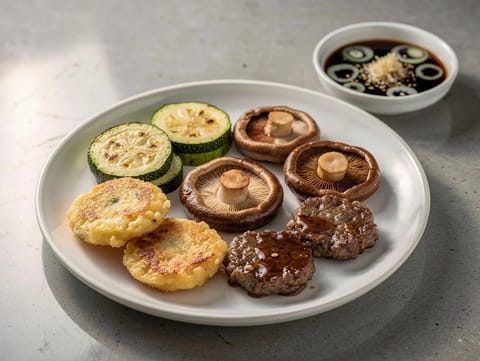
Assorted Korean pan-fried pancakes with a soy vinegar dipping sauce

Warm milk sweetened with honey and finished with cinnamon
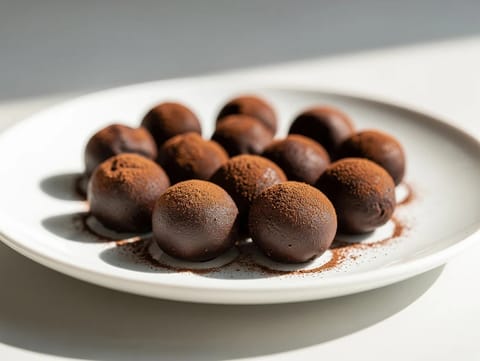
Dark chocolate truffles coated in cocoa powder
Scandinavian usually refers to Denmark, Norway and Sweden. Nordic is broader and can include Finland and Iceland as well. In recipes, the terms are sometimes used loosely, so it helps to look at the ingredients and flavour cues.
Fish is common, especially in coastal traditions, but Nordic cooking also includes breads, vegetable dishes, meatballs, soups, and a wide range of baking and desserts.
Cardamom is a frequent signature, often alongside cinnamon, vanilla and citrus zest. Berries and apples are also common, bringing acidity and fragrance.
Acidity cuts through rich foods like fatty fish and dairy, and it also reflects preserving traditions. In practical terms, it keeps flavours tasting clear and defined.
Rye is denser and more strongly flavoured, with a slight bitterness that pairs well with salty, creamy and sharp toppings. It can also hold up well under moist ingredients.
Often, yes. Seasoning tends to be deliberate rather than heavy, with herbs, mustard, pepper and warm baking spices used to support the main ingredient rather than mask it.
Choose one Nordic cue to anchor your cooking, such as rye, dill, berries or a pickled element, then build the rest of the dish around contrast and clarity. The style is forgiving when you keep flavours distinct and finish with a little acidity.
