
Classic Brownies
Classic brownies baked until just set for a fudgy texture

Brownies and bar bakes are tray-baked sweets designed to be cut into portions, but the eating experience can be very different from one recipe to the next. Some are dense and fudgy, others are cakier with a lighter crumb, and many bars sit outside the brownie spectrum entirely, from shortbread-style bases to oat and caramel layers. If you start by deciding the texture you want and how neatly you need the pieces to slice, you can choose a recipe with much more confidence.
Brownies are typically chocolate-forward and sit between cake and confection: they can be glossy-topped and chewy, or softer and more cake-like depending on the balance of fat, sugar, flour and eggs. Bars are a wider family defined by format rather than flavour. They may be single-layer bakes, but they are often built in layers, with a base that sets firmly and a topping that can be baked, chilled or simply set. What this category does not automatically imply is that everything is chocolate, or that the bake is meant to be eaten warm. Many bar recipes are designed to slice cleanly once fully cooled, which is a different goal from a brownie that is intentionally gooey in the centre.
Classic brownies baked until just set for a fudgy texture
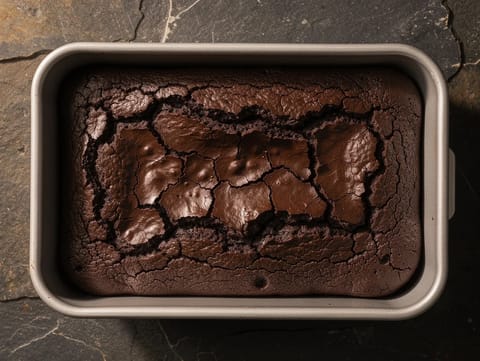
Fudgy air fryer brownie bites with cocoa and dark chocolate.
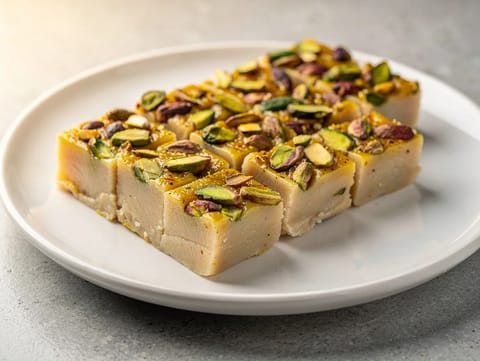
Fudgy barfi made from reduced milk, cardamom and pistachios
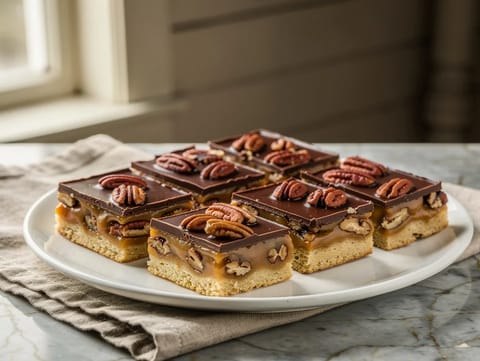
Shortbread bars topped with pecans, caramel and dark chocolate
Rich air fryer brownies bake up fudgy with dark chocolate and cocoa.
Air fryer fudge brownies with dark chocolate, cocoa powder and butter, cooled before slicing.
Classic chocolate brownies range from fudgy to cakey. Fudgy styles usually rely on a higher proportion of fat and chocolate, with less flour, giving a dense bite and a centre that can feel almost truffle-like when cooled. Cakier brownies use more flour and often more aeration from mixing, producing a lighter crumb and a taller slice. Blondies shift the flavour base away from cocoa towards brown sugar, butter and vanilla, often with a chewy, toffee-like profile. Beyond that, bar bakes commonly include shortbread-style bases topped with fruit, curd or jam; oat-based bars that bake up hearty and sliceable; and layered bars where the contrast between crisp base and soft topping is the point. Each style has its own “right” level of firmness for cutting.
Fudgy barfi made from reduced milk, cardamom and pistachios
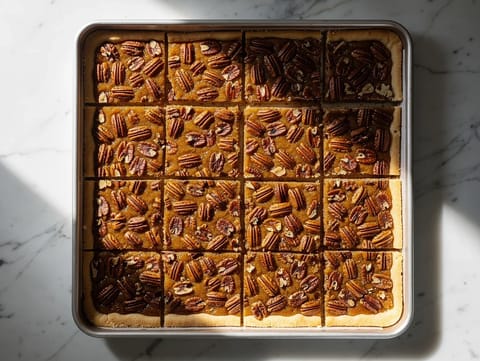
Shortbread bars topped with maple and brown sugar pecans
Shortbread bars topped with pecans, caramel and dark chocolate
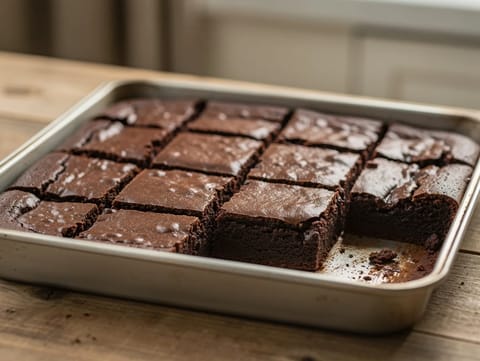
Fudgy brownies with dark chocolate, cocoa and vanilla
Fudgy air fryer brownie bites with cocoa and dark chocolate.
Rich air fryer brownies bake up fudgy with dark chocolate and cocoa.
Air fryer fudge brownies with dark chocolate, cocoa powder and butter, cooled before slicing.
Classic brownies baked until just set for a fudgy texture
Because brownies and bars are often sweet and buttery, small amounts of bitterness, acidity or salt can make the flavour read more clearly. Coffee, dark chocolate and toasted nuts add depth without adding extra sweetness. Fruit works best when it brings sharpness, such as berries or citrus, rather than only sweetness. Spices like cinnamon can emphasise warmth, while vanilla tends to round off harsh edges in cocoa. Texture pairings matter too: a soft, dense bar benefits from something crunchy mixed in or sprinkled on top, while a crisp base can carry a smoother topping without feeling heavy. If you are serving these as part of a spread, a plain dairy accompaniment can soften the sweetness, but it is not essential if the bake already has a bright element built in.
Cooking method is a useful companion here because small changes, such as baking versus chilling a topping, can completely change the final texture and how cleanly pieces cut. Cuisine can also be a helpful route when you want bars with familiar flavour cues, from spice choices to typical nuts and fruits.
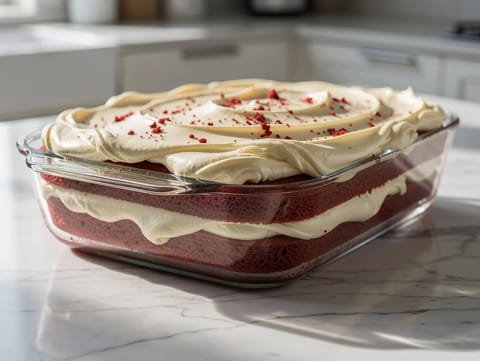
Red velvet cake with tangy cream cheese frosting
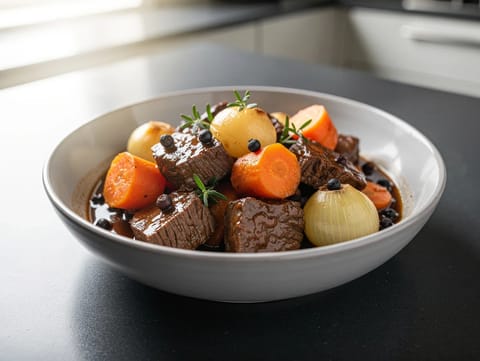
Slow-braised venison with juniper and root vegetables
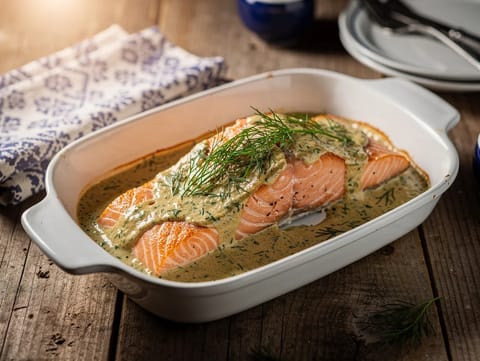
Baked salmon with mustard, dill and lemon
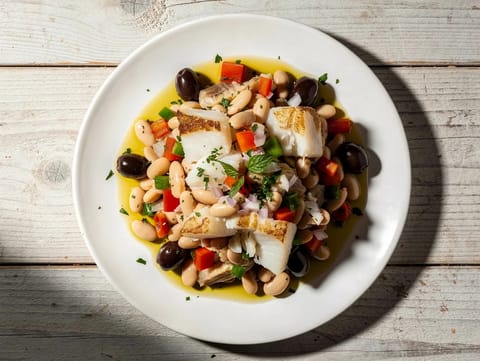
Catalan salt cod and white bean salad with tomato and peppers
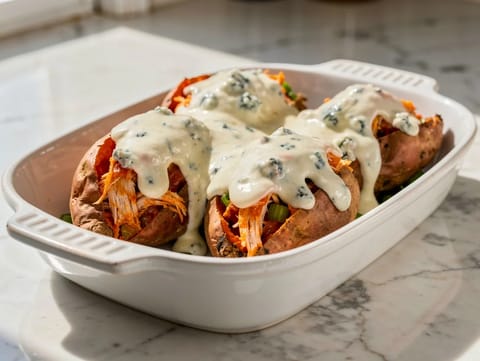
Sweet potatoes stuffed with Buffalo chicken and blue cheese yoghurt
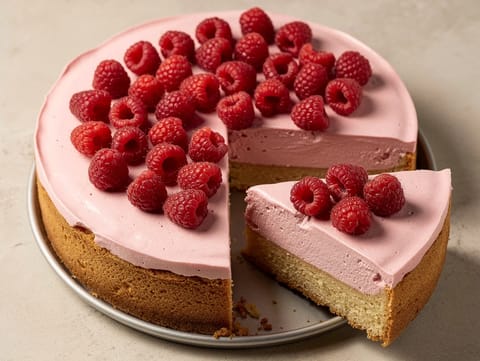
Almond sponge topped with raspberry mousse and fresh raspberries
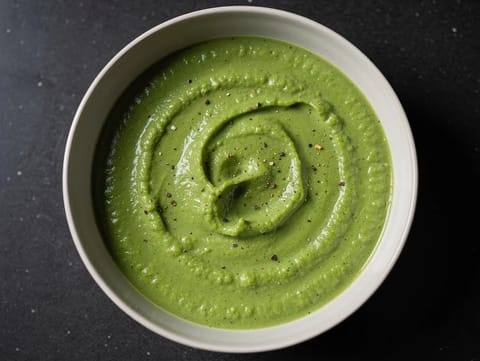
Smooth broccoli soup finished with Stilton and double cream
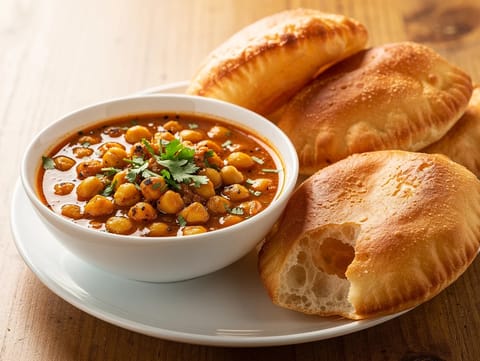
Spiced chickpea curry served with puffed fried bhature
It usually comes down to the balance of fat and chocolate versus flour, plus how much air is incorporated. Fudgy brownies tend to have less flour and a denser structure; cakier ones have more flour and a lighter crumb.
A glossy top often comes from how sugar dissolves and how the batter is mixed, creating a thin meringue-like layer as it bakes. Not every recipe aims for it.
Most bars slice more cleanly once fully cooled, because the structure sets as it cools. Brownies can be eaten warm, but they are usually messier to cut at that stage.
A blondie is typically cocoa-free and built around butter, brown sugar and vanilla, giving a caramel-like flavour and a chewy texture rather than a chocolate-forward one.
Look for styles with a firm base and a topping that sets, whether baked or chilled. Very gooey fillings and warm-served bakes are harder to portion neatly.
For brownies and bars, the most useful question is not flavour but structure: do you want a dense, fudgy bite, a lighter crumb, or a firm slice that holds layers? Choose with that in mind and the rest falls into place.
