
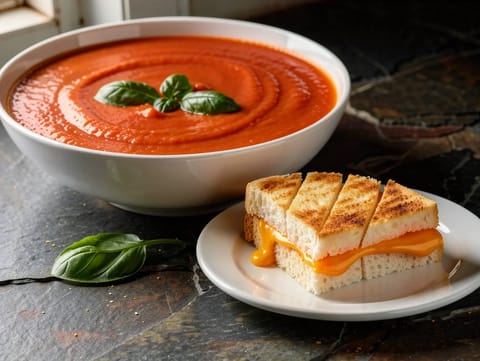
Grilled Cheese Sandwich with Tomato Soup
Cheddar grilled cheese served with smooth tomato soup

A good sandwich is mostly engineering: the bread, the filling and the moisture all have to agree, especially when you’re making more than one. Start by choosing the base, because sliced bread, rolls, flatbreads and wraps each change how much filling you can use, how neatly it eats and whether it travels well. From there, you can decide whether you want a cold, crisp sandwich or a hot, pressed one, and build flavour and texture without ending up with soggy edges or slipping layers.
Sliced sandwich bread is forgiving and easy to portion, but it compresses, so it suits thinner layers and spreadable fillings. Crusty rolls and baguettes handle juicy fillings better because the crumb is sturdier, though they can be harder to bite cleanly unless the filling is chopped or sliced thinly. Flatbreads and pittas are useful when you want a wide surface for spreads and grilled vegetables, or a pocket that keeps fillings contained. Wraps and tortillas are portable, but they need a drier filling and a tight roll to avoid leaks. Toasting or lightly grilling the bread changes everything: it adds crunch, reduces surface moisture and helps the sandwich hold its shape.
Cheddar grilled cheese served with smooth tomato soup

Soft Italian sandwich with prosciutto, mozzarella and mayonnaise
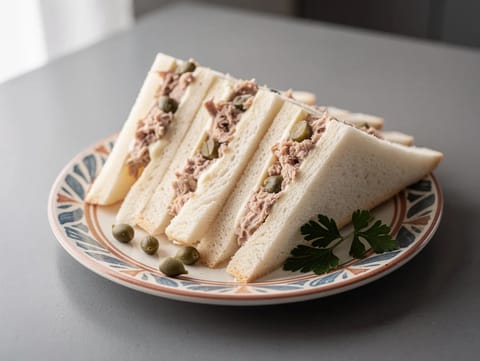
Soft tuna and caper sandwiches with mayonnaise and lemon

Grilled chorizo sandwich in crusty bread with chimichurri

Rye smørrebrød topped with avocado, soft-boiled egg and dill

Cold chicken in curry mayonnaise with apricots and almonds
For a sandwich that can sit out, choose fillings that don’t weep: cured meats, firm cheeses, roasted vegetables, well-drained tuna or chickpeas, and thicker spreads. Keep tomatoes, cucumbers and dressed leaves separate until serving, or use them sparingly with a barrier spread. For a hot sandwich, think about melt and steam: cheese and saucy fillings taste generous, but trapped steam can soften bread, so a press, griddle or brief oven heat helps drive off moisture and crisp the outside. If you want clean slices for sharing, chopped fillings and even layers behave better than large, slippery pieces. When flavour feels flat, add acidity (pickles, mustard, citrus) rather than more salt.

Toasted bread with refried beans, melted Oaxaca cheese and pico de gallo
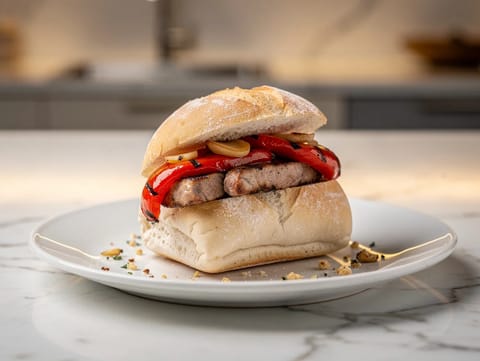
Spanish pork and sweet pepper sandwich with garlic and paprika

Toasted bagel with smoked salmon, cream cheese and capers

Toasted sourdough tartine with cultured butter and radishes
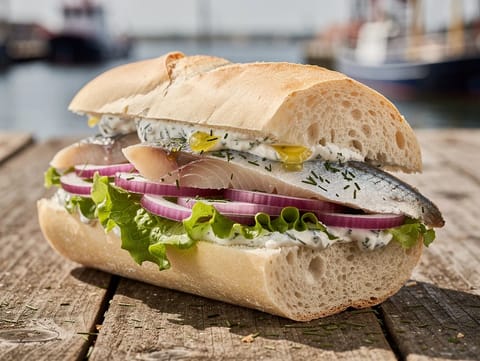
Pickled herring roll with red onion and dill sour cream

Smoked salmon bagel with lemon cream cheese, cucumber and capers
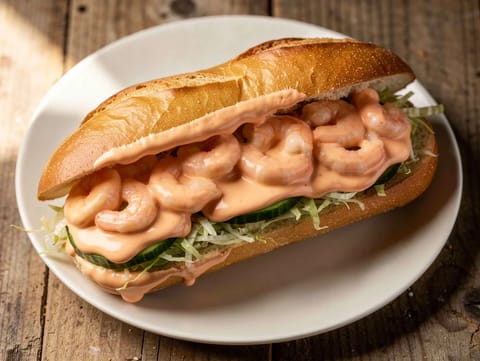
Baguette filled with prawns in Marie Rose sauce
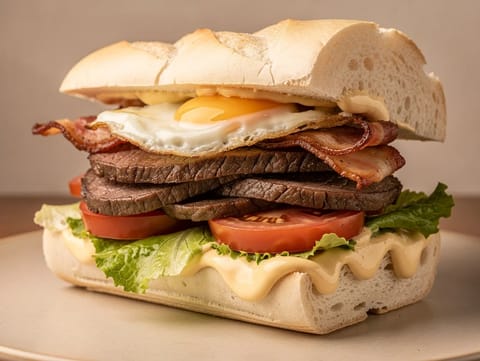
Steak sandwich with fried egg, bacon, tomato and mayonnaise

Japanese egg sandwich with creamy mayonnaise and mustard filling
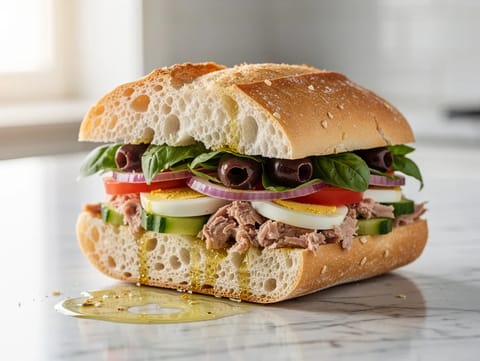
Niçoise sandwich with tuna, hard-boiled egg, tomatoes and olives
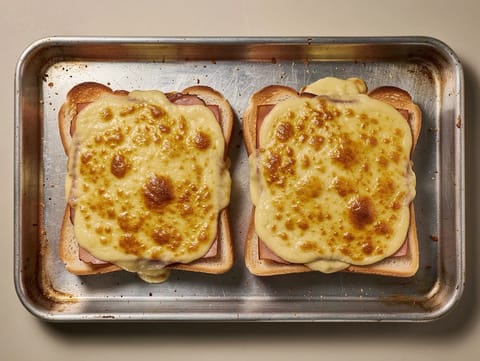
French toasted ham and Gruyère sandwich topped with béchamel

Smoky tomato beans on sourdough with cheddar
Sandwiches pair naturally with something crisp and something sharp. A simple salad, slaw or pickled vegetables bring acidity that cuts through rich fillings such as cheese, mayonnaise-based salads or fried components. Soups work well with toasted or grilled sandwiches because the textures contrast and the sandwich can be dipped without falling apart. If the sandwich is already crunchy, a softer side such as roasted vegetables or a bean salad can round out the plate. For drinks, think refreshment and palate-clearing: iced tea, sparkling water with citrus, or light beer and cider where appropriate, especially alongside salty cured meats or spicy fillings.
Cuisine is a helpful next step for sandwiches because breads, spreads and typical fillings vary widely by region, from herb-heavy Mediterranean styles to deli-inspired combinations. Cooking method is also worth browsing when you’re deciding between no-cook assemblies, toasted sandwiches, griddled melts or pressed panini-style builds.

Whipped syllabub with lemon and white wine

Rolled pork belly with roast potatoes and herbs

Sticky roasted char siu pork served with steamed rice

Skillet macaroni in creamy Cheddar sauce with crispy bacon

Crisp tarte flambée with crème fraîche, bacon and onions

Neapolitan pasta with egg, pecorino Romano and black pepper
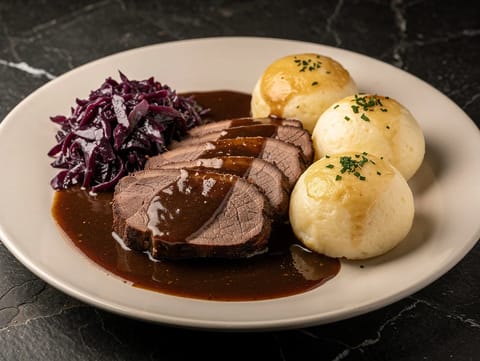
Marinated beef pot roast with red cabbage and potato dumplings
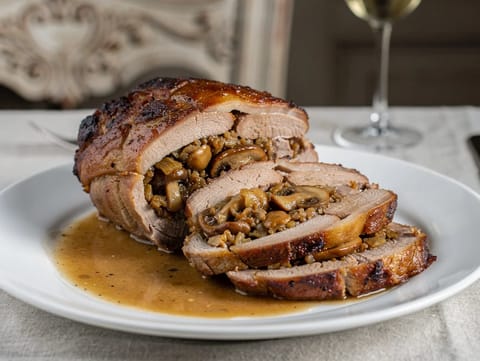
Roast veal layered with mushroom and onion stuffing
Control moisture: dry salad leaves, drain wet fillings well, and use a barrier such as butter, mayonnaise, hummus or cream cheese against the bread. Add very juicy ingredients close to serving.
Put spreads against the bread, then sturdier items (cheese, meat, roasted vegetables), then delicate items (leaves, herbs). This helps keep the bread from soaking up moisture and stops layers sliding.
Choose a bread that matches the filling, keep layers even, and avoid overstuffing. Chopped fillings and firm spreads slice more neatly than large pieces and loose sauces.
Not always, but toasting adds structure and reduces surface moisture, which helps with juicy fillings. It also changes the eating experience, making the sandwich feel crisper and more robust.
A melt focuses on cheese melting under heat, often open or closed. A pressed sandwich is compressed while heating, which crisps the outside and helps the filling bind into a cohesive layer.
Pick the bread for the texture and portability you need, then choose fillings that match its strength and moisture. A sandwich that holds together is usually the one that was assembled with water and heat in mind.
