
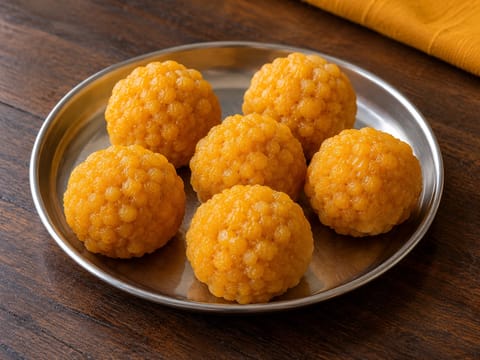
Motichoor Ladoo (Boondi Sweets in Cardamom Syrup)
Boondi sweets shaped into cardamom ladoo

Eid cooking often centres on generosity: food that can be offered easily, served in stages, and shared with family and visitors. That doesn’t mean everything has to be elaborate, but it does reward a little planning so the table feels abundant without becoming stressful. Look for recipes that hold well, travel well, or can be finished quickly once guests arrive. Depending on where you live, Eid may fall in warm or cool weather, so it helps to think in terms of serving temperature and freshness as much as richness.
Eid recipes commonly suit a celebratory, open-door style of eating: dishes that can be portioned without fuss, sweets that can be offered with tea or coffee, and centrepieces that feel special even when served alongside many other plates. You may see both savoury and sweet cooking here, and a mix of everyday techniques and more occasion-specific finishes such as garnishes, syrups or toasted nuts. Because Eid is celebrated across many cultures, the flavours and formats can vary widely, but the practical thread is consistent: food that welcomes people in, and that still tastes good after it has sat on the table for a while.
Boondi sweets shaped into cardamom ladoo
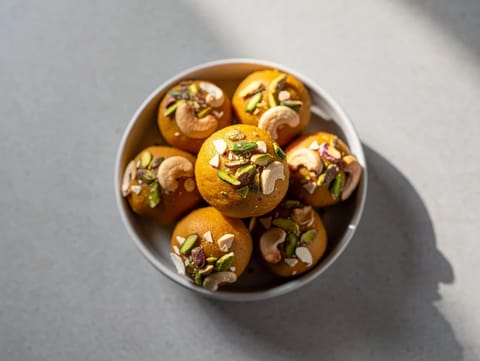
Chickpea flour sweets roasted in ghee and shaped into balls
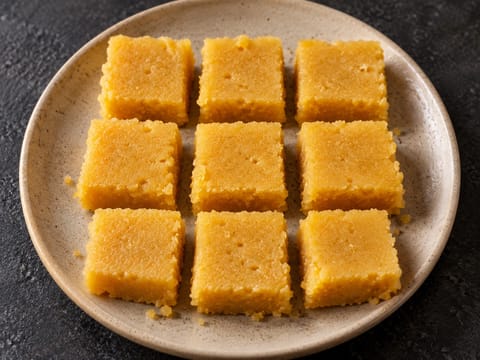
South Indian chickpea flour fudge cooked with ghee and sugar syrup
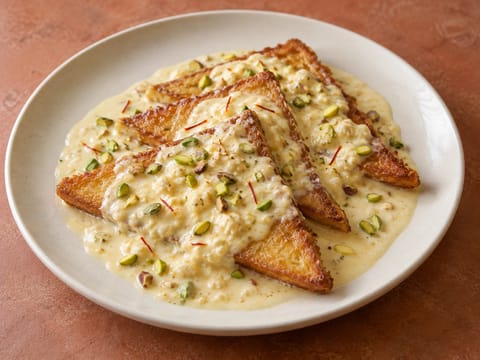
Indian fried bread pudding topped with saffron rabri and pistachios
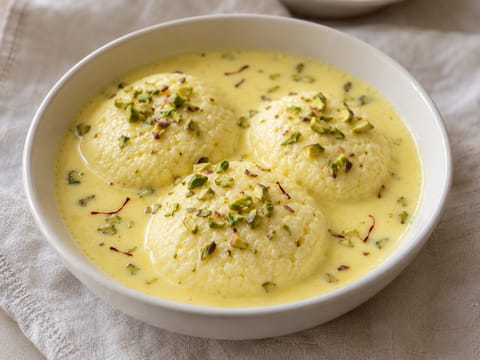
Paneer dumplings soaked in sweet saffron milk
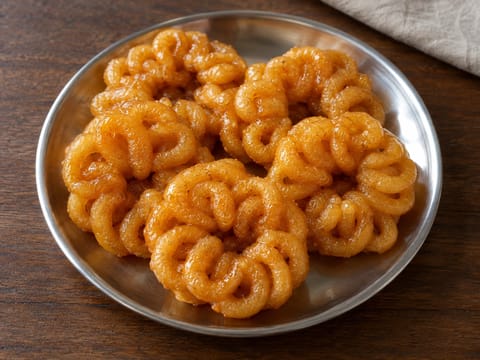
Fried urad dal spirals soaked in saffron and cardamom syrup
When you’re planning for Eid, think in layers rather than a single ‘main’. A good anchor is one substantial dish that can be served hot or warm, supported by a few lighter plates that bring contrast. Crisp salads, yoghurt-based sides, pickles and herb-heavy relishes can keep richer dishes from feeling heavy, especially if the meal is taken after a day of fasting. For sweets, a mix of textures helps: something syrupy, something crisp or baked, and something that can be portioned neatly for sharing. Drinks matter too: a simple, fragrant option alongside water makes the sweet course feel intentional without adding extra cooking pressure.
Chickpea flour sweets roasted in ghee and shaped into balls
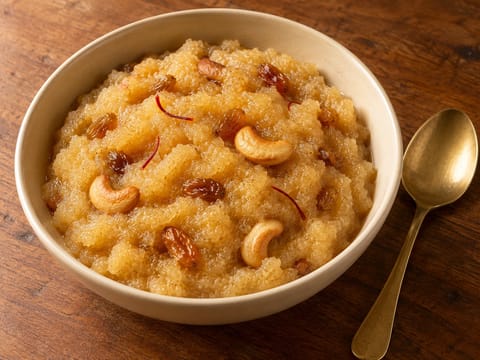
Toasted semolina pudding cooked with ghee, cardamom and sugar syrup
South Indian chickpea flour fudge cooked with ghee and sugar syrup
Paneer dumplings soaked in sweet saffron milk
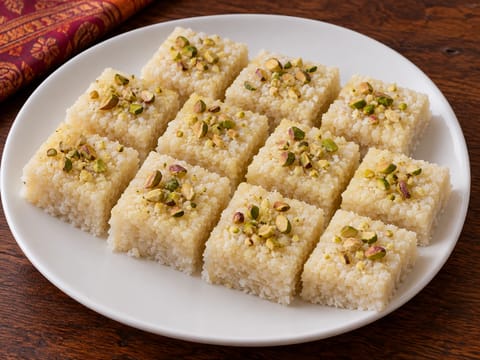
Coconut barfi squares made with condensed milk
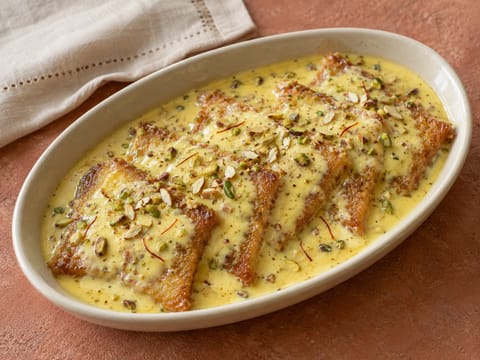
Fried bread soaked in syrup with saffron milk and nuts
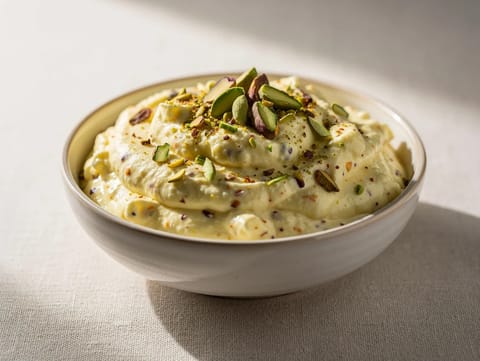
Strained yoghurt pudding flavoured with saffron and cardamom
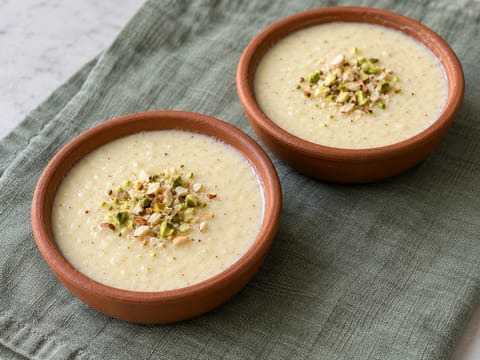
Chilled ground rice pudding with cardamom
Boondi sweets shaped into cardamom ladoo
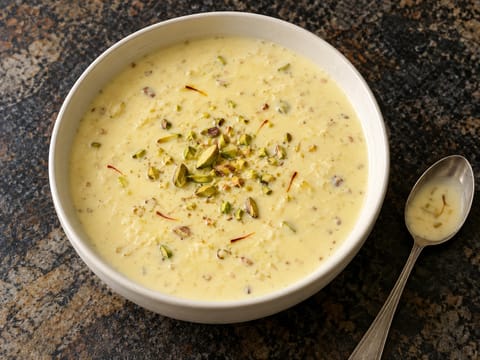
Thickened sweetened milk dessert with cardamom, saffron and pistachios
Fried urad dal spirals soaked in saffron and cardamom syrup
Indian fried bread pudding topped with saffron rabri and pistachios
For a calm kitchen, prioritise dishes that are forgiving about timing. Braises, baked dishes and many rice-based recipes often hold their quality if kept warm, while fried items and delicate pastries usually need more last-minute attention. If you’re making sweets, look for recipes that set cleanly and can be cut or shaped without crumbling, especially if you’ll be packing them for gifting. Keep an eye on garnishes: toasted nuts, fresh herbs and a final drizzle can be prepared separately and added just before serving, which preserves colour and crunch. If children will be eating too, having at least one mild, familiar option on the table can reduce last-minute negotiations.
If you want the food to match the weather as well as the occasion, explore Season for ideas that suit warm days or cooler evenings. Collections can also be useful when you’re building a varied table, especially for themes like make-ahead dishes or sweets for sharing.
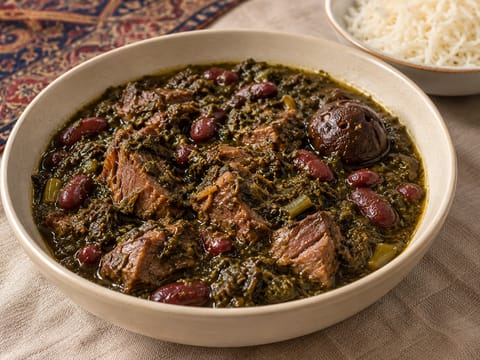
Persian herb and lamb stew with kidney beans and dried lime
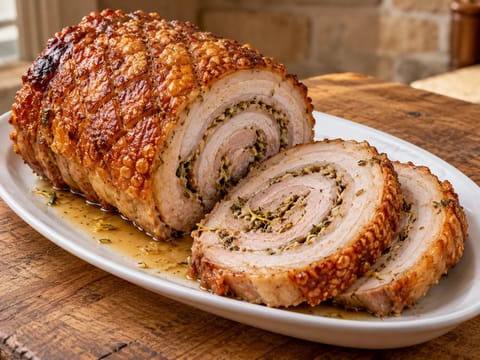
Italian rolled pork roast with fennel, rosemary and lemon
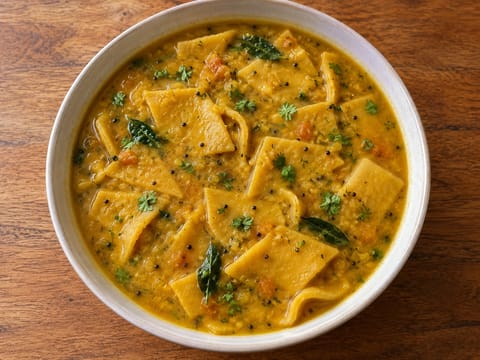
Toor dal broth with tender wheat dumplings and spiced tempering
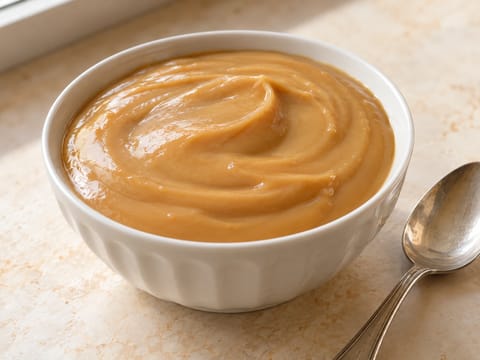
Smooth stovetop butterscotch pudding with vanilla
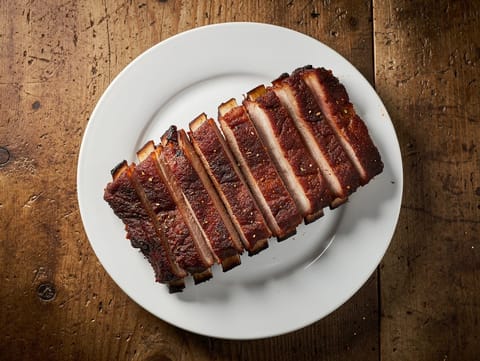
Slow-roasted spare ribs with a paprika and brown sugar crust
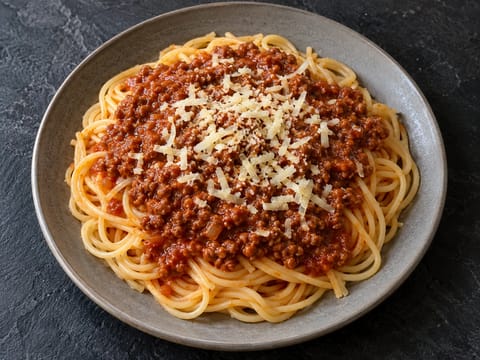
Greek spaghetti with minced beef, tomato and cinnamon
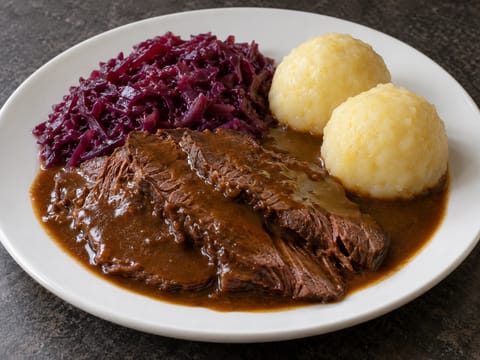
Marinated beef pot roast with red cabbage and potato dumplings
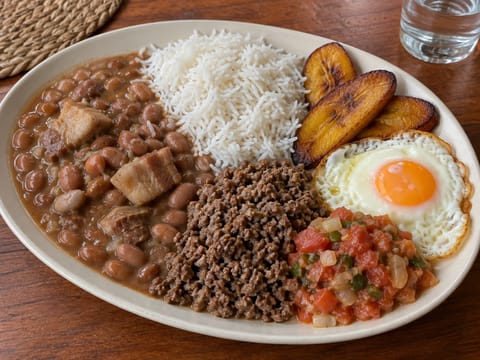
Colombian platter of beans, rice, pork, beef, plantain and egg
Not necessarily. Eid is celebrated across many regions, so there isn’t one fixed menu. It’s more useful to choose dishes that fit the way you’ll serve and share food, then lean into flavours that feel familiar to your household.
Look for dishes that hold well: baked casseroles, braises, pilafs and many sweets that can be portioned ahead. Save anything that must be fried or assembled at the last moment for a smaller part of the menu.
Balance rich dishes with freshness and acidity. A crisp salad, yoghurt-based side, pickles, citrus, herbs and chilli can all lift the overall meal without requiring complicated cooking.
Either can work. Lots of small plates suit grazing and sharing, while one anchor dish can make the meal feel grounded. The most reliable approach is a substantial centre plus a few contrasting sides.
Choose sweets that keep their shape, aren’t overly sticky on the outside, and can be packed without crushing. A clean-cut bar, biscuit or set sweet is often easier to portion than something very delicate.
Yes. Eid moves through the solar year, so it may fall in very different weather from one year to the next. Serving temperature, freshness and how well dishes hold at room temperature are practical seasonal considerations.
Start with one dish that can carry the meal, then add contrast with fresh sides and a sweet or two that can be made ahead. Once the structure is in place, small finishing touches can provide the celebratory feel.
