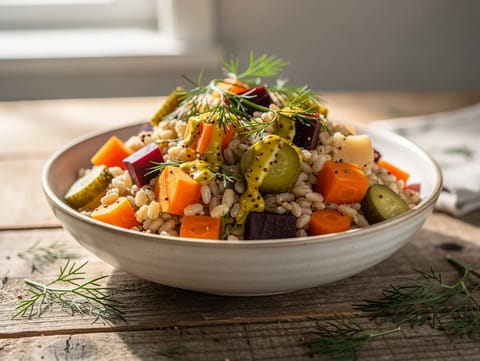
A vinaigrette combines oil with vinegar or citrus juice. Whisking breaks the oil into small droplets so the dressing coats food more evenly. Many simple vinaigrettes separate again on standing and only need another whisk before serving.
Step by step
Start with the acidic ingredients
Measure the recipe’s vinegar or citrus juice into a bowl. Dissolve the salt in it and mix in mustard or other seasonings if specified. Set the bowl on a folded cloth if it moves while whisking.
Add the oil gradually
Whisk while adding oil in a thin stream or small additions. Wait until each addition is dispersed before pouring faster. Follow the recipe’s proportions rather than treating one ratio as right for every vinegar.
Taste with the food it will dress
Try a little on a leaf or a piece of the salad ingredient. The dressing may taste sharper on its own. Adjust with small additions of oil, acid or seasoning according to the dish.
Whisk again before serving
Dress the food shortly before serving where appropriate. If the bowl or jar has separated into layers, whisk or shake in a tightly closed container until combined again.
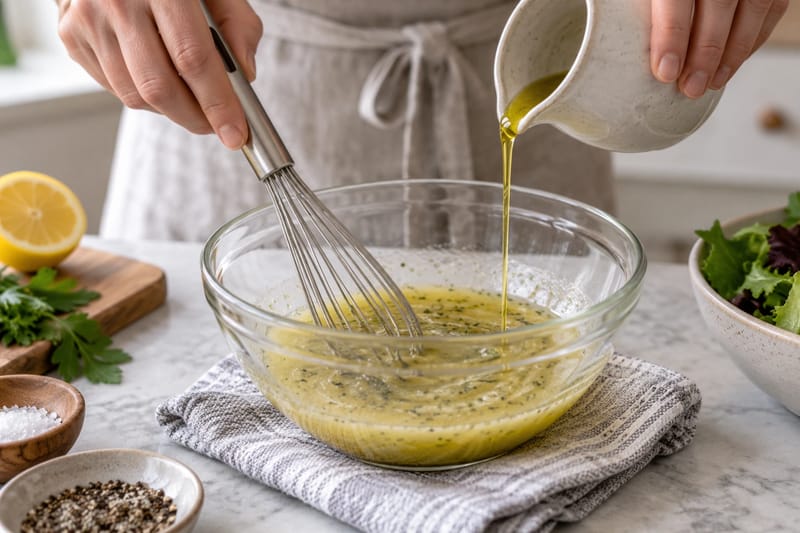
Separation and excess oil
Mustard can help keep droplets dispersed, but a basic vinaigrette need not remain permanently thick. If it tastes greasy, check the balance and add acid cautiously. Fresh garlic, herbs and other perishable additions require appropriate chilled storage; a homemade dressing is not automatically shelf-stable because it contains vinegar.