Tempering gradually warms eggs by mixing in some hot liquid before returning them to the pan. It helps avoid a sudden pocket of scrambled egg. It is a mixing technique, not a guarantee that a custard or sauce has been cooked to a safe temperature.
Step by step
Have both mixtures ready
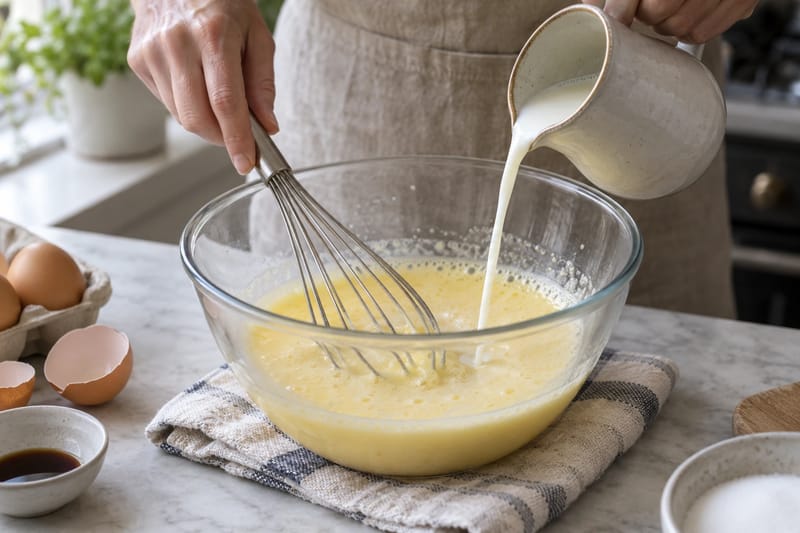
Whisk the eggs with the recipe’s sugar or other starting ingredients in a heatproof bowl. Warm the milk or other liquid as directed. Set the bowl securely and have a ladle or pouring jug ready.
Whisk in a small hot addition
Whisk the eggs continuously while adding a small amount of hot liquid in a thin stream. Aim the liquid into the moving mixture rather than onto one still patch of egg.
Add more gradually
Continue with a few small additions until the egg mixture is warmer and thinner. Stir it back into the remaining liquid as directed, mixing the pan thoroughly.
Complete the recipe’s cooking stage
Cook with the prescribed heat and stirring, reaching the recipe’s safe endpoint. Plain stirred custards usually need gentle heat; starch-thickened pastry cream may require a different, hotter finish. Do not apply one sauce’s boiling instructions to another.
Small lumps or a scrambled texture
A fine sieve can catch a few small cooked-egg fragments, but a heavily curdled mixture may need a fresh start. Lower heat and constant scraping of the pan’s base help prevent local overheating. Use pasteurised egg for a preparation that will remain undercooked, and do not taste a raw egg mixture to check its seasoning.