
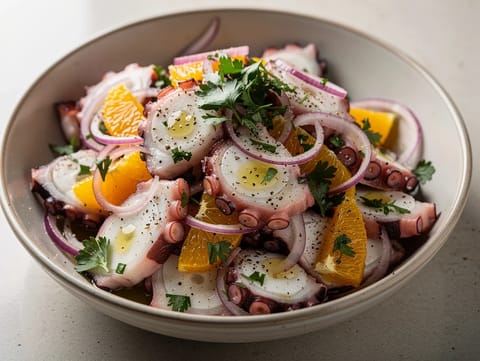
Citrus Octopus Salad
Chilled octopus salad with orange, lemon and parsley

When you’re feeding other people, salad is often the dish that has to travel well, hold its texture and still look deliberate on the table. The useful distinction is less “leafy or not” and more how the salad is built: tossed or composed, crisp or hearty, dressed early or at the last minute. Once you know the structure, you can choose ingredients and dressings that stay bright rather than turning limp, and you can scale up without losing balance.
A salad is defined more by its assembly than by a single ingredient. It can be raw or cooked, warm or chilled, and it may be built around leaves, vegetables, grains, pulses, noodles, fruit, seafood or meat. What makes it behave like a salad is the combination of bite-sized components and a dressing or seasoned element that ties them together. The main practical implication is moisture management: watery vegetables, juicy fruit and warm ingredients can dilute dressing and soften crisp elements. Salads that rely on crunch tend to be dressed close to serving, while sturdier bases such as potatoes, beans or grains can be dressed earlier so they absorb flavour without collapsing.
Chilled octopus salad with orange, lemon and parsley

Sliced raw salmon served with lime and ají amarillo sauce
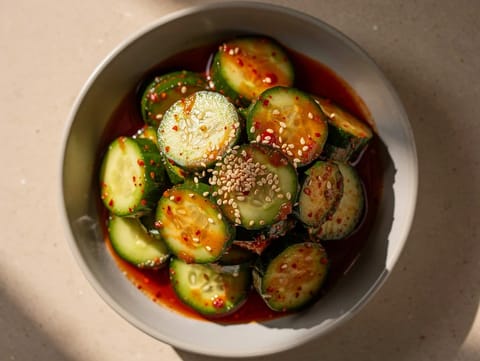
Spicy cucumber salad with gochugaru, vinegar and sesame oil
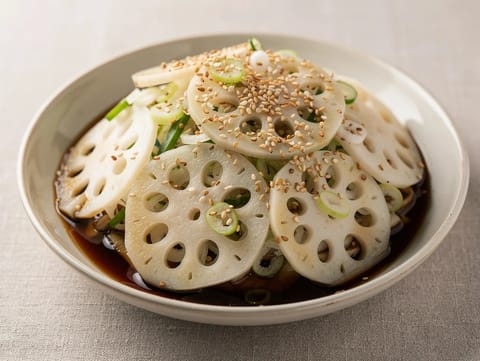
Chilled lotus root salad with black vinegar, soy and chilli oil
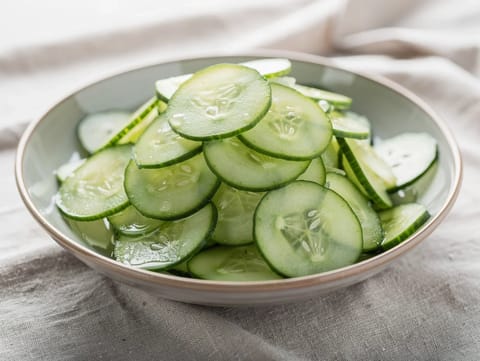
Danish cucumber salad in a sweet and tangy vinegar dressing
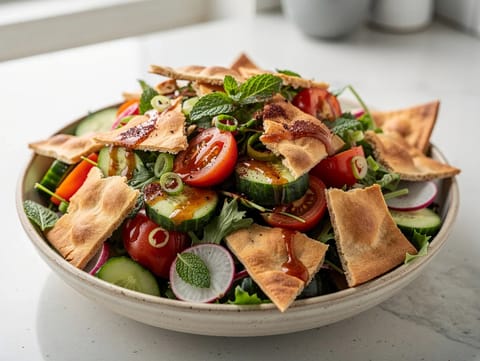
Crunchy salad with toasted pitta, vegetables and sumac
Tossed green salads are quickest to assemble, but they are also the most sensitive to overdressing and to sitting around. Composed salads, arranged on a platter, keep delicate leaves and crisp toppings separate until the last moment and look tidy even when scaled up. Chopped salads sit somewhere in between: the small pieces catch dressing evenly, but they can lose crunch if left too long. Hearty salads built on grains, lentils or potatoes are naturally make-ahead friendly and often improve after a rest, especially when the dressing is oil-based or includes an acidic element. Warm salads, using roasted or sautéed vegetables, are best served with a dressing that can handle heat, such as a vinaigrette, rather than one that may split.
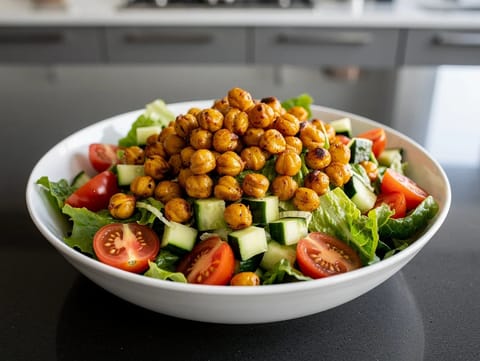
Crispy chickpea salad with lemon and crunchy veg
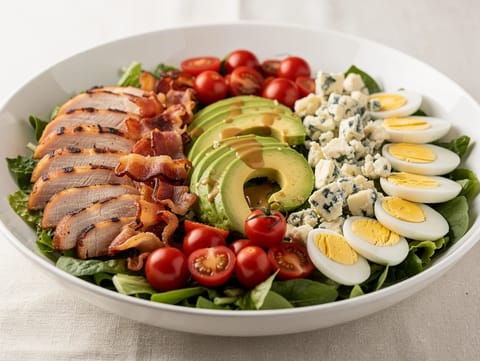
Cobb salad with chicken, bacon, avocado, eggs and blue cheese
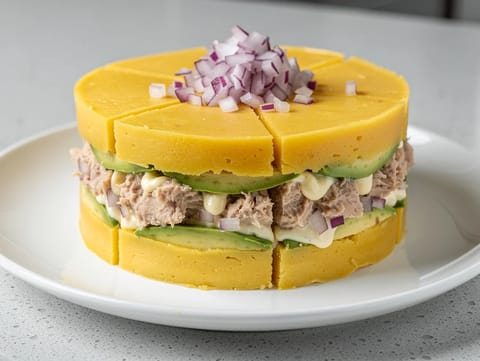
Chilled Peruvian potato layers filled with tuna, avocado and red onion
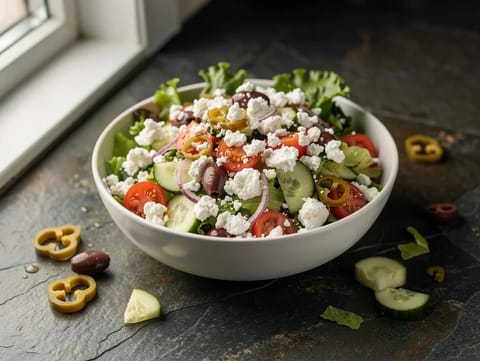
Chopped romaine salad with feta, olives and pepperoncini
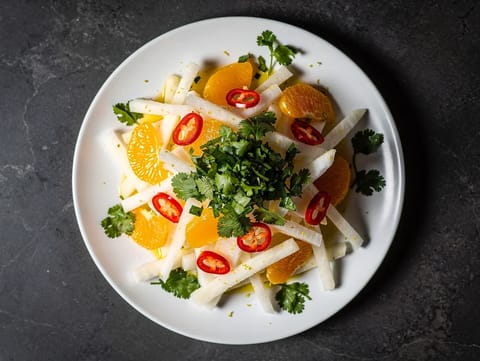
Crunchy jícama salad with orange, lime and chilli
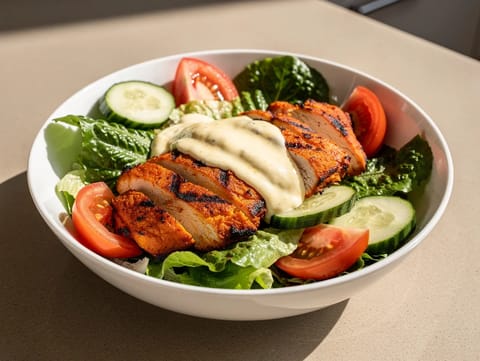
Tandoori chicken with lettuce, cucumber, tomatoes and yoghurt dressing
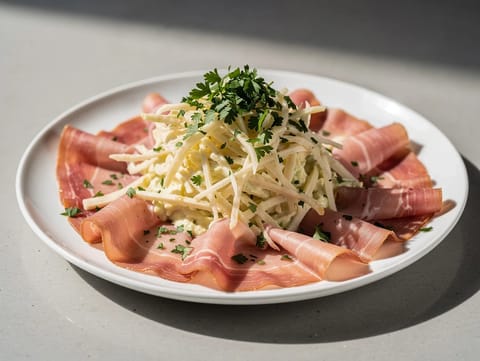
Celeriac rémoulade with mustard and lemon mayonnaise
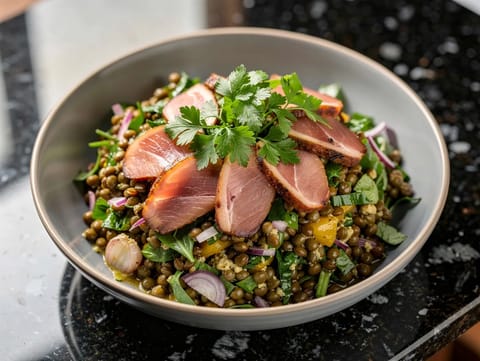
Green lentil salad with mustard dressing and smoked duck
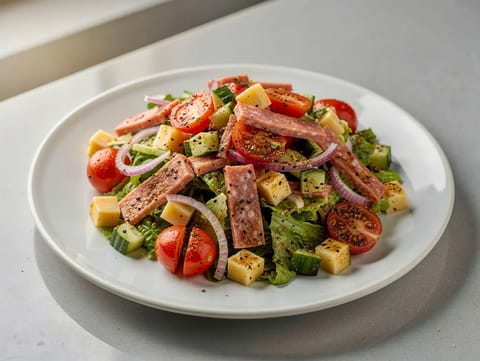
Chopped salad with lettuce, salami, provolone and vinaigrette
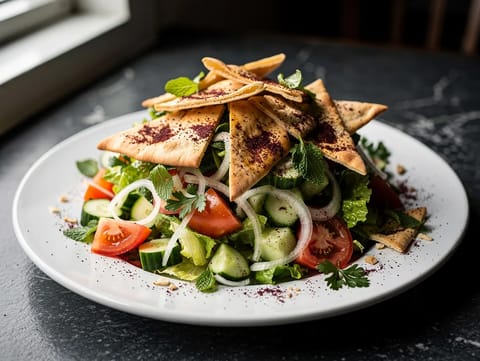
Fattoush bowl with pitta chips and lemon sumac dressing
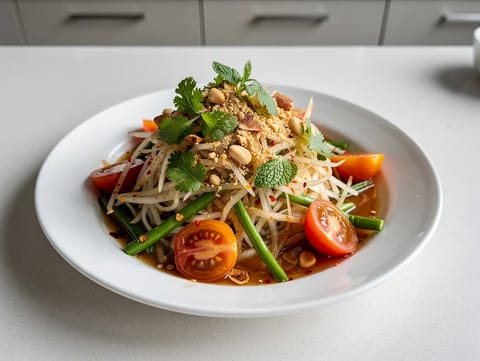
Som tam style green papaya salad with peanuts and herbs
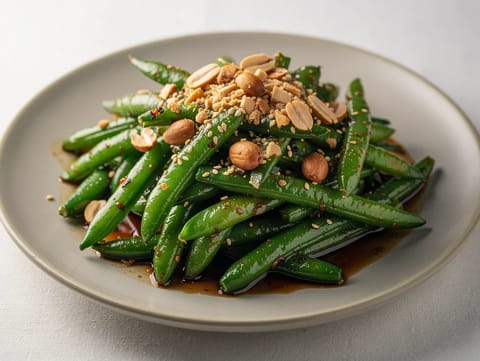
Green bean salad with black vinegar, chilli oil and peanuts
Think in contrasts: crisp with creamy, sweet with sharp, and soft with something toasted or crunchy. A simple vinaigrette suits tender leaves and vegetables because it coats lightly and doesn’t weigh them down. Creamier dressings cling well to sturdier ingredients such as potatoes, pasta or shredded vegetables, but they can mute delicate flavours, so a bright note like lemon, vinegar, capers or mustard helps. If you’re adding salty elements such as cheese, olives or cured fish, keep the dressing less salty and let those ingredients do the seasoning. For salads served alongside rich mains, bitterness (radicchio, endive) and acidity cut through; alongside lighter dishes, herbs and aromatics can provide the lift.
If you know the cuisine you’re cooking, browsing by Cuisine can help you match the salad’s dressing style and typical add-ins to the rest of the menu. Cooking method is also useful for salads, especially when you’re choosing between raw, blanched, roasted or grilled components that change texture and how well the salad holds after dressing.
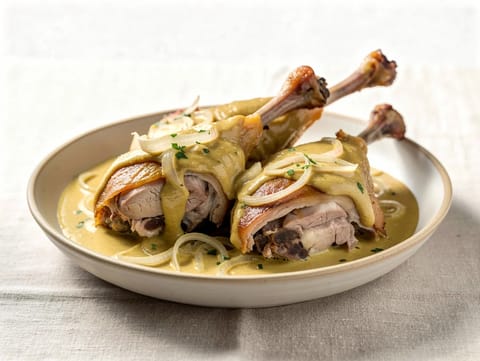
Braised rabbit finished with Dijon mustard and double cream
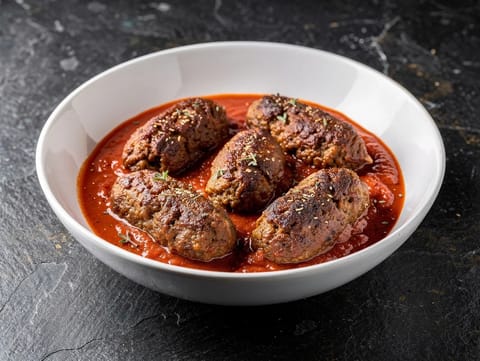
Greek spiced beef meatballs in tomato sauce
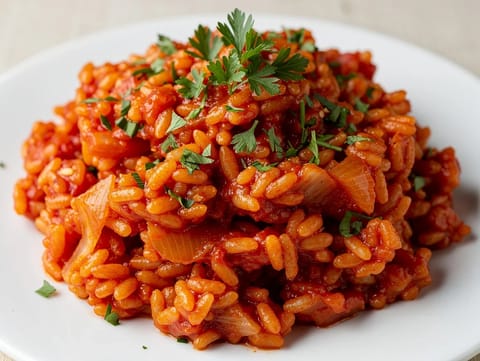
Portuguese tomato rice simmered with onion, garlic and stock
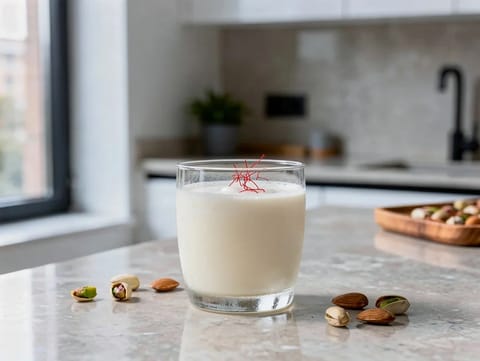
Chilled thandai made with spiced milk and blended almonds
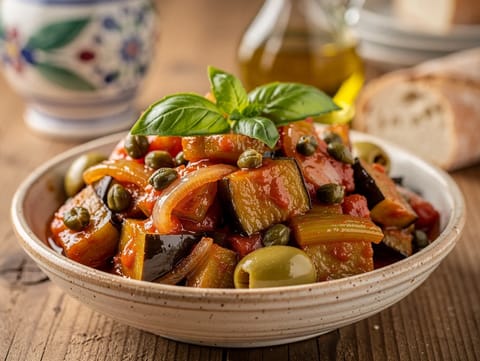
Sweet and sour aubergine stew with capers and olives

Vol-au-vents filled with creamy chicken and mushroom sauce
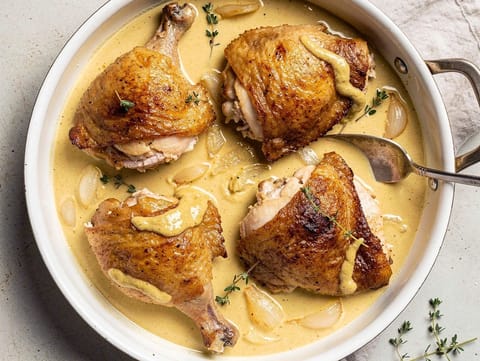
Chicken simmered in a Dijon mustard and white wine sauce
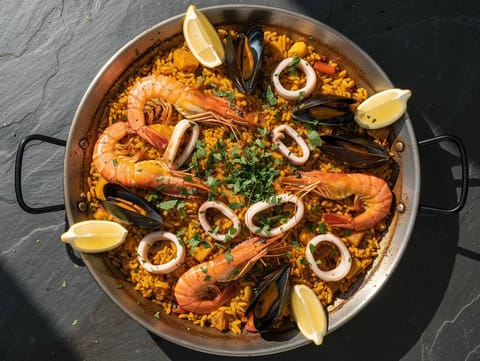
Saffron rice cooked with prawns, mussels and squid
A tossed salad is mixed with dressing so every leaf is coated; it’s fast but can wilt if it sits. A composed salad is arranged, often with dressing served separately or spooned over at the end, which helps delicate elements stay crisp.
Dry leaves thoroughly, salt juicy vegetables briefly and drain if needed, and let cooked ingredients cool before combining. Keep very wet items and the dressing separate until close to serving when the salad relies on crunch.
Many can, but the approach matters. Prep components in advance, then assemble at the end. Sturdy salads with grains, beans or potatoes often tolerate early dressing; leafy salads usually do not.
A hearty base (grains, pulses, potatoes), a protein element (eggs, fish, meat, tofu) and a dressing with enough body to bind the ingredients. Texture helps too: something crunchy and something fresh.
A bowl makes it easier to coat evenly with a small amount of dressing. A platter suits composed salads and helps keep delicate toppings crisp; you can spoon dressing over or serve it alongside.
Decide whether your salad needs to stay crisp, travel, or sit on the table for a while, then pick a base and dressing that behave accordingly. Once that’s set, the flavour details are easy to tune to the rest of the meal.
