
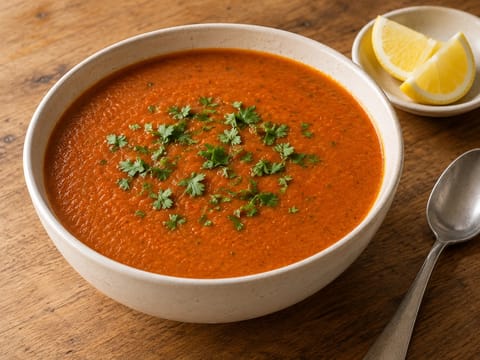
Moroccan Tomato Soup with Chickpeas and Spices
Smooth tomato and chickpea soup with Moroccan spices
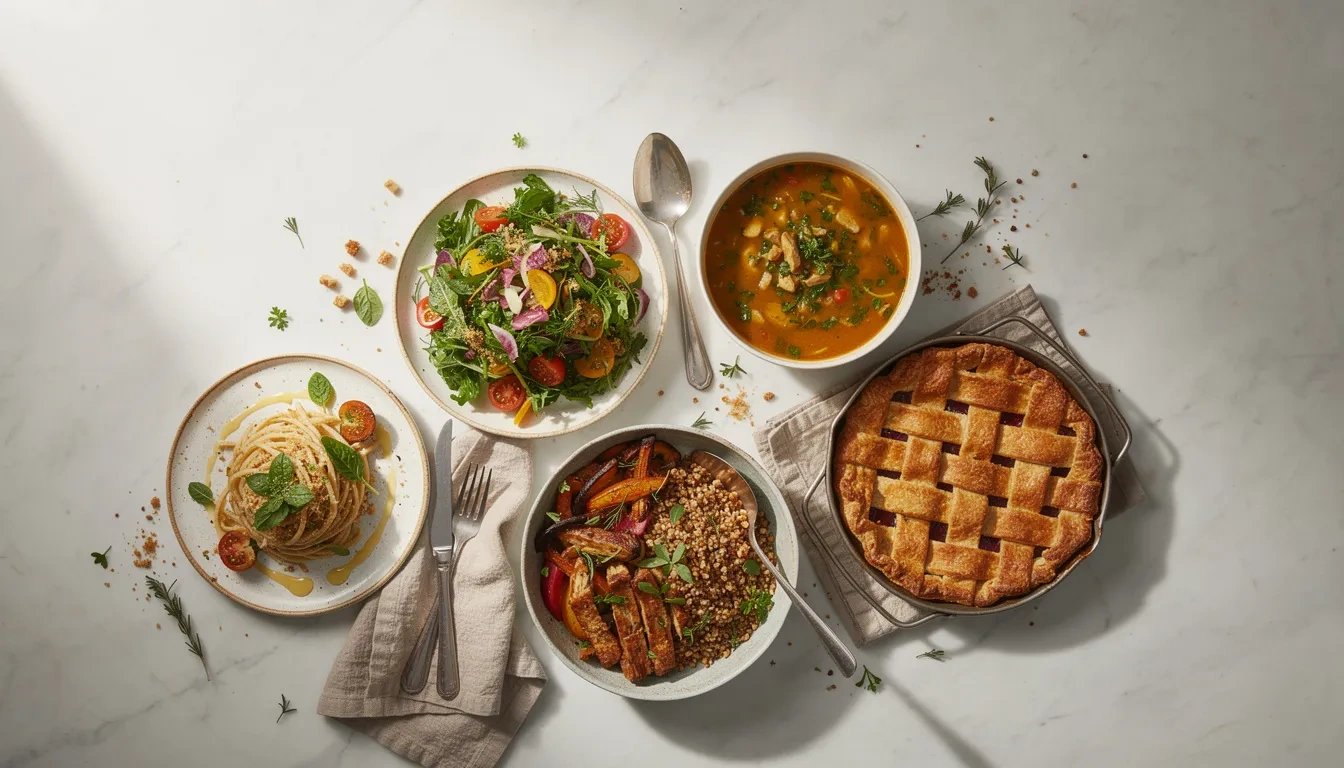
Soup is a broad family, but most choices come down to texture and structure: clear and brothy, thickened and creamy, or hearty with substantial pieces. That structure affects how the soup eats, how it reheats, and what you might want alongside it.
When you are comparing recipes, look for the thickening method (blending, dairy, starches or legumes), the size and amount of “bits”, and whether the flavour is built from a quick sautéed base or from a longer-simmered stock. Those details tell you more than the name alone.
Soup is a liquid-based dish served hot or cold, where the balance between broth and solids is deliberate. Some soups are essentially seasoned stock with a few additions; others are closer to a stew, with enough vegetables, pulses or meat to make the bowl feel substantial.
The category also includes puréed soups, where the body comes from blended vegetables, legumes or grains. These can taste rich without being heavy, but they rely on careful seasoning because a smooth texture can soften sharp flavours.
Soup does not automatically mean slow cooking. Many soups are built quickly from aromatics and a good base liquid, while others depend on time for extraction and depth. The recipe’s method will usually signal which it is.
Smooth tomato and chickpea soup with Moroccan spices
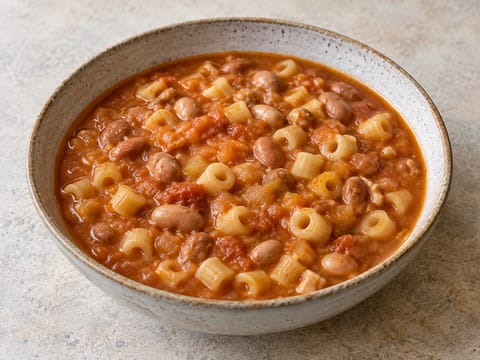
Thick pasta and bean soup with borlotti beans, tomato and rosemary
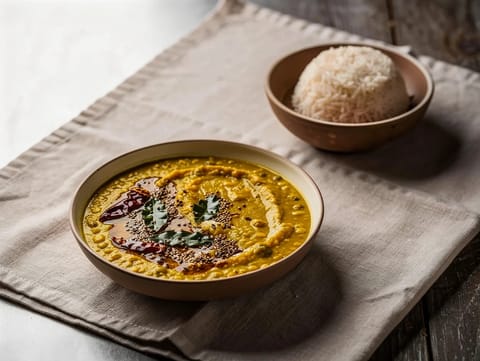
Yellow lentil dal topped with hot tempered spices
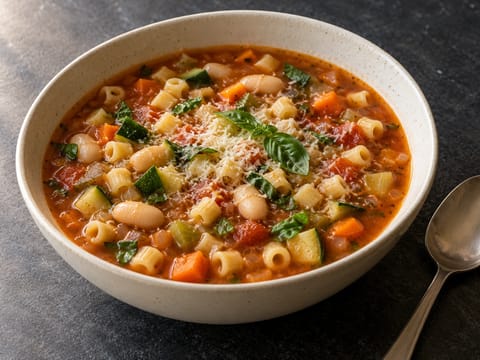
Brothy minestrone with vegetables, cannellini beans and small pasta
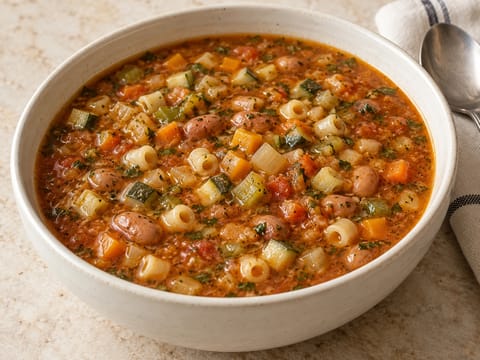
Vegetable, bean and pasta soup with pesto
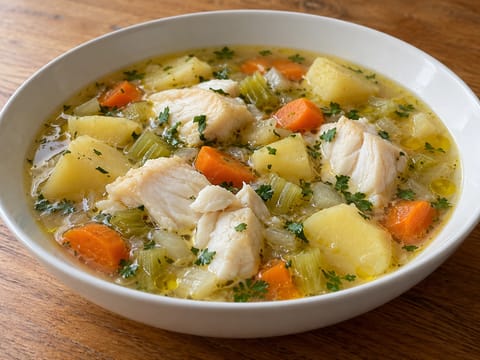
Light Greek fish soup finished with lemon and olive oil
For a lighter bowl, choose clear soups and broths with quick-cooking additions such as leafy greens, noodles or small dumplings. These tend to taste freshest when served soon after cooking, because delicate ingredients can soften as they sit.
For a more filling soup, look for pulses, grains, potatoes or larger pieces of vegetables and meat. These soups often improve after a rest as flavours mingle, and they are commonly practical for making ahead.
If you want a creamy texture, check how it is achieved. Blended vegetable soups get thickness from the ingredients themselves; dairy-thickened soups are richer but can be more sensitive to boiling; soups thickened with flour or starch have a different, more velvety feel. Choose based on the texture you enjoy and how hands-off you need the cooking to be.
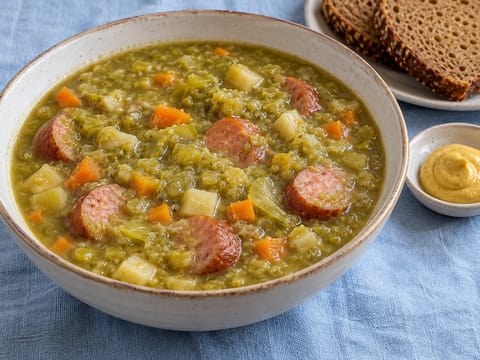
German split pea soup with smoked sausage and root vegetables
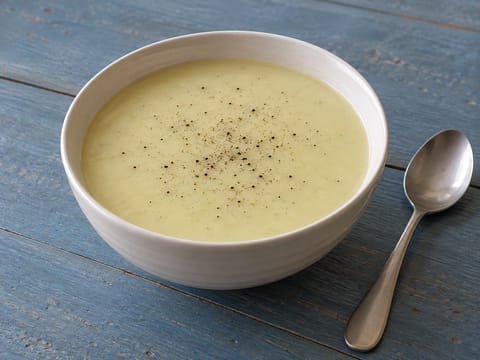
Smooth leek and potato soup finished with double cream

German lentil soup with frankfurters
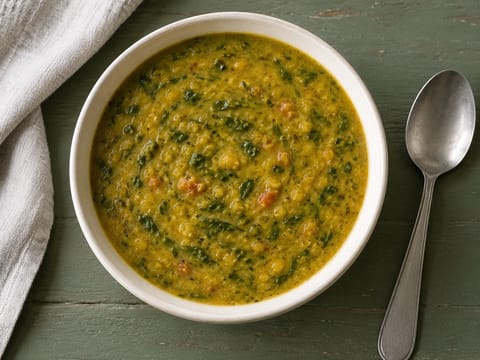
Vegan spinach and red lentil soup with cumin and garlic
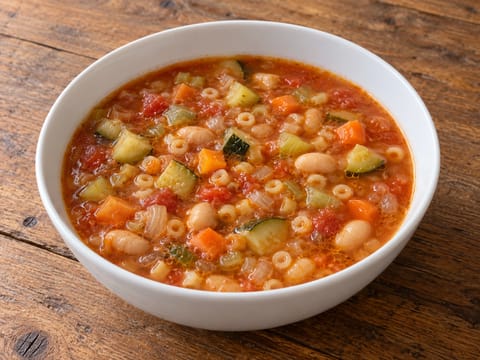
Italian minestrone with vegetables, cannellini beans and small pasta
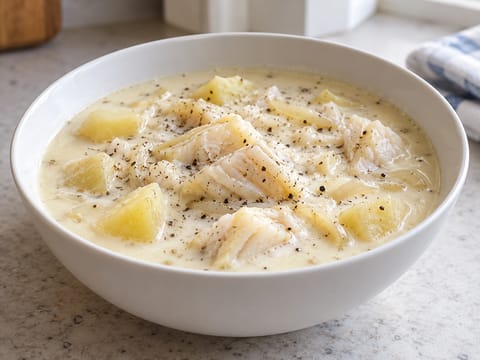
Scottish smoked haddock soup with potatoes and milk
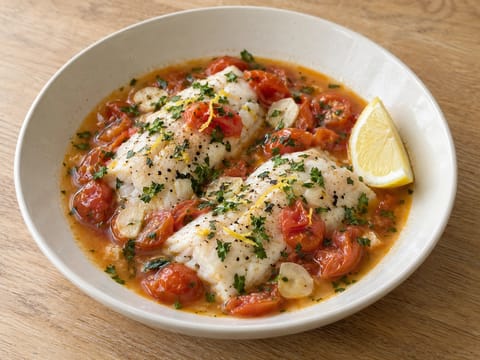
White fish poached in cherry tomato, garlic and wine broth
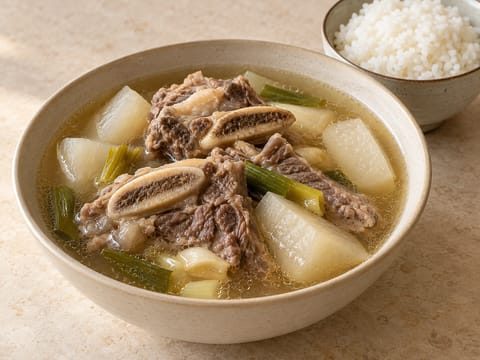
Korean clear short rib soup with radish and spring onions
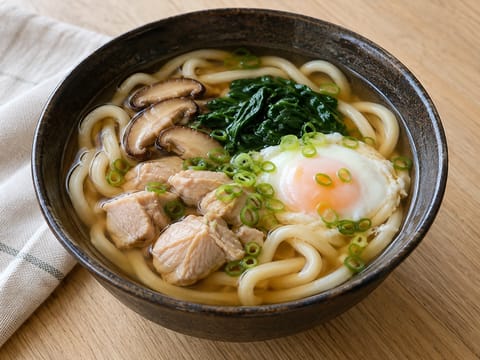
Hot udon noodle soup with chicken, shiitake, spinach and egg
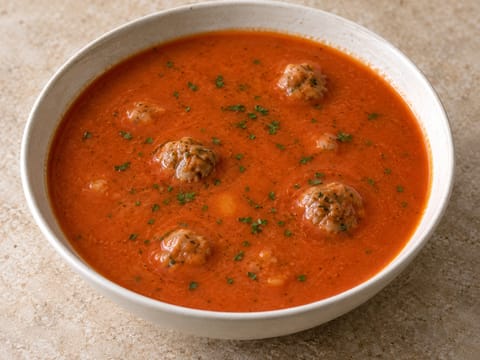
Belgian tomato soup with poached beef and pork meatballs
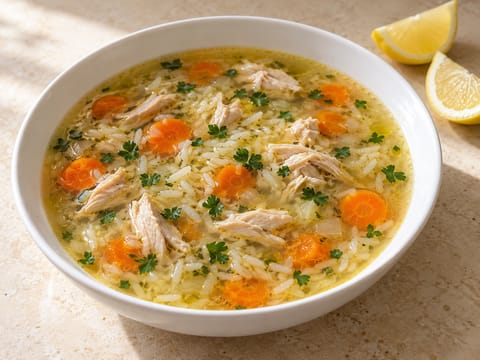
Light chicken and rice soup finished with parsley and lemon
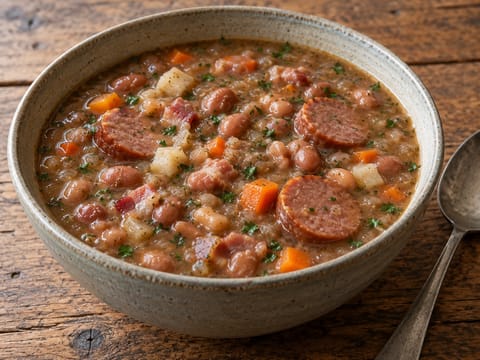
Thick brown bean soup with bacon and smoked sausage
The most useful pairing is usually texture. Smooth soups welcome something crisp, such as toasted bread, croutons or a simple salad, to keep the meal from feeling one-note. Clear soups often suit a more substantial side, such as dumplings, noodles, rice or a filled flatbread, because the broth itself is light.
Acidity is another quiet helper. A squeeze of lemon, a spoon of yoghurt, a splash of vinegar or a few pickled vegetables can lift soups that taste flat, especially those built on sweet vegetables or long-simmered bases.
If the soup is already rich, think about contrast rather than more richness: herbs, chilli oil, peppery greens or a sharp relish can make the bowl feel more defined without changing the core recipe.
Cooking method is a useful next step because soup texture is closely tied to technique, whether it is simmered, blended, pressure-cooked or finished with a quick garnish. Cuisine can also help when you want a particular flavour direction, from spice-led broths to dairy-based or herb-forward soups.
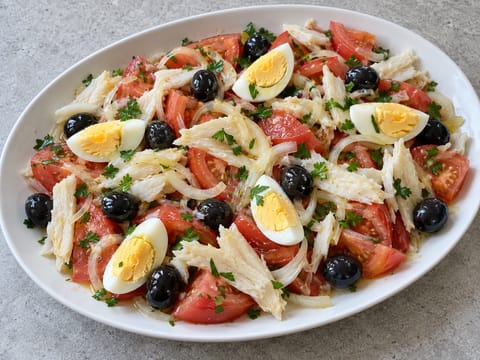
Murcian tomato salad with salt cod and olives
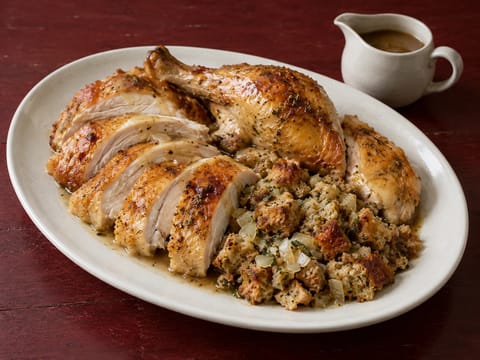
Roast chicken with herb bread stuffing and pan drippings gravy
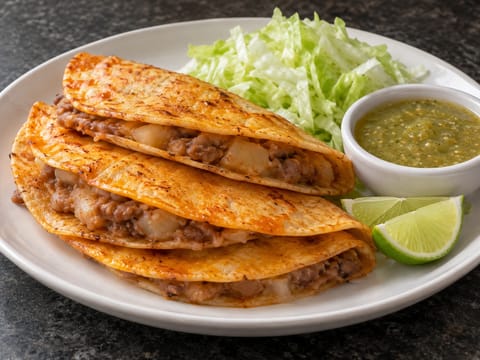
Basket tacos with beans, potato and chilli oil
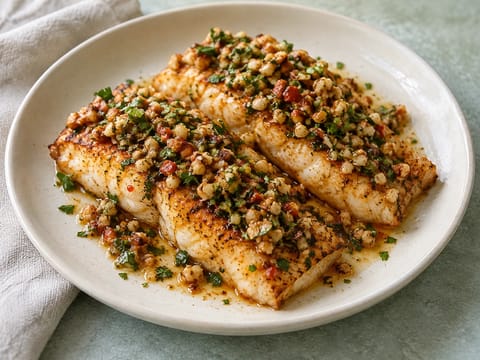
Baked fish topped with a spicy walnut and coriander sauce
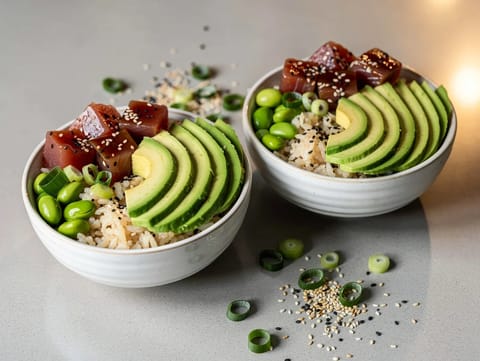
Sushi rice poke bowl with tuna and avocado.

Air fryer teriyaki chicken skewers with sesame and spring onions.
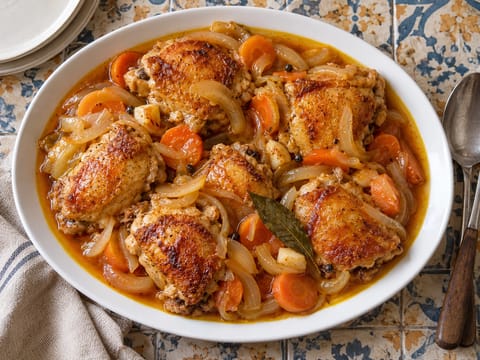
Chicken rested in a vinegar and olive oil escabeche marinade
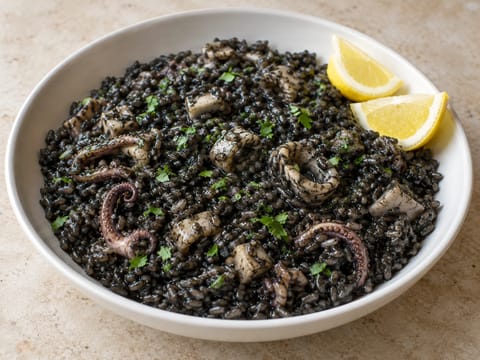
Spanish squid ink rice cooked with squid and fish stock
The line is flexible, but soup is generally more liquid-forward, while stew is more solid-forward. Many hearty soups sit in the middle, so the recipe method and serving style matter.
In soups with robust ingredients, flavours continue to mingle as they rest. The texture can also thicken as starches from potatoes, grains or pulses settle into the broth.
They often rely on the natural starch and fibre of vegetables, legumes or grains. Blending creates a smooth texture that feels creamy even without dairy.
Some dairy-based soups can curdle or split if boiled hard or if acidic ingredients are added abruptly. Gentle heat and careful finishing usually help.
Yes. Cold soups are part of the same family, but they rely more on seasoning and acidity because chilling dulls flavour and aroma.
A contrasting topping often does the job: herbs, toasted seeds, chilli oil, croutons, grated cheese or a spoon of yoghurt can add aroma and texture without changing the base.
If you are unsure where to start, choose soup by texture: brothy and light, blended and smooth, or chunky and hearty. That single decision will usually tell you how it will eat, what it needs alongside, and whether it suits making ahead.
