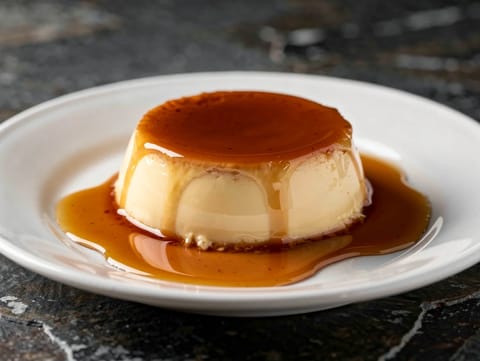
This guide uses the wet method, in which sugar dissolves in a little water before it browns. As water evaporates, the syrup becomes extremely hot. Clear the workspace and prepare the next ingredients before heating; caramel needs your attention once colour appears.
Step by step
Use a deep, light-coloured saucepan
Choose a recipe for the quantities and finishing method. Use a pan with ample room for bubbling, a dry heatproof utensil and dry oven gloves. Keep children away from the workspace. Measure any cream or other finishing liquid in advance.
Dissolve the sugar before browning
Combine sugar and water as directed and warm gently, stirring only as needed to dissolve the crystals. If crystals cling to the sides, use the recipe’s wet-brush method to wash them down carefully.
Let the syrup colour without vigorous stirring
Once dissolved and boiling, stop stirring and watch closely. Swirl the pan gently only if needed for even colour. Follow the change from clear to pale gold and then amber; the darkening accelerates near the end.
Stop and finish exactly as directed
Remove from the heat at the recipe’s target colour. Add butter or warmed cream only if the recipe calls for it, slowly and with hands and face well back because the mixture can foam fiercely. For a plain caramel, pour into the prepared heatproof dish or mould as instructed.
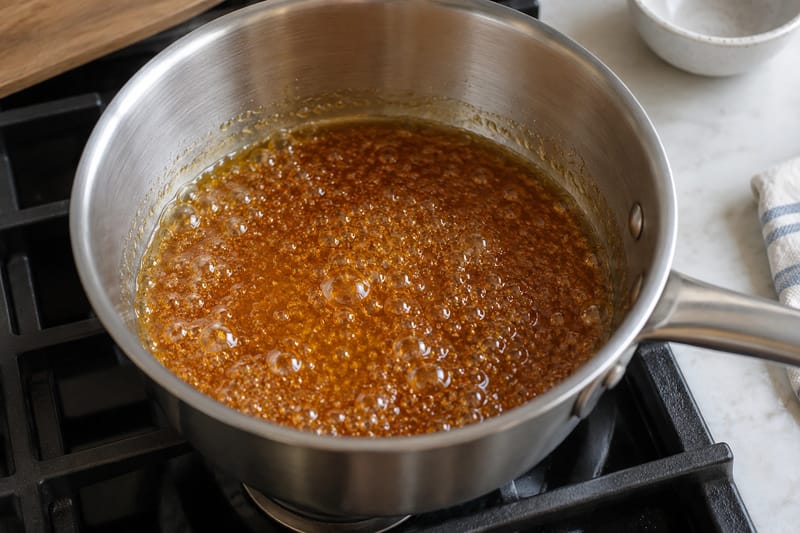
Do not touch or taste hot caramel
Hot sugar sticks to skin and can cause severe burns. Let any sample cool completely before tasting. Do not dip a finger into the syrup or add water casually to a hot batch. Let the pan cool before soaking it for cleaning.
Crystals or burnt flavour
If the syrup turns grainy, follow the recipe’s recovery method or restart after cooling. A blackened, bitter batch needs replacing. Do not wait for every part of a hot pan to become very dark; residual heat continues cooking the caramel.