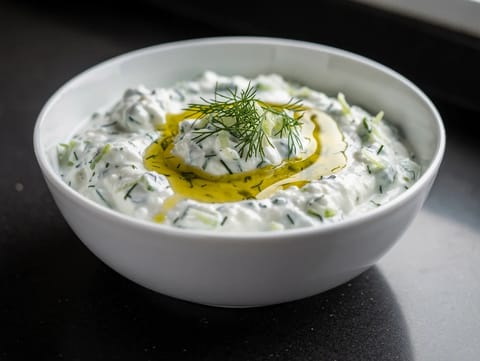
Grated courgette or cucumber can release enough water to loosen a fritter mixture or thin a yoghurt sauce. Salting and draining can remove some of that moisture before mixing. Use this step when the recipe calls for it, since the salt also affects the final seasoning.
Step by step
Prepare the vegetable as directed
Wash, trim and grate or slice the vegetable to the recipe’s size. Remove a cucumber’s watery seed centre if specified. Set a sieve over a bowl, leaving space underneath for liquid.
Mix with the measured salt
Toss evenly with the recipe’s salt and leave for its stated draining time. Do not add an unmeasured handful: the vegetable will retain some seasoning after liquid drains away.
Press or squeeze out the liquid
Press small portions against the sieve or gather grated vegetables in a clean kitchen towel and squeeze over the sink. Stop when they feel noticeably drier rather than trying to make them completely dry.
Add to the recipe
Loosen the squeezed pieces before mixing so they spread evenly. Account for the salt already used before adding more seasoning. Taste only when every ingredient in the mixture is safe to eat.
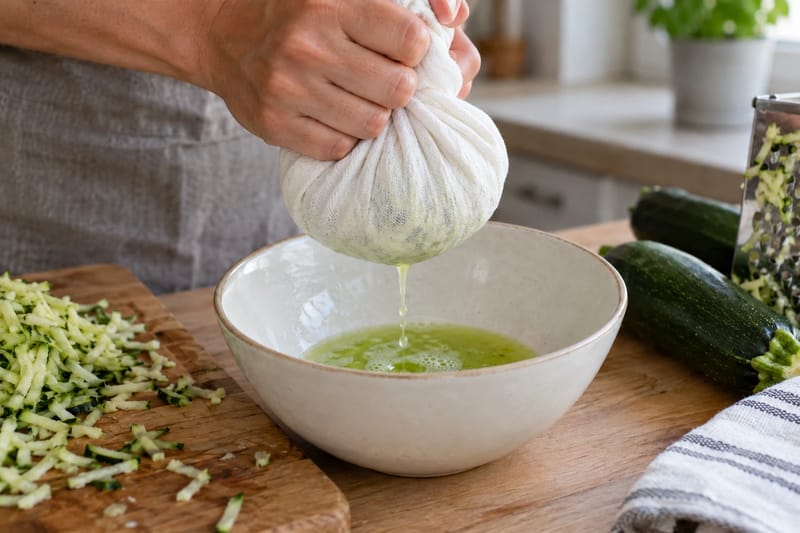
A mixture that is still watery
Before mixing, squeeze the vegetables again if they still feel very wet. Adding extra flour later to absorb that water can make fritters heavy. If the recipe asks you to rinse after salting, drain and dry again afterwards. Salting is not a food preservation method; keep long draining stages refrigerated and use the prepared vegetables promptly.