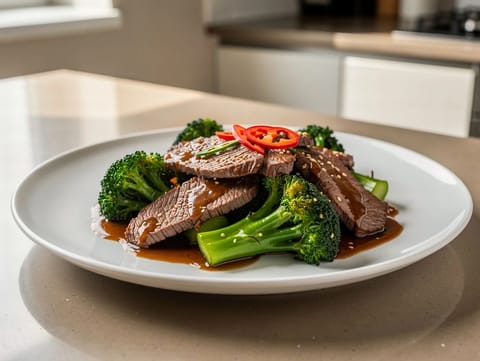
The grain is the direction of the muscle fibres running through meat. Slicing across those fibres makes them shorter in each bite. This is especially useful with cuts such as flank or skirt steak, where the fibres are easy to see.
Step by step
Find the fibres before slicing
Look for parallel lines running across the surface. Check before cooking too, when browning has not obscured them. Do not assume the longest edge of the meat shows the grain direction.
Use the correct board and resting stage
For cooked meat, complete the recipe’s cooking and any required safety resting time first, then transfer to a clean board. Keep raw-meat preparation on a separate board and clean utensils before they touch cooked food.
Turn the meat across the blade
Position the meat so each cut crosses the visible lines rather than following them. If the grain changes direction in a large piece, divide it into sections and turn each section as needed.
Cut controlled, even slices
Hold the meat securely with fingers clear of the blade and use smooth strokes. Slice to the thickness the dish needs. A slight angle can make wider slices, but it still needs to cross the fibres.
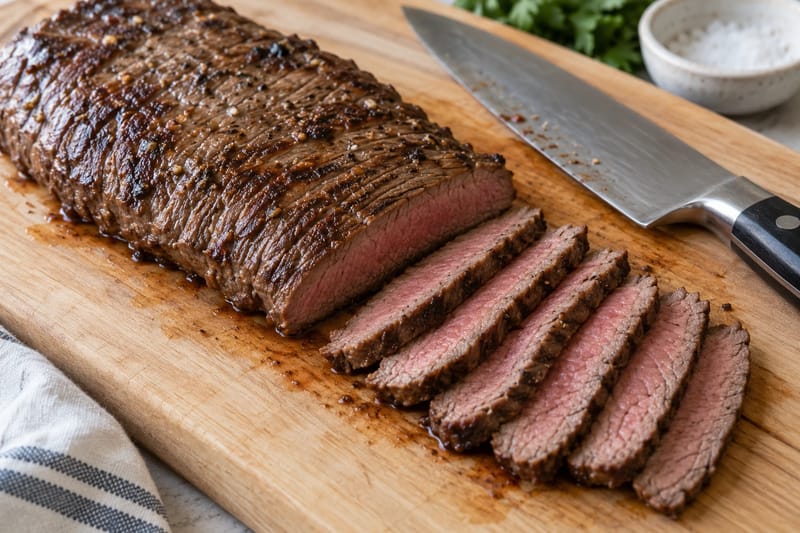
Diagonal is not always against the grain
Cutting diagonally across the board does not guarantee that you are crossing the fibres. Look at the meat itself. Slicing improves the eating texture, but cannot correct undercooking or make a cut suited to braising behave like a tender steak.