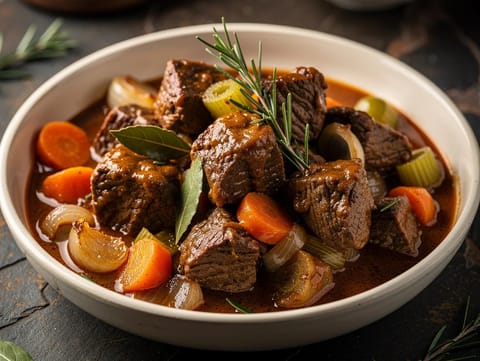
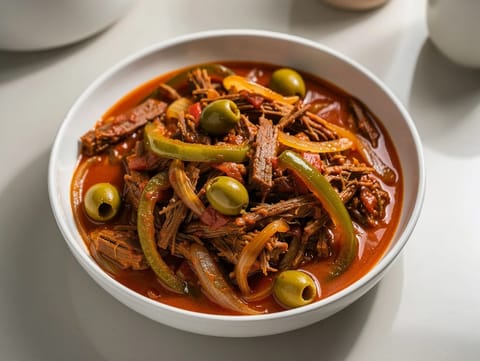
Searing develops a browned surface on meat. It does not seal in juices, and browning alone does not tell you whether the centre is safe to eat. The recipe may finish the meat in the same pan, an oven or a braising liquid.
Step by step
Dry and prepare the surface
Pat the meat dry with kitchen paper and discard the paper. Season as the recipe directs. Remove loose, wet marinade that would flood the pan; keep raw-meat utensils separate from cooked-food utensils.
Heat a suitable pan
Use a sturdy pan and the recipe’s cooking fat. Heat enough for a steady sizzle when the meat enters, staying within the pan manufacturer’s guidance. Do not heat a nonstick pan empty over high heat or wait for oil to smoke.
Give each piece room
Lower meat into the pan away from you. Leave gaps and work in batches if necessary. Let the first surface brown before trying to turn it; gentle release is easier once a crust develops.
 Image by JustRecipes
Turn and complete the cooking
Brown the other required surfaces, adjusting heat if deposits darken too quickly. Follow the recipe’s finishing method and check the correct internal temperature with a food thermometer. Transfer cooked meat to a clean plate.
Pale surfaces and burning spices
Liquid pooling around meat usually means a wet surface, a crowded pan or insufficient heat for the batch. Remove some pieces and let the pan recover. Sweet glazes and ground spices can burn before a crust forms, so add them at the stage the recipe specifies. Do not taste pan drippings before the dish is cooked safely.