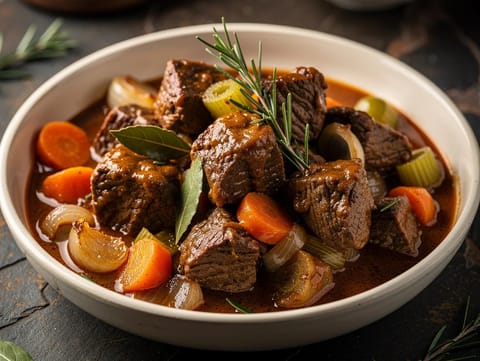
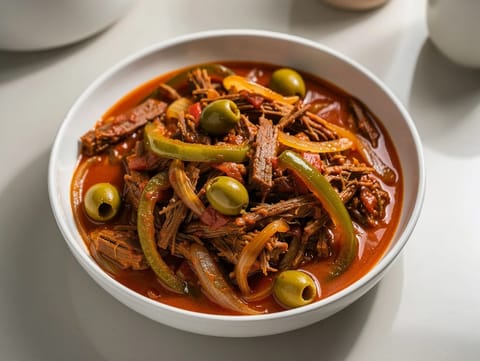
Braising uses gentle cooking in a covered pot with some liquid to tenderise a suitable cut of meat. Browning first can add flavour, while the covered stage gives tough connective tissue time to soften. A rapidly boiling pot is not a shortcut to tender meat.
Step by step
Brown if the recipe calls for it
Pat the meat dry, season and brown in a suitable heavy pot in batches. Transfer to a plate, then cook the aromatics. Keep the raw or partly cooked meat and its utensils away from ready-to-eat food.
Add the braising liquid
Release suitable browned deposits with the recipe’s liquid. Return the meat and add the specified amount of stock or other liquid. Many braises leave part of the meat exposed; do not fill the pot to the top automatically.
Cover and cook gently
Bring to a gentle simmer, then cover and use the hob or oven method in the recipe. Check occasionally that liquid remains and the pot is not boiling hard. Add a little hot liquid if the base is drying out.
Check the meat and finish the sauce
Use a thermometer to meet the safe endpoint for the meat, then continue as needed for tenderness. A fork or skewer should enter with little resistance when the intended braising texture is reached. Lift tender meat out before reducing a thin sauce.
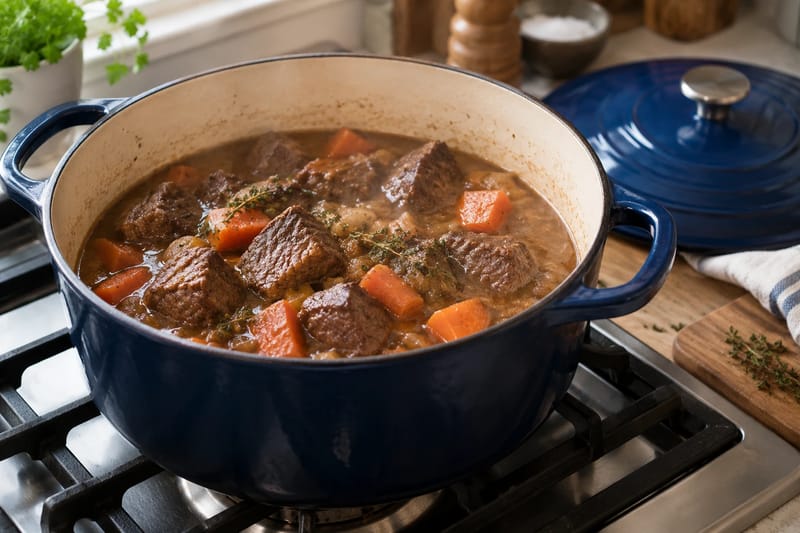
Tough meat or a dry pot
A suitable braising cut can be safely cooked yet still tough and need more gentle cooking. Lean quick-cooking cuts may simply dry out during a long braise. If liquid disappears, check the lid fit and heat rather than repeatedly topping up a fiercely boiling pot. Handle oven-heated lids and handles with dry oven gloves.