
Cougnou (Belgian Christmas Sweet Bread)
Why this recipe works
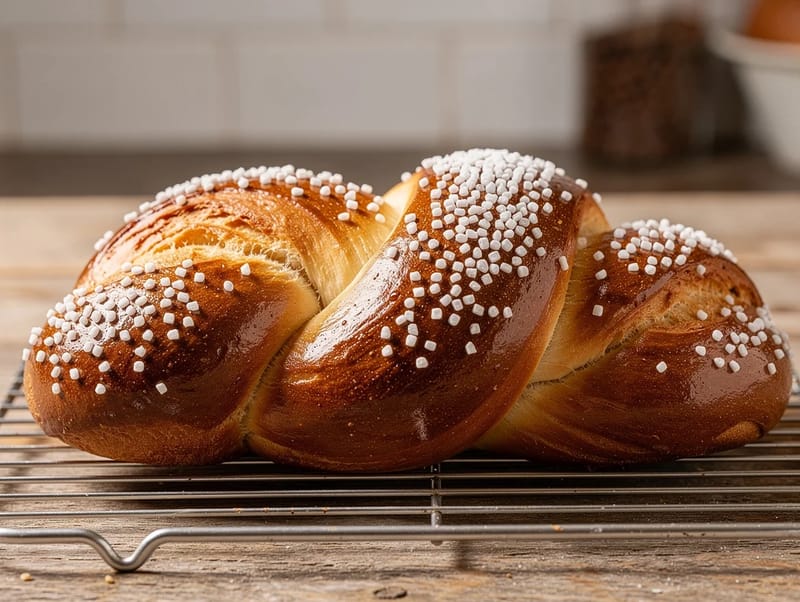
- Traditional shaping: Dividing the dough into one large centre piece and two smaller ends creates the recognisable cougnou silhouette while keeping the loaf easy to shape.
- Gentle richness: Milk, butter, egg and vanilla give the dough a soft, rounded flavour without making the bread overly sweet.
- Soft crumb, crisp finish: A tender enriched crumb contrasts with the crunchy pearl sugar topping, which adds texture as well as a festive look.
Get the most out of this recipe
Timing notes
- Let the dough guide the timing: Proofing times can vary with room temperature. Look for dough that has doubled on the first rise and feels puffy on the second, rather than relying only on the clock.
- Cool before slicing: Rest the loaf briefly after baking so the crumb sets; slicing too soon can make the interior seem compressed or gummy.
Ingredient notes
- Use bread flour for structure: Bread flour helps support the butter- and egg-enriched dough, giving the loaf enough strength to rise well and hold its shape.
- Add butter gradually: Softened butter incorporates more evenly when added a little at a time, helping the dough become smooth, elastic and glossy.
- Pearl sugar matters: Pearl sugar keeps its crunch during baking and gives cougnou its characteristic sweet, textured topping.
Common mistakes
- Avoid cold butter: Cold butter will resist mixing into the dough and can leave streaks. It should be soft enough to blend in gradually.
- Check the centre is baked through: Because this is an enriched loaf, a deeply golden top is not the only sign of doneness. The base should sound hollow when tapped.
- Do not rush the second prove: If the shaped loaf is baked before it looks puffy, the finished bread may be denser and the joins may pull apart.
Make-ahead tips
- Prepare before mixing: Bring the butter to a soft, workable texture before starting, and have the egg and milk ready so the dough comes together smoothly.
- Freeze in slices: Once fully cooled, slice and freeze the bread tightly wrapped. Defrost at room temperature before warming gently.
- Refresh before serving: Warm defrosted slices in a 160°C (320°F) oven until gently heated through to revive the crumb.
Equipment you'll need
Ingredients
Instructions
- Warm the milk until just lukewarm. In the bowl of a stand mixer, stir together the milk, yeast and caster sugar, then leave for 5 minutes until lightly foamy.
- Add the bread flour and fine sea salt, then mix briefly to combine. Beat in the eggs and vanilla, then knead on medium speed for 6 to 8 minutes until smooth and elastic.
- With the mixer running, add the softened butter a little at a time, letting each addition disappear before adding more. Continue kneading for 4 to 6 minutes until the dough is glossy and pulls cleanly from the bowl.
- Cover the bowl and leave the dough to prove in a warm place for 60 to 75 minutes, until doubled in size. If your kitchen is cool, allow a little longer.
- Tip the dough onto a lightly floured surface and gently press out the air. Divide into 3 pieces: one large piece for the body and two smaller equal pieces for the ends.
- Shape the large piece into a thick log and place it on a baking tray. Shape the two smaller pieces into shorter logs and tuck one against each end to form the traditional swaddled-baby shape, pinching the joins so they hold.
- Cover and prove for 35 to 45 minutes until puffy and the dough springs back slowly when pressed. Meanwhile, heat the oven to 180°C (355°F).
- Brush the surface lightly with a little milk, then sprinkle over the pearl sugar, pressing gently so it adheres. Bake for 22 to 28 minutes until deep golden and the loaf sounds hollow when tapped underneath.
- Cool on a rack for at least 15 minutes before slicing so the crumb sets. Serve warm or at room temperature.
Recipe notes
Tips
- If the top is browning too quickly, loosely cover the loaf with foil for the last 10 minutes of baking.
- For the best rise, keep the dough warm but not hot; around 24°C to 27°C is ideal.
- Food safety: if serving to pregnant people, young children, older adults, or anyone immunocompromised, use eggs with a recognised safety mark and bake the bread until fully cooked through.
Substitutions
- Replace Vanilla extract with vanilla bean paste for a more pronounced vanilla flavour.
- Replace Bread flour with high-gluten bread flour for a slightly chewier crumb.
Storage
- Refrigerate up to 3 days
- Keep tightly wrapped at room temperature for up to 2 days, or refrigerate for up to 3 days. Freeze sliced for up to 2 months; defrost at room temperature, then warm in a 160°C (320°F) oven for 8 to 10 minutes.
Ratings & reviews
Liked this recipe? Share your feedback to support our cooking community.
Tried this recipe?
Choose 1–5 stars. A comment is optional.
Stay inspired
Discover new recipes, seasonal favourites and cooking inspiration every day. Follow JustRecipes on Pinterest and Spillt.
Recipe overview
- Servings: 8 servings
- Yield: cougnou loaf
- Total time: 3h 20min (35min active)
- Difficulty: Medium
- Cuisine: Belgian
-
Allergens:
Eggs Gluten Milk Wheat
Plan your meals and get a complete grocery list automatically.
Add to meal plannerEquipment you'll need
Got ingredients left?
Find recipes using ingredients from this recipe or what you already have at home.
Find recipes with these ingredients →
Skillet Cornbread with Jalapeño and Cheddar
Golden skillet cornbread with jalapeño and cheddar
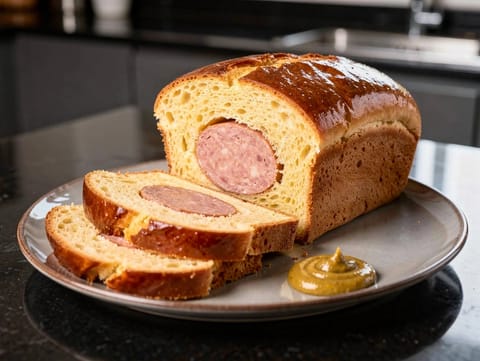
Saucisson Brioché (Sausage Baked in Brioche Dough)
Pork sausage baked inside soft brioche
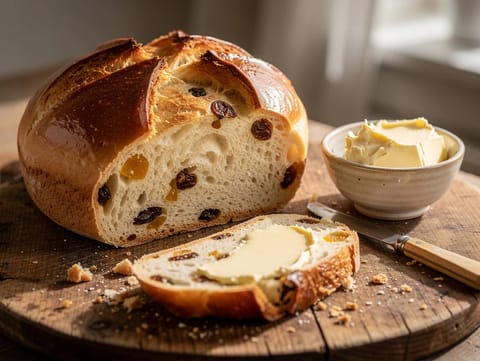
Osterbrot (German Easter Bread with Raisins and Candied Peel)
Lightly sweet German Easter bread with raisins and candied peel
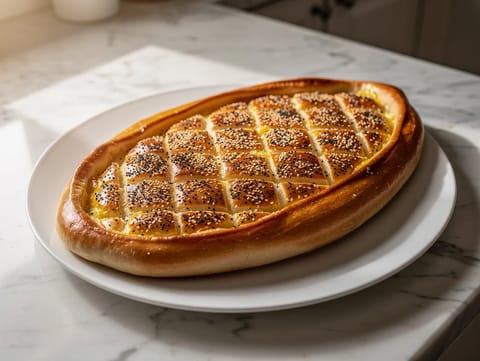
Ramadan Pide (Turkish Iftar Flatbread)
Soft Turkish flatbread topped with sesame and nigella
American Banana Bread
Moist banana bread loaf with vanilla
Easter Rosca (Ring-Shaped Sweet Bread with Orange and Vanilla)
Ring-shaped sweet bread with orange zest, icing and almonds
Nieuwjaarsrolletjes (Dutch New Year’s Wafer Rolls)
Crisp Dutch wafer rolls flavoured with butter and vanilla

Rosquillas (Spanish Lemon and Aniseed Doughnuts)
Spanish lemon and aniseed ring doughnuts with a sugar coating
Streuselkuchen (German Yeasted Crumb Cake)
German yeasted crumb cake with a thick buttery streusel topping

Air Fryer Scones
Classic air fryer scones served with clotted cream and jam.
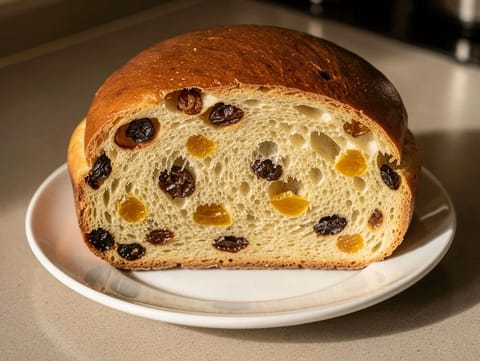
Julekake (Norwegian Christmas Bread with Raisins and Mixed Peel)
Soft Norwegian Christmas bread with raisins and mixed peel

Classic Apple Pie with Shortcrust Pastry
Shortcrust apple pie with cinnamon and lemon
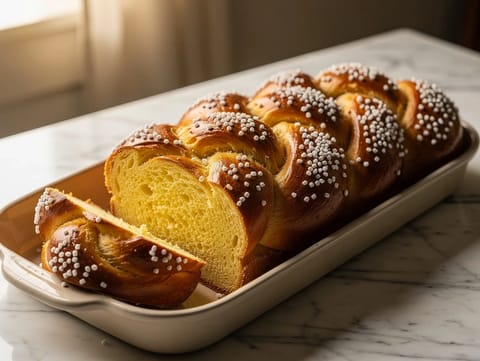
Hefezopf (German Braided Yeast Bread)
German braided yeast bread enriched with butter, eggs and milk
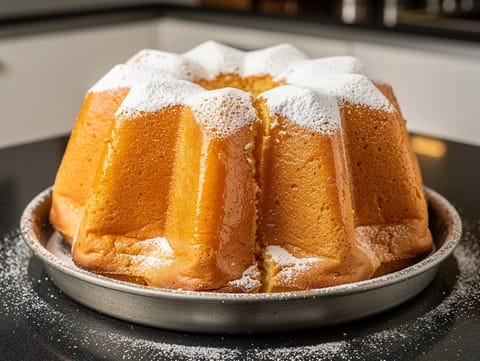
Pandoro (Italian Golden Christmas Cake)
Buttery Italian Christmas cake dusted with icing sugar
Streuselkuchen (German Yeasted Crumb Cake)
German yeasted crumb cake with a thick buttery streusel topping
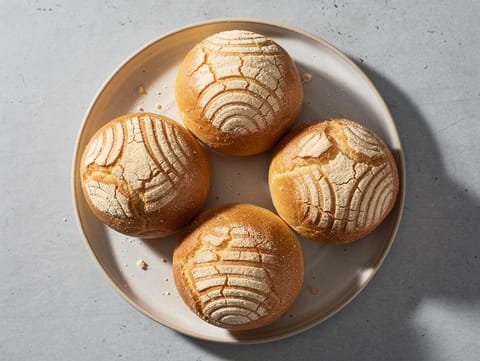
Conchas (Mexican Sweet Bread Rolls)
Soft conchas with a crackly vanilla sugar topping
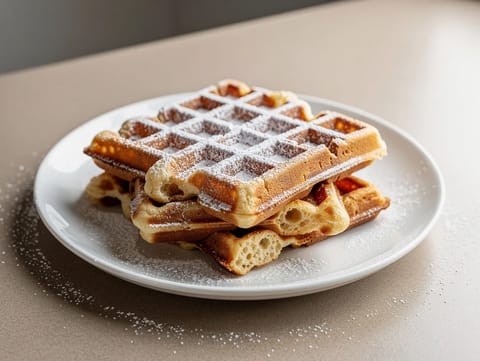
New Year’s Waffles (Gaufres du Nouvel An)
Yeast-raised Belgian waffles dusted with icing sugar
Nieuwjaarsrolletjes (Dutch New Year’s Wafer Rolls)
Crisp Dutch wafer rolls flavoured with butter and vanilla
You might also like

Roze Koeken (Dutch Pink Iced Cakes)
Soft Dutch sponge cakes topped with smooth pink icing

Sjømatgryte (Nordic Fish and Prawn Stew with Cream)
Creamy fish and prawn stew with dill and lemon
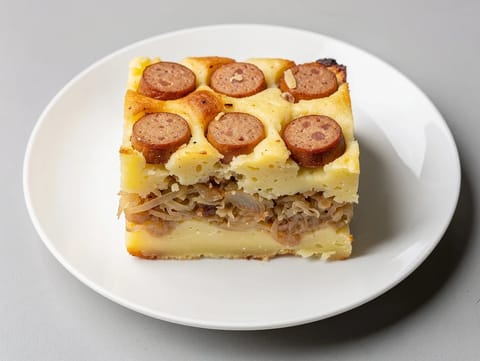
Zuurkoolschotel Met Rookworst (Dutch Sauerkraut Casserole with Smoked Sausage)
Mashed potato casserole with sauerkraut and smoked sausage
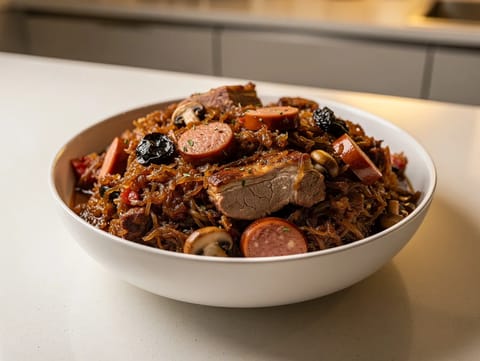
Świąteczny Bigos (Polish Hunter’s Stew with Pork and Sauerkraut)
Slow-simmered stew with sauerkraut, pork, smoked sausage and prunes
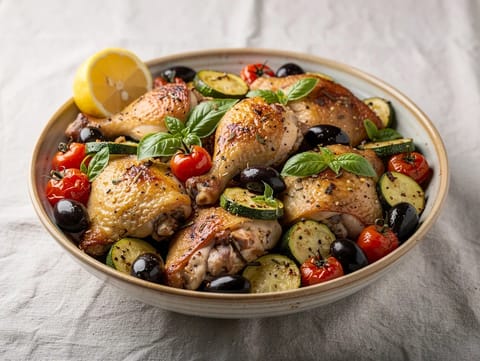
Provençal Chicken Bowl with Courgette and Olives
Herbed chicken bowl with courgette, tomatoes and black olives
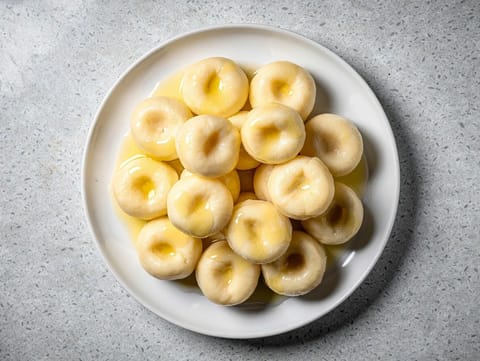
Kluski Śląskie (Silesian Potato Dumplings)
Soft Silesian potato dumplings simmered until tender
Make this recipe easier next time
AdvertisementThese tools help you get better results with less effort.
KitchenAid Stainless Steel Mixing Bowls
- Non-slip base
- Stainless steel
- Not microwave safe
Pyrex Glass Mixing Bowls with Lids
- Microwave safe
- BPA-free lids
- Glass is heavier
OXO Good Grips Stainless Mixing Bowl Set
- Non-slip base
- Comfort grip
- Higher price
Enjoy cooking with JustRecipes?
Add JustRecipes as one of your preferred Google sources to discover our recipes more easily across Google Search.
Add JustRecipes to GoogleEvery recipe on JustRecipes follows the same structured editorial process. Learn how recipes are created, validated, translated, illustrated, and continuously improved across the platform. How we create recipes.
