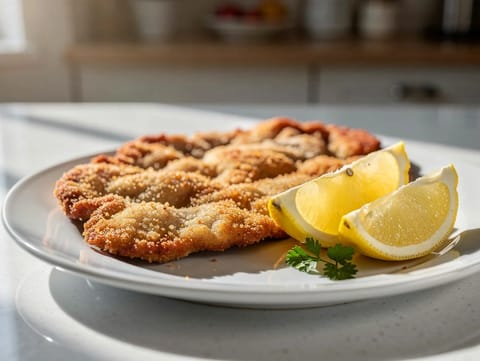
Shallow-frying cooks food in a layer of hot fat while part of it stays above the surface. Turning exposes the other side to the oil. Use pieces of even thickness so the crust and centre can finish at similar times.
Step by step
Prepare the food and draining area
Dry or coat the food as the recipe directs. Shake off loose crumbs. Set a rack over a tray nearby and have heat-safe tongs or a spatula ready before adding oil to the pan.
Heat the recipe’s shallow layer of oil
Use a stable, heavy frying pan and an oil suitable for the specified temperature. Heat gradually and use a suitable frying thermometer where a temperature is given. Smoking oil is too hot; turn off the heat and let it cool.
Lower in a small batch
Place pieces into the oil gently, away from you, leaving space between them. Adjust the heat to keep a steady sizzle. Avoid moving fragile coatings until they have set.
Turn and check the centre
Turn carefully without dropping or splashing the food. Once both sides are browned, lift a piece onto a clean surface and check its centre as appropriate, including a thermometer for meat, poultry or fish. Drain and serve promptly.
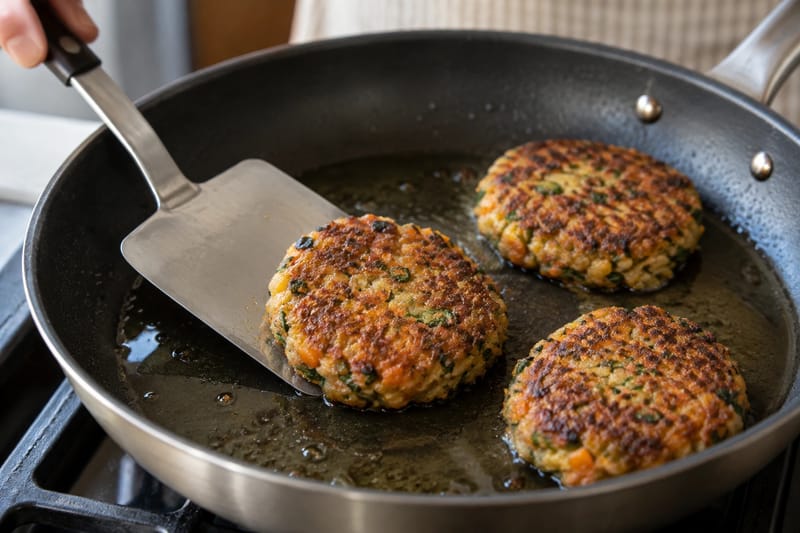
Dark crust before a cooked centre
Reduce the heat if the coating colours too quickly. Follow the recipe’s supported finishing method instead of serving an undercooked centre. Remove burnt crumbs between batches with a heat-safe utensil. Stay beside the pan and keep water away from hot oil; let it cool completely before moving or disposing of it.